

Wholesale Combined Air Handling Units Guide to Smarter HVAC Planning
2026-11-17
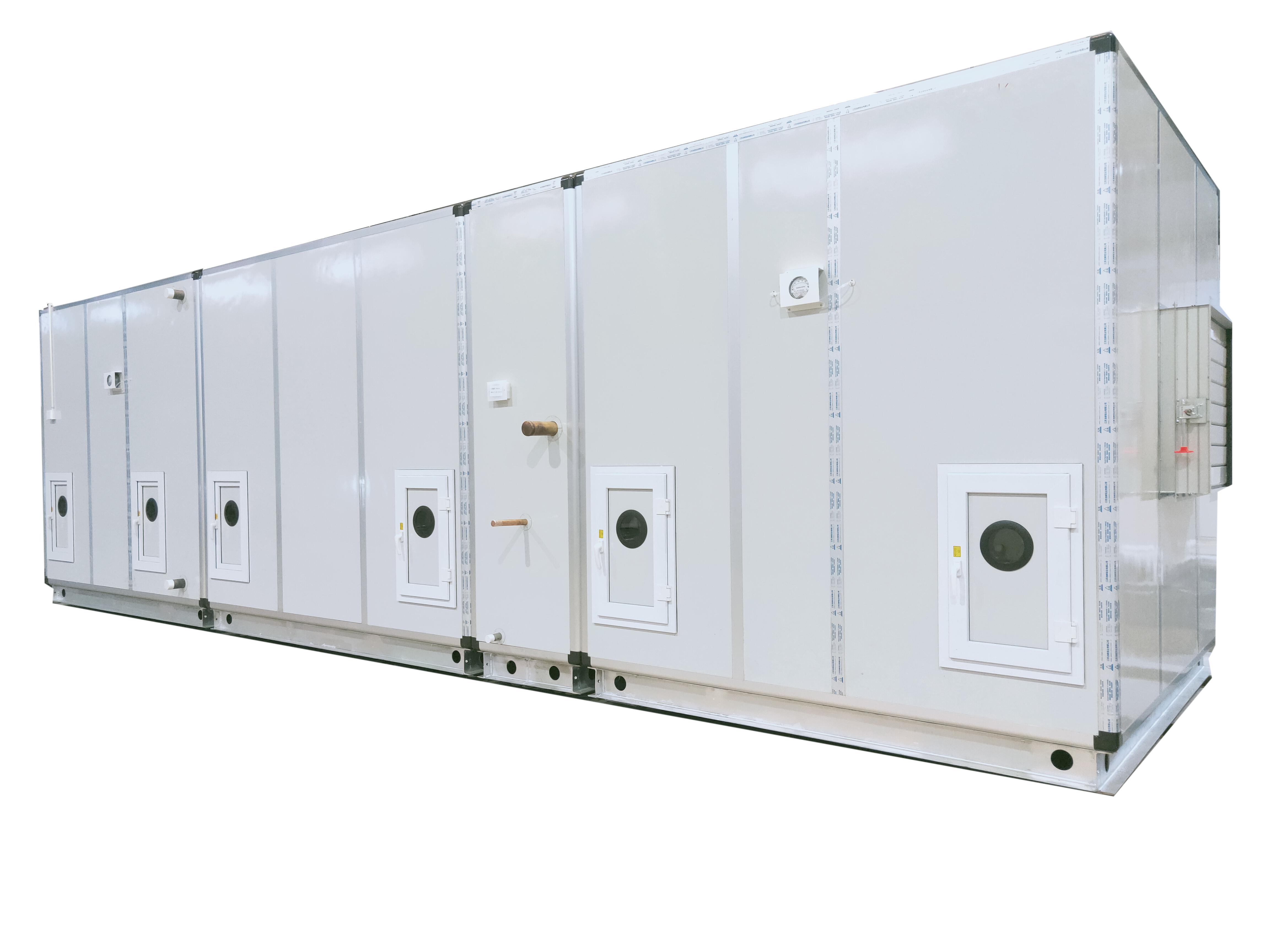
Most HVAC planning conversations start with individual components, yet the real leverage often sits further upstream. Wholesale combined air handling units change that equation by bringing fan, coil, filter, and casing decisions into one coordinated package, which can simplify specification, reduce on-site surprises, and sharpen long-term operating efficiency. This guide unpacks how to move from piecemeal selection to a smarter planning framework. Along the way, we draw on insights from ROTER to show how the right AHU partner can turn a crowded equipment schedule into a clearer path to performance.
Why Combined Air Handling Units Belong in Early Planning, Not Last-Minute Specs
Combined air handling units shape far more than ductwork—they set the physical and operational rhythm of a building. When brought into early planning, the unit's footprint, weight, access clearances, and coil pull zones can be coordinated with structural bays and ceiling cavities before architectural details harden. Waiting until construction documents are nearly complete forces the team to accept whatever fits, often at the cost of filter access, maintenance headroom, or sensible zoning.
Early sizing also opens room for honest performance conversations. A last-minute selection usually defaults to a catalog match, leaving little time to examine part-load behavior, fan energy, heat recovery placement, or control sequences that interact with the rest of the plant. If the AHU enters the discussion during concept or schematic design, engineers can test options against actual occupancy patterns and climate data rather than chasing a single peak-load number.
The commercial case is just as direct. Moving equipment decisions upstream prevents change orders for structural supports, electrical feeders, condensate drainage, and fire-rated enclosures that surface too late to resolve cleanly. It also gives procurement a realistic lead time, which matters when coils, fans, or controls are constrained by supply chains. Early planning does not simply de-risk the schedule; it preserves the design intent that value-engineered substitutions tend to erode.
Sizing for Real Load Profiles Instead of Worst-Case Assumptions
Oversizing equipment around a single worst-case number feels safe, but it quietly drives up cost, footprint, and cooling burden. Real load profiles are messy: they include soft starts, idle periods, seasonal swings, and short bursts that rarely overlap the way a simplified maximum would suggest. Working from measured demand instead of an assumed spike usually uncovers headroom that was already there.
A load profile collected over days or weeks makes the actual duty cycle visible. Instead of treating every motor or heating element as if it hits peak at the same moment, the sizing process can weigh concurrence, duration, and ramp behavior. That shift matters most in systems where the maximum appears for only a few minutes a day, because the real constraint is often thermal stability or voltage recovery, not a static amp total.
The practical result is a smaller, calmer installation that still holds its performance limits. Engineers can keep reserve capacity for genuine future growth rather than paying for it upfront based on a scenario that rarely occurs.
Coatings, Drainage, and Corrosion Details That Keep Units Running Longer
Most equipment retirements start with standing water, not heavy use. On units that survive harsh seasons, the drainage path is treated as a load-bearing part: pans are sloped past the nominal minimum, corners are rounded so debris can't dam the flow, and drain outlets sit just below the lowest flat surface. Coating alone rarely compensates for a puddle that never leaves.
Coatings earn their keep at the edges. Sharp bends, fastener heads, and welds are where mill scale, scratches, and thin film invite corrosion first. A practical fix is to apply a stripe coat along those contours before the main spray, then verify dry-film thickness at the same points rather than on open plate. Zinc-rich primers help at connections, but only if the topcoat stays continuous over the transition.
The details that add years are quieter: isolating dissimilar metals with non-conductive gaskets, sealing lap joints against capillary seepage, and keeping drain channels clear of oversize washers or sloppy sealant. Where access allows, a small inspection plug at the low point makes it easy to flush sediment before it turns into a corrosion cell. Those choices don't show up in a brochure, but they show up in runtime.
Wholesale Buying Without Losing Configuration Flexibility
Many purchasing teams still treat bulk orders and fixed specifications as the same thing, as if buying in volume means giving up meaningful choices. That assumption rarely holds up in practice. When the supply side supports parameterized ordering, a wholesale purchase can include different sizes, interface options, firmware versions, and packaging requirements on the same order without forcing every unit into a single template.
Configuration flexibility is not reserved for small retail orders. Wholesale buyers often use modular part codes or a product configurator to lock in a base platform while adjusting details by customer group or region. One production batch can mix different power cord specs, panel finishes, or software licenses, and the manufacturer tracks each unit by serial number, so the variety does not turn into a logistics problem.
The practical concern is the relationship between change windows and minimum order quantities. Keeping configurable options within a stable range preserves flexibility without slowing fulfilment or inflating unit costs. That way wholesale purchasing still captures volume advantages, while the end customer receives a product that actually fits the intended environment.
How Shipping Limits and Rigging Paths Shape Unit Section Choices
Highway height clearances and axle load limits often draw the first hard lines around a unit section. A module that fits the fabrication shop may still exceed a 14-foot bridge clearance or push a lowboy trailer past its axle spread, so the break points get pulled back to what can actually travel the route. Rail sidings, tunnel widths, and even seasonal road postings on county bridges can force a section split that has little to do with structural logic and everything to do with getting steel to the site without a police escort.
Rigging paths introduce a second set of constraints once the pieces arrive. The crane’s working radius, its charted capacity at that radius, and the room needed for counterweight swing all dictate how heavy a single lift can be. Overhead conductors, pipe racks, or an existing roof edge may cut the available hook height, pushing designers toward shorter vertical sections or lighter horizontal assemblies. In tight infill sites the tail swing clearance alone can rule out a long module even when the road delivery was manageable.
The practical outcome is that unit section choices get settled early, often before structural detailing begins. Splice locations end up where transport and lift boundaries overlap with sound erection sequencing, not just where bending moments are lowest. A section that looks efficient on paper may be abandoned because it cannot be turned through a gate, lifted over a parapet, or set without moving the crane twice.
Planning Service Access and Filter Replacement Before the Unit Arrives
Most homeowners overlook the small but critical step of checking filter orientation before the unit shows up. A quick look at the existing return grille tells you whether the replacement needs a 1-inch or 4-inch filter, and whether the arrow on the frame points up, down, left, or right. Taking a photo with your phone takes ten seconds and saves the installer from guessing or making a second trip. It also lets you order the exact size ahead of time, so the new system isn't running with a dirty, mislabeled filter on day one.
Access matters just as much as the filter itself. If the air handler sits in a tight closet, attic corner, or basement nook, clearing a path before delivery prevents delays and damaged door frames. Move boxes, seasonal decorations, and low-hanging shelves out of the way. For units in crawlspaces or vertical attics, measure the opening width and height, not just the room. A small clear zone of two to three feet around the planned service side gives the technician enough space to open panels, slide out the old filter, and check drain lines without working at an awkward angle.
Finally, have a replacement filter ready before the crew arrives, even if the new system includes one. Installation days get busy, and the filter may be left inside a plastic bag or tucked in a side pocket of the unit. By placing your own new filter next to the thermostat or on top of the return grille, you make sure the final step happens right then. Mark the install date on the filter frame with a permanent marker, set a phone reminder for three months out, and you've already started a simple habit that protects the equipment from day one.
FAQ
A combined unit packages cooling, heating, filtration, and sometimes heat recovery into one cabinet. That reduces the number of separate components a contractor has to coordinate and keeps mechanical rooms more compact.
Start with load calculations for each zone instead of a rough square-footage estimate. Oversizing often causes humidity problems and wasted energy while undersizing shortens equipment life. Request fan curves and coil performance data before placing the order.
They are practical when the fan and controls are set up for modulating operation. The important step is matching the turndown range to the building's minimum airflow so the unit does not cycle too often at part load.
Look past the rated cooling or heating capacity. Compare fan efficiency, filter pressure drop, coil face velocity, and sound levels at the operating point you expect. These details have a bigger effect on long-term operating cost than the upfront price.
Custom coil coatings, unusual voltages, and special control packages can add weeks to the schedule. If timing is tight, stick with standard configurations or confirm the supplier's current backlog before you commit to a delivery date.
Modular sections allow you to add heating coils, energy recovery, or higher filtration later without replacing the whole unit. That flexibility works well for buildings with phased occupancy or changing use patterns.
Access clearance around filter and coil sections is often underestimated. If the unit sits too close to a wall or piping, routine replacement becomes much harder. Confirm door swing, removal space, and service access before setting the equipment.
In climates with cold winters or hot humid summers the extra cost usually pays back faster because it lowers peak heating and cooling demand. In mild climates with low runtime the added pressure drop and maintenance may not justify the investment.
Conclusion
The most practical reason to bring combined air handling units into the discussion early is that they affect far more than the mechanical room. Once the layout, structural openings, and electrical rough-ins are set, the available unit configurations shrink quickly; a last-minute spec often ends up forcing either a larger casing than planned or a compromised service layout. Sizing also deserves a harder look than typical peak-load rules provide. Buildings rarely operate at their worst-case design condition, so matching the unit to actual load profiles—morning warm-up, partial occupancy, and shoulder-season humidity—tends to reduce coil rows, fan power, and the cost of reheat without giving up comfort. On the durability side, small details such as sloped stainless drain pans, coated coil frames, and proper condensate trapping can matter more in the long run than a slightly thicker panel.
Buying at wholesale scale should not force a generic configuration. If the supplier's selection tool allows section-level choices—mixing access, filter, coil, and fan arrangements—the project can hold onto better lead times and pricing while still getting side access doors, double-wall liners, and factory-mounted controls where they are actually needed. Shipping and rigging often decide the section count and casing height before airflow does; a unit split to clear a low doorway or an elevator path may be easier to install than a single piece that meets the fan performance target but cannot reach the floor. Planning filter replacement and coil cleaning before the unit arrives means placing blank sections, access doors, and drain valves on the side the building staff can actually reach, not just the side that looks tidy on the submittal drawing.
Contact Us
Contact Person: Rhea
Email: [email protected]
Tel/WhatsApp: +8618800560886
Website: https://www.rotorairtech.com