

Wastewater System Fabrication Essential Methods for Efficient Treatment
2026-08-09
Achieving efficient wastewater treatment starts long before the first drop enters the system—it begins with smart fabrication. Every weld, every material choice, and every design decision can make or break treatment performance. Yet, too many facilities settle for standard approaches that lead to costly inefficiencies. Sinou takes a different path. By mastering essential fabrication methods that prioritize both durability and treatment optimization, Sinou ensures that every system not only meets regulatory standards but delivers long-term operational savings. In this post, we’ll pull back the curtain on the fabrication techniques that separate high-performance treatment plants from the rest—and why getting these details right matters more than you think.
Selecting Corrosion-Resistant Materials for Long-Lasting Systems
The first step in building a system that stands up to harsh environments is recognizing that corrosion isn't a single problem—it's a family of degradation mechanisms, each triggered by specific chemical and physical conditions. Materials that hold up beautifully against atmospheric oxidation might crumble within weeks when exposed to chloride-rich solutions or acidic process streams. A stainless steel that shines in a coastal outdoor installation could fail prematurely if placed in a confined space where stagnant moisture collects. Successful selection starts with a thorough audit of all the substances and stresses the material will encounter, not just during normal operation but also during shutdowns, cleaning cycles, and unexpected upsets. Temperature shifts, mechanical loads, and even the presence of harmless-sounding bacteria can turn a durable alloy into a liability.
Once the environment is fully mapped, matching it to the right material often involves navigating trade-offs that aren’t obvious on a datasheet. For example, the addition of molybdenum dramatically improves pitting resistance in stainless steels, but it also raises cost and complicates welding procedures. High-nickel alloys shrug off reducing acids that would destroy lesser metals, yet they may be overkill—and unnecessarily expensive—for mildly corrosive waters where a carefully selected duplex stainless steel delivers a longer, more economical service life. Many engineers lean on accelerated laboratory tests like salt spray or electrochemical potentiokinetic reactivation, but these only approximate real-world performance. The most reliable choices come from field histories and pilot-scale trials that replicate the exact chemical cocktail, thermal cycling, and stress conditions of the intended application.
Beyond simple material grade selection, thoughtful design details can dramatically extend a system’s lifespan. Avoiding crevices, ensuring complete drainage, and eliminating areas where solids or liquids can pool often matters as much as upgrading to a more expensive alloy. Proper joint design and compatible weld fillers prevent galvanic couples that accelerate localized attack, while surface finishes influence how aggressively a corrosive medium interacts with the base metal. Even with the best material choice, a lack of attention to fabrication and installation details can create weak points that corrode far faster than the bulk material. Covering all these bases—from alloy chemistry to joint geometry—shifts the focus from merely reacting to corrosion after it appears to engineering systems that resist it from the start.
Optimizing Hydraulic Design to Boost Treatment Efficiency
Subtle tweaks in channel geometry often unlock massive gains in treatment throughput. By reshaping inlet baffles to smooth velocity gradients, a plant can eliminate short-circuiting without adding chemicals or tankage. One retrofit replaced a sharp 90-degree bend with a gradually expanding transition—cutting headloss by half and allowing equalization basins to fill 20% faster during peak flows.
Pump and piping layouts frequently harbor hidden inefficiencies that bloat energy bills. Re-routing return activated sludge lines to eliminate a high-lift station, for instance, dropped a facility’s kilowatt-hours per million gallons by double digits while reducing seal failures from cavitation. Smart redesigns don’t just push water faster—they let gravity do more of the work, trimming both capital and operating budgets in ways that keep surprising veteran operators.
Integrating Advanced Biological Processes for Superior Contaminant Removal
Pollutant removal strategies have evolved beyond singular treatment stages, moving toward tightly coupled biological pathways that mimic and enhance natural degradation cycles. By orchestrating aerobic, anoxic, and anaerobic conditions within a unified process train, facilities can tackle a broad spectrum of contaminants with remarkable efficiency. This integrative design fosters specialized microbial communities in distinct zones, each primed to break down specific compounds without the energy demands and chemical additions characteristic of conventional approaches.
Practical implementation often involves sequential reactors, hybrid biofilm-activated sludge systems, or membrane-based bioreactors that physically separate and optimize each metabolic step. In these setups, electron acceptor conditions are precisely manipulated—oxygen is introduced for rapid oxidation, nitrate replaces oxygen for denitrification-linked carbon removal, and strictly anaerobic pockets enable dehalogenation or recalcitrant molecule breakdown. Advanced process control, relying on real-time sensors and adaptive aeration, further refines the balance between microbial synergy and energy expenditure, ensuring stable performance under variable loads.
The outcome is a treatment train that not only exceeds standard discharge limits for organics, nitrogen, and phosphorus but also attenuates emerging contaminants like pharmaceutical residues and endocrine disruptors. By consolidating biological functions that would otherwise require multiple standalone units, this integrated approach reduces footprint, sludge production, and operational complexity. It represents a leap toward resilient, low-chemical water resource recovery, where contaminant destruction is inherently built into the biology instead of being patched with downstream physical-chemical treatments.
Precision Fabrication Techniques to Minimize Leakage and Failures
Achieving fluid-tight integrity in critical assemblies demands more than just dimensional accuracy—it requires a deep integration of process control, material science, and surface engineering. Modern precision fabrication leans heavily on multi-axis CNC machining with real-time metrology feedback, where cutting parameters adapt dynamically to maintain tolerances within single-digit microns. For sealing surfaces, non-contact laser profiling and interferometry map topography at sub-wavelength scales, ensuring flatness and roughness specifications are met without inducing subsurface micro-cracks that later propagate under thermal cycling or pressure fluctuations.
Beyond machining, joining methods play a pivotal role in eliminating leak paths. Controlled atmosphere brazing and electron beam welding are favored for their ability to produce homogeneous, void-free bonds in materials ranging from stainless steels to exotic nickel alloys. These processes are often paired with helium mass spectrometry or pressure decay testing at multiple stages—not merely as final inspection but as in-process validation steps, catching minute porosities before they become field failures. When design allows, additive manufacturing is employed for near-net-shape components with conformal cooling channels, which reduces the number of joints and the associated risk of gasket creep or thread galling.
Surface treatments further enhance reliability by mitigating corrosion-initiated leaks. Electrochemical polishing removes surface asperities that could harbor contaminants, while diamond-like carbon coatings on rotary shaft seals decrease friction and extend service intervals under abrasive conditions. In semiconductor-grade equipment, the emphasis shifts to ultra-high purity manufacturing rooms where fabrication occurs under ISO Class 1 cleanliness standards, preventing particulate contamination from compromising valve seats or O-ring grooves. By layering these techniques—precision machining, nondestructive validation, and functional coatings—manufacturers can shift from reactive maintenance to proactive assurance of system integrity.
Implementing Smart Automation for Real-Time System Control
Stepping into the realm of real-time system control often means confronting a tangle of legacy protocols, sensor noise, and latency that traditional automation simply wasn't designed to handle. The move toward smart automation isn't about ripping everything out and starting fresh—it's about layering adaptive logic on top of existing infrastructure. For instance, a water treatment facility we worked with used programmable logic controllers that functioned reliably, but their rigid sequencing couldn't respond to sudden changes in turbidity or chemical demand. By inserting lightweight edge nodes that interpret sensor streams and adjust setpoints mid-cycle, the plant slashed chemical waste by 22% without a single PLC replacement. It's a quiet shift, but the operational breathing room it creates is remarkable.
One underdiscussed piece of this puzzle is how smart automation reshapes the human role. When systems begin self-regulating in milliseconds, the operator's job transforms from manual intervention to strategic oversight. At a power distribution hub, we embedded anomaly detection models that not only flag voltage deviations but also suggest corrective actions ranked by confidence score. Engineers initially balked, worried about ceding control, but after seeing their troubleshooting time drop from hours to minutes, they became advocates. The key was designing the interface to explain rather than dictate—each recommendation came with a plain-language rationale, turning the system into a collaborative tool rather than a black-box overlord.
Implementation hiccups are inevitable, but they're rarely about the technology itself. Most stalls come from data silos or risk-averse procurement cycles. A neat workaround we've seen in manufacturing is starting with a digital twin of a single production line, running months of simulated what-if scenarios to build stakeholder confidence. When the same logic later went live on the factory floor, the transition felt almost mundane—no drama, just a smooth handover. That's the real hallmark of getting smart automation right: it eventually becomes invisible, a background hum that lets people focus on problems worth their creativity.
Adopting Modular Construction for Scalable Wastewater Solutions
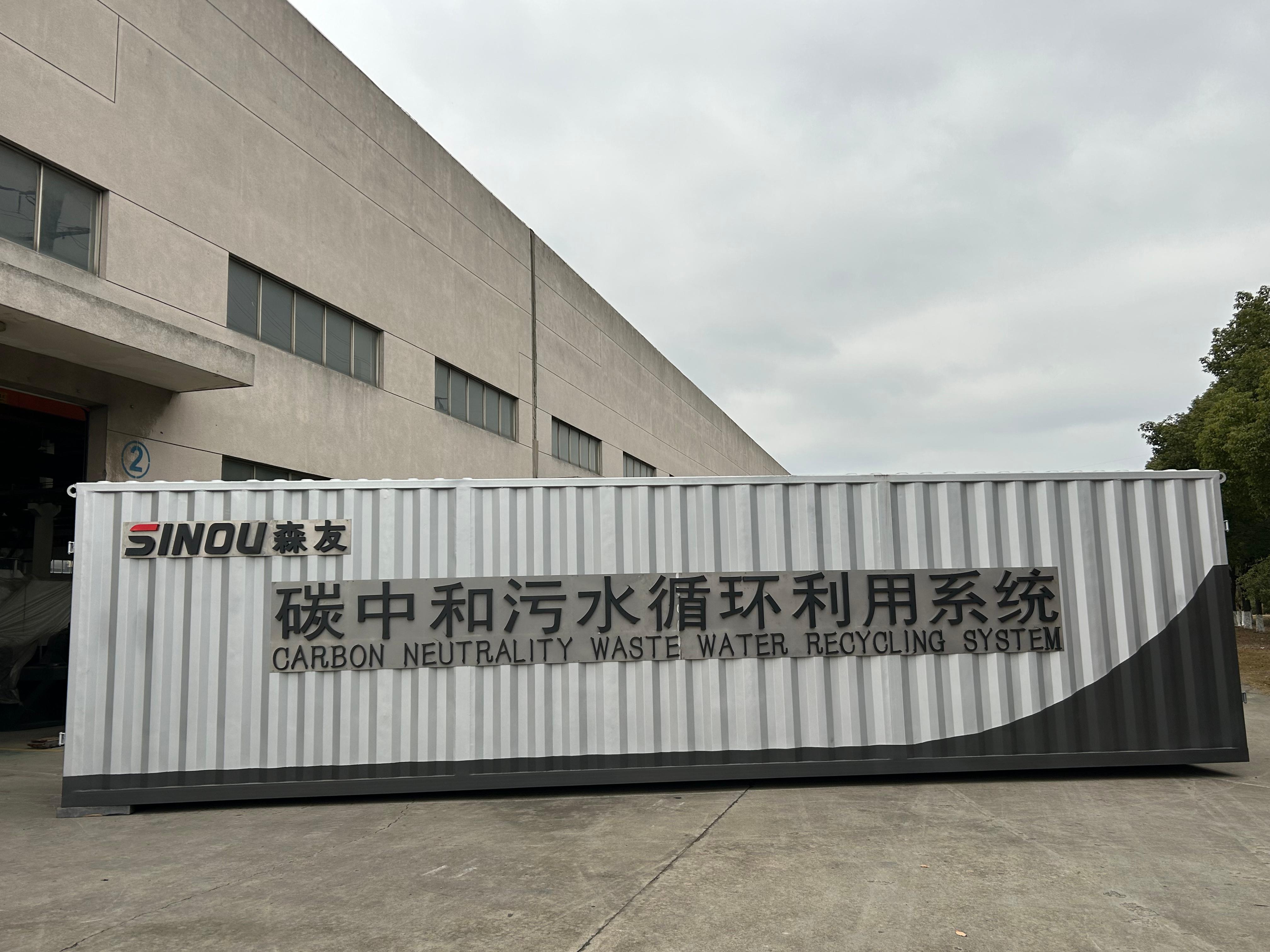
Modular construction flips the script on traditional wastewater treatment plants by assembling systems from prefabricated units that can be configured, expanded, or even relocated as needs shift. Instead of committing to a massive, static facility from day one, communities and industries can start with exactly the capacity they need and add modules over time. This approach cuts initial capital outlay, shrinks construction timelines, and sidesteps the logistical headache of large-scale civil works, all while delivering treatment performance that rivals conventional builds.
Scalability sits at the heart of the modular approach. When a population grows or industrial output ramps up, additional treatment trains simply plug into the existing framework—no major redesign, no prolonged shutdowns. The same flexibility proves invaluable for seasonal operations like food processing or remote mining camps, where demand fluctuates sharply. Because each module operates independently, maintenance or upgrades can zero in on one section without halting the whole plant, keeping compliance and uptime exceptionally high.
Beyond raw expansion capability, modular systems adapt to diverse wastewater profiles and regulatory environments. A brewery facing high organic loads might integrate an anaerobic digestion module for energy recovery, while a coastal community could bolt on advanced nutrient removal to meet stringent discharge limits. This mix-and-match logic not only future-proofs the investment but also encourages incremental innovation—when better membrane or biological treatment technologies emerge, they can be swapped into a single module rather than requiring a plant overhaul. The result is a resilient, cost-efficient infrastructure that evolves alongside the water challenges it’s meant to solve.
FAQ
Stainless steel and ductile iron are popular due to their corrosion resistance and durability in harsh chemical environments. Fiberglass-reinforced plastic is also gaining traction for its lightweight and non-conductive properties.
Modular fabrication allows off-site assembly of standardized components, reducing on-site construction time, labor costs, and weather delays, while ensuring higher quality control.
Orbital welding and TIG are often preferred for stainless steel pipes because they provide precise, consistent welds that minimize contamination and ensure smooth internal surfaces.
Coatings create a barrier against corrosive gases and chemicals, extending equipment life. Epoxy and polyurethane linings are common, offering excellent adhesion and resistance to hydrogen sulfide damage.
Automated plasma cutting and robotic rollers speed up plate forming and welding, improving repeatability and dimensional accuracy while reducing human error.
They integrate sealed covers, vent piping, and biofiltration units from the start, using corrosion-resistant materials to withstand moist, odorous air without degradation.
Non-destructive testing like ultrasonic thickness gauging and hydrostatic pressure tests are standard. Radiographic testing is used for critical welds to detect internal flaws.
Yes, additive manufacturing can produce complex, customized parts such as impellers or diffusers quickly, with reduced material waste, though it's limited to smaller components due to size constraints.
Conclusion
Building a wastewater treatment system that performs efficiently over the long term begins with deliberate choices in materials and design. Corrosion-resistant alloys and engineered polymers are selected for tanks, piping, and internals to withstand aggressive chemical environments, preventing early deterioration that would otherwise lead to costly repairs. Alongside material integrity, the hydraulic profile is carefully modeled—flow paths are smoothed, bottlenecks are eliminated, and head losses are minimized so that water moves through the plant using gravity as much as possible, keeping energy consumption low. These physical foundations are then paired with advanced biological processes, such as membrane bioreactors or moving bed biofilm reactors, which intensify treatment within compact footprints and achieve high removal rates for nutrients and organic pollutants without requiring additional chemicals.
Beyond the core process, the fabrication and operational approach significantly affects long-term reliability. Precision welding, automated quality checks during assembly, and rigorous pressure testing ensure that joints and connections remain leak-free, protecting groundwater and maintaining system efficiency. On the control side, smart sensors and real-time automation adjust aeration rates, chemical dosing, and sludge handling based on live load conditions, which not only stabilizes effluent quality but also trims operating costs. Finally, adopting modular construction methods allows treatment capacity to be added in phases, with factory-built skids and containerized units reducing on-site labor and speeding up deployment. Together, these methods create a robust, adaptable system that can meet tightening regulations while remaining economically viable over its full service life.
Contact Us
Contact Person: HaiYan
Email: [email protected]
Tel/WhatsApp: +86 18957325588
Website: https://www.senyoubeton.com/