

Top High Speed Door Solutions: Boost Efficiency and Safety in Your Facility
2026-07-21
When seconds count and safety is non-negotiable, your facility deserves more than just any door—it needs a high-speed solution that works as hard as you do. From busy warehouses to temperature-controlled environments, slow or unreliable doors can quietly drain productivity and compromise workplace safety. NORTON high-speed doors are engineered to open and close rapidly, withstand demanding cycles, and seal tightly, keeping your operations flowing smoothly while cutting energy costs. But what truly sets the right door apart, and how do you choose one that aligns perfectly with your workflow? In this post, we’ll break down the key features that define top-tier high-speed doors and show you why investing in the right solution is a smart move for both your bottom line and your team’s wellbeing.
Rapid Roll-Up Doors: Accelerating Workflow Without Sacrificing Security
In fast-paced industrial environments, every second counts. Rapid roll-up doors are engineered to open and close in mere moments, dramatically cutting the time equipment and personnel spend waiting at entry points. This quick cycling isn’t just about shaving off a few seconds—it’s about maintaining the tempo of logistics, minimizing air exchange between zones, and keeping production lines humming without interruption. The high-speed operation directly translates into fewer bottlenecks and a more fluid movement of goods, all while the heavy-duty curtain and reinforced guides stand guard against unauthorized access and environmental contaminants.
Security doesn’t take a back seat to speed with these doors. Robust locking mechanisms, impact-resistant materials, and optional access control integrations ensure that accelerated operations never compromise site safety. Unlike traditional overhead doors that lumber open and invite lingering vulnerability, rapid roll-up models close almost as soon as they open, sealing off sensitive areas before an intruder can exploit the gap. For facilities handling valuable inventory or controlled atmospheres, that split-second closure provides continuous protection without the need to slow down daily workflows.
Beyond the mechanics, the design of modern rapid roll-up doors actively supports both pace and protection. Soft-edge safety systems and intelligent sensors detect obstacles and trigger immediate reversal, preventing collisions that could damage goods or injure staff—downtime that no operation can afford. Meanwhile, features like self-repairing curtains after minor impacts and diagnostic feedback loops ensure that the door remains operational and secure over the long haul. By blending swift motion with vigilant safeguarding, these doors become an invisible partner in a facility’s productivity, allowing managers to focus on throughput without waking up at night worrying about breaches.
High-Speed Fabric Doors: Lightweight Design for Food and Pharma Environments
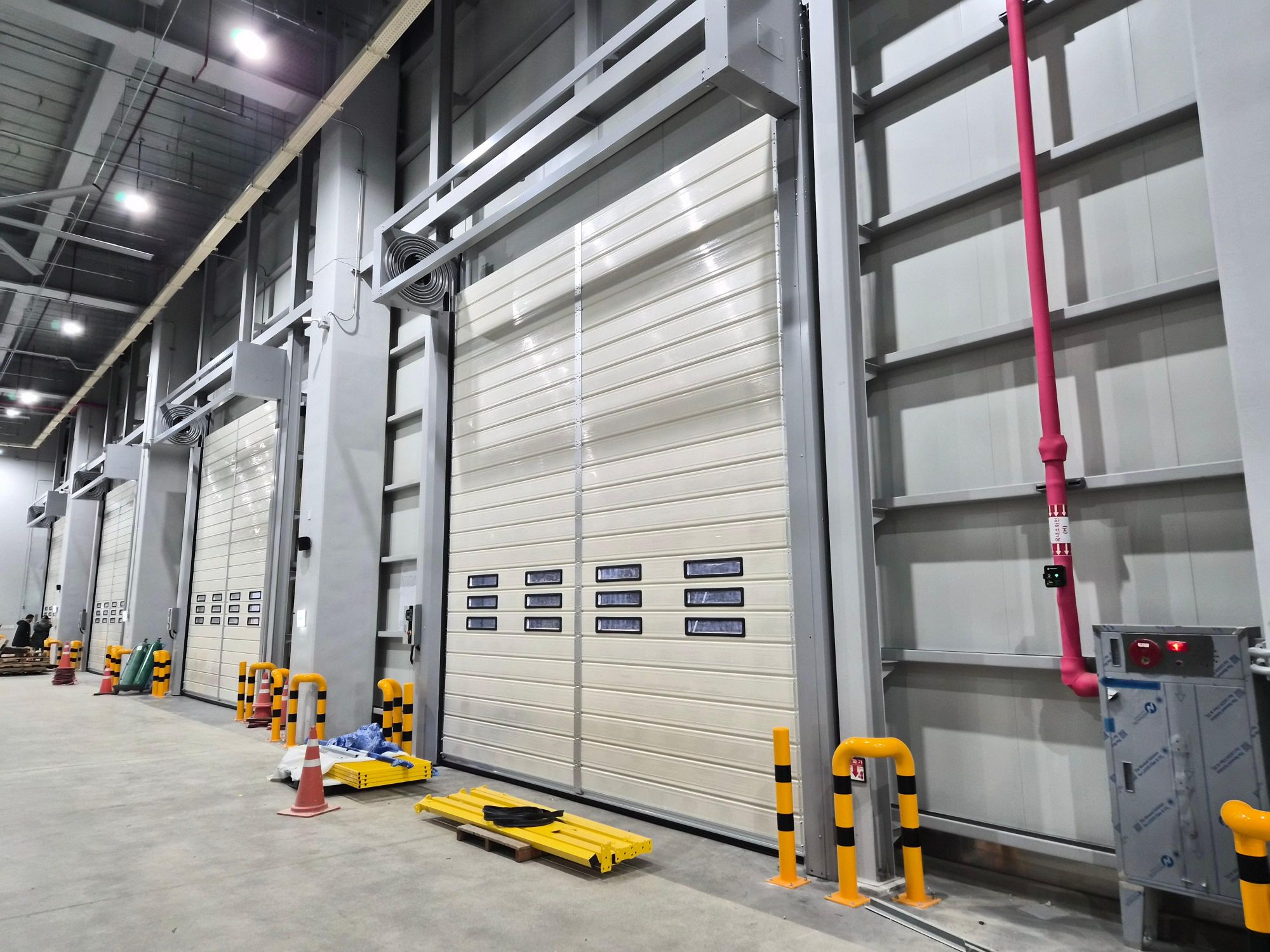
In food and pharmaceutical facilities, every second counts. High-speed fabric doors redefine operational flow by combining swift opening and closing cycles with a remarkably lightweight construction. Unlike traditional metal doors, these fabric-based systems minimize wear on motors and structural components, translating into lower maintenance demands over time. Their rapid action not only accelerates material movement but also helps maintain strict environmental separation between processing zones.
The lightweight nature of the door curtain goes hand in hand with stringent hygiene requirements. Smooth, non-porous fabric surfaces resist microbial growth and are easy to wipe down during sanitation routines. Without heavy metal panels or crevices where contaminants might hide, these doors support cleanroom protocols without adding bulk. Their design also reduces air exchange when opening, which is critical for preserving temperature-controlled areas and preventing cross-contamination.
Beyond function, the emphasis on low mass brings everyday practicality. Installation is simpler, often requiring less structural reinforcement compared to rigid alternatives. The gentle, fabric-on-fabric contact during operation yields quieter performance and a safer environment for staff. When paired with features like self-repairing capabilities after minor impacts, these doors consistently deliver both the speed that high-throughput facilities demand and the hygienic integrity that sensitive products require.
Turbo-Seal Insulated Doors: Slashing Energy Loss in Cold Storage
Cold storage facilities bleed energy through every gap and poorly insulated barrier, but the biggest culprit is often the door. Standard dock doors or roll-ups can’t maintain the tight temperature envelope needed, forcing compressors to cycle relentlessly just to compensate for the constant thermal leaks. Turbo-Seal Insulated Doors change that equation entirely. Their core is built from a high-density, closed-cell foam that delivers an R-value far beyond typical insulated doors, while the perimeter seals create a virtually airtight lock when closed, stopping the outflow of chilled air and the infiltration of warm, moist air in its tracks.
The real-world impact shows up quickly on the power bill. By minimizing the temperature differential that HVAC systems have to fight, these doors can cut thermal transfer by up to 70%, which translates directly into lower kilowatt-hours and a lighter load on cooling equipment. Plant managers often see the savings within the first full month, and since the gasketing system remains resilient through thousands of cycles without deforming, that performance doesn’t gradually degrade the way it does with conventional seals. Less energy means less strain on the grid and a cleaner operational footprint.
Beyond the numbers, there’s a noticeable improvement in inventory stability. Temperature fluctuations that cause frost buildup or thawing cycles are practically eliminated, keeping product quality consistent from receiving to shipping. For operations that store anything from pharmaceuticals to frozen foods, that reliability isn’t just a cost saver—it’s a core part of meeting safety standards and customer expectations, all while dialing back the relentless drain of wasted energy.
Clean-Room Fast-Action Doors: Maintaining Strict Hygiene Standards Effortlessly
In settings where airborne particles pose a risk to both product and personnel, the role of clean-room fast-action doors goes beyond simple access control. Their rapid open-and-close cycles actively limit the exchange of contaminated air between zones, preserving pressure differentials and reducing the load on HVAC filtration systems. This seamless functionality allows teams to move materials and equipment without the delays associated with manual wipe-downs or air showers, effectively turning traffic areas into guarded thresholds rather than vulnerable breaches.
Engineered with smooth, non-porous surfaces and minimal crevices, these doors discourage microbial growth and facilitate easy cleaning with common disinfectants. The absence of complex mechanical parts exposed to the controlled environment further reduces the risk of particulate generation from wear and tear. By integrating sensors that activate only in response to authorized movement, they eliminate unnecessary handling and the transfer of contaminants from gloves or switches, subtly reinforcing aseptic workflows without interrupting daily operations.
Beyond the sterile performance, the design prioritizes energy efficiency and workplace safety. Insulated panels and tight perimeter sealing prevent temperature fluctuations, while soft obstruction detection and low-impact bumpers protect both staff and delicate cargo. Ultimately, fast-action clean-room doors quietly uphold the rigorous standards of modern pharmaceutical, biotech, and electronics production—not by demanding attention, but by reliably delivering hygiene integrity with every quiet, swift transit.
Spiral Track Doors: Space-Saving Speed for High-Traffic Industrial Bays
Industrial facilities with constant forklift traffic need doors that keep pace without becoming a bottleneck. Spiral track doors solve this by rolling up vertically in a tight coil, leaving valuable overhead space completely free. Unlike traditional sectional doors that swing out or slide sideways, these doors vanish upward along a spiraling track, clearing the entire bay opening in seconds. That means fewer collisions, less heat loss, and a workflow that never has to wait for an open door.
The real payoff comes in speed. High-speed spiral doors can open at rates exceeding 60 inches per second, drastically slashing the time bays are exposed. For refrigerated warehouses or cleanrooms, that translates to tighter temperature control and lower energy bills. And because the curtain is made from robust, flexible materials instead of rigid panels, it withstands bumps from vehicles far better—keeping maintenance costs surprisingly low even in round-the-clock operations.
Installation versatility adds another layer of appeal. Spiral track systems don’t need side room for horizontal tracks, making them a natural fit for tight layouts or retrofits where every inch counts. Facility managers often choose them to replace aging roll-up doors, gaining not just speed but also improved insulation and noise reduction. Whether it’s a busy loading dock or a washdown environment, these doors deliver a blend of durability and rapid operation that standard alternatives simply can’t match.
Intelligent Access Systems: Integrating Sensor Technology for Seamless Traffic Control
Modern traffic networks increasingly rely on intelligent access systems that merge cutting-edge sensor technology with real-time data processing to streamline vehicle movement. These setups utilize a blend of inductive loops, infrared beams, radar, and high-resolution cameras to detect approaching vehicles, monitor queue lengths, and assess traffic density without interrupting flow. By embedding such sensors at entry points, intersections, and ramps, the system can dynamically adjust signal timings or grant priority to authorized vehicles, reducing bottlenecks and idle time. The result is a responsive infrastructure that adapts to live conditions rather than relying on fixed schedules, ultimately cutting down emissions and driver frustration.
A key advantage of integrated sensor-driven access lies in its ability to differentiate between various road users—cars, emergency vehicles, public transport, or pedestrians—and allocate right-of-way accordingly. For instance, RFID tags or dedicated short-range communication (DSRC) enable immediate identification of approaching emergency responders, silently triggering green lights along their path while halting cross traffic. Similarly, contactless readers can verify parking credentials or toll payments as vehicles enter restricted zones, eliminating the need for physical barriers and human checks. This layer of intelligence not only speeds up access but also enhances security by logging each entry with minimal disruption to the overall rhythm of the roadway.
Deploying such systems requires careful calibration of sensor fusion algorithms to filter out noise caused by weather, obstructions, or overlapping signals. Advanced setups combine visual data with radar or LiDAR to maintain accuracy in rain, fog, or heavy snowfall, ensuring consistent performance. Beyond the hardware, edge computing units process information locally to deliver split-second decisions, while a centralized platform aggregates long-term trends for urban planners. This dual-layered approach keeps everyday operations nimble and supports data-driven adjustments to traffic patterns during peak hours or special events, making cities safer and more efficient without constant manual oversight or expensive roadway expansions.
FAQ
High speed doors are rapid-opening barriers designed for high-traffic areas. They improve workflow by minimizing air exchange and temperature loss, which boosts energy efficiency, while also enhancing safety with quick closure to prevent accidents.
By opening and closing in seconds, these doors reduce wait times for forklifts and personnel, streamline logistics, and keep production zones at stable temperatures, cutting down on HVAC energy waste.
Key safety features include advanced motion sensors, breakaway bottom edges that reset on impact, and light curtains to detect obstructions. These prevent collisions and pinch injuries, making them safer than standard overhead doors.
Absolutely. Many models are built with corrosion-resistant materials, heavy-duty seals, and insulated panels. They maintain their speed and seal even in sub-zero conditions or high-pressure washdowns, ensuring durability and hygiene compliance.
Regular inspections of springs, guides, and sensors are essential. Self-monitoring systems can alert you to wear, but typically you'll need to clean tracks, check tension, and ensure safety devices are functional. With proper care, they last for years with minimal downtime.
They minimize air infiltration between zones, reducing heating and cooling loads. This lowers energy consumption and carbon footprint. Their fast cycle also means less time open, which directly saves power and supports green building certifications.
Yes, manufacturers offer tailor-made options including non-standard sizes, vision panels, and special activation methods. Whether you have a narrow passage or hazardous environment, solutions can be engineered to fit without compromising speed or safety.
Often within two years, due to energy savings, reduced product spoilage, and improved traffic flow. Less obvious benefits like fewer repairs and less facility downtime also contribute to a rapid return on investment.
Conclusion
Modern high-speed door solutions transform industrial facilities by merging rapid operation with robust security and energy efficiency. Rapid roll-up doors whip open in seconds to keep logistics flowing, while high-speed fabric doors, with their lightweight and hygienic surfaces, cater perfectly to food and pharmaceutical settings where contamination risks must be minimized. For temperature-controlled areas, turbo-seal insulated models dramatically cut thermal loss, ensuring cold storage stays efficient. Meanwhile, clean-room fast-action doors help maintain stringent sterility without slowing down personnel or material movement, proving that speed and safety can go hand in hand.
Beyond basic function, smart integration elevates traffic management. Spiral track doors save valuable space in busy bays by spiraling up compactly, ideal for high-cycle entrances. Intelligent access systems tie it all together, using advanced sensors to orchestrate seamless, safe movement for forklifts and workers, while automatically excluding unauthorized access. By combining durable materials, thoughtful engineering, and sensor-driven automation, these door solutions not only accelerate workflow but fortify facility safety and slash long-term operational costs, making them a smart investment for any forward-thinking operation.
Contact Us
Contact Person: Cyril He
Email: [email protected]
Tel/WhatsApp: 8613969697307
Website: https://cqyqgd.en.alibaba.com/