

Speaker Magnet Factory: Inside Precision Manufacturing for Superior Sound
2026-08-28
Every great speaker starts with a hidden hero: the magnet. At DAWA, the factory floor isn't just about metal and machinery—it's where precision meets passion to shape sound you can feel. From raw alloy to finely tuned magnetic fields, each step is engineered to push audio performance beyond expectations. Curious what it takes to turn ordinary drivers into extraordinary acoustic experiences? Step inside, and let's explore the craftsmanship behind superior sound.
The Grain Structure Secret Behind a Magnet's Musicality
The magnetic alloy inside a guitar pickup or loudspeaker does far more than simply “grab” the string’s vibration. Its internal architecture—the size, shape, and orientation of microscopic grains—sets the rules for how magnetic flux spreads from pole piece to coil. In cast Alnico, slow cooling produces relatively large, irregular grains with wandering domain walls. That graininess doesn’t create a perfectly smooth magnetic field; instead, it imposes a kind of micro-variation across the sensing area. When a string moves through that uneven field, the resulting voltage isn’t a mathematically clean sine wave but one sprinkled with tiny amplitude and phase shifts. Those shifts are interpreted by the ear as warmth, bloom, and a touch of organic compression.
Sintered neodymium, on the other hand, starts as a fine powder pressed and heated just enough to fuse. The result is a dense matrix of tiny grains, each separated by a distinct grain boundary. Those boundaries act as pinning sites for magnetic domains, making the magnet respond more uniformly under small field changes. For a pickup designer, that means a stronger, more focused magnetic window—great for clarity and punch, but often missing the softer nonlinearities that make an old Alnico pickup feel “alive.” The secret isn’t strength alone; it’s the microscopic granular landscape that shapes how the magnet argues with the string’s motion.
Some of the most coveted musical magnets sit in a middle zone: grain structures neither too coarse nor too fine, processed in ways that leave just enough domain-wall friction. When a player digs in harder, the magnetic response compresses slightly—not because of electronics, but because the grain boundaries resist rapid flux changes in a nonlinear way. This mechanical-magnetic interplay adds sustain and a singing quality that can’t be duplicated by simply boosting treble or gain. In the end, “musicality” in a magnet often comes down to the disordered beauty of its crystalline grains, quietly coloring every note before it ever reaches an amplifier.
Why Tight Tolerances in Machining Translate to Tighter Bass
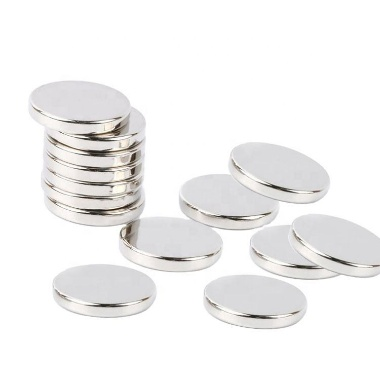
Low-frequency sound lives and dies by air pressure. When a woofer cone moves, it compresses and rarefies the air inside the cabinet. Any microscopic gap between panels, around the driver flange, or at the port joint becomes a leak path that releases that pressure before it can reinforce the cone's motion. Machining with tight tolerances ensures mating surfaces are flat and flush, so the box behaves like a true acoustic spring. The result is bass that hits with immediate attack instead of sounding soft or bloated.
Inside the driver itself, the voice coil sits in a magnetic gap only a few thousandths of an inch wide. If the coil former, spider landing, and pole piece are machined sloppily, the coil can rub or tilt during long excursions, generating distortion and limiting how far the cone can travel cleanly. Tight tolerances keep that gap uniform around the entire circumference, letting the motor push the cone farther without mechanical noise. That translates into lower, louder bass without the gritty edge that cheap drivers often exhibit.
Port tuning is another place where precision pays off. A bass reflex enclosure relies on a port with exact length and cross-sectional area to create a Helmholtz resonance at a specific frequency. Even a half-millimeter variation in port diameter or a slightly undersized flange recess can shift that tuning by several hertz, leaving a noticeable dip or peak in the response. When every part is machined to the same tight blueprint, the port does its job predictably, reinforcing the low end exactly where the design intended. The final payoff is bass that feels tight, controlled, and physically present rather than muddy or one-note.
From Powder to Power: The Sintering Journey That Defines Clarity
Every transparent ceramic begins as a loose assembly of fine particles, each grain carrying its own microscopic imperfections. The sintering process transforms this fragile powder into a dense, light-transmitting solid by applying carefully controlled heat and pressure. It’s not merely about melting—sintering coaxes atoms to migrate across grain boundaries, eliminating pores and aligning crystalline structures until the material achieves optical clarity. The result is a body that bends light with precision while retaining the hardness and thermal resilience of its ceramic nature.
What makes sintering so decisive is the delicate balance between temperature, time, and atmosphere. Too little energy leaves residual voids that scatter light and cloud the material; too much triggers abnormal grain growth, creating internal stresses that warp or crack the piece. Modern kilns track thermal profiles to within a few degrees, holding the ceramic at a narrow plateau where diffusion outpaces grain coarsening. This is where the “power” enters—not from raw heat, but from the mastery of that narrow window that turns powder into a flawless, glass-like medium.
The clarity achieved through sintering is not accidental. It is engineered through repeated cycles of pressing, pre-firing, and atmosphere control, often under vacuum or hydrogen gas to purge trapped oxygen. Each step removes another source of light loss until the final part transmits with near-theoretical transparency. For applications where precision optics meet brutal environments—think armored visors, laser hosts, or high-intensity lamp envelopes—sintered ceramics offer a unique promise: the purity of glass without its fragility, and the strength of a crystal grown from nothing but powder and intention.
The Factory Floor Where Each Magnet Is Tuned by Ear and Laser
The tuning bench is a study in contradiction: a technician cups a magnet in one palm, taps it with a worn brass rod, and leans into the ring like a piano tuner listening for a sour fifth. Next to him, a laser interferometer maps the same magnet's resonant decay in nanometers, its readout flickering across a screen nobody watches. The two methods—one inherited from old transducer shops, the other from metrology labs—have to agree before a magnet leaves the floor.
Each magnet behaves a little differently. Small voids in the ferrite, a slightly off-center pole piece, a coil wound half a turn too tight—these defects don't show up in a spec sheet, but they change the way a magnet rings. The ear catches a dull thump where there should be a clear, bell-like sustain. The laser confirms it with a frequency spike at 3.2 kHz instead of 3.8. Workers learn to hear that difference long before the software flags it.
It's slow work, deliberately so. A shift might tune forty magnets, maybe fewer if the batch runs brittle. But the reject bin stays nearly empty, and the ones that pass carry a signature: a small handwritten frequency on the magnet's base, matched to a laser log entry. Buyers don't ask for that mark. It's just the floor's way of saying the magnet was listened to, not just measured.
How Magnetic Field Consistency Prevents That Muddy Midrange
A dynamic driver only sounds as clean as the region where the voice coil actually travels. In many midrange units, the magnetic flux density is not uniform across the gap or around its circumference, so the force factor shifts as soon as the coil leaves the rest position. That variation turns a simple sine wave into a moving target, and the resulting harmonic spray lands right in the vocal and instrument range where the ear is most unforgiving. The first sign is rarely obvious distortion—it's a loss of separation, a smearing of note attacks, and a vague thickness that gets blamed on the recording.
Consistency in the magnetic circuit changes that behavior before it reaches the cone. Tightly toleranced gap geometry, symmetrical pole plates, and conductive shorting rings keep eddy currents and flux modulation from tugging at the voice coil's motion. The result is a flatter BL curve across the usable stroke, so a midrange note keeps the same acceleration profile whether it's played softly or pushed hard. Low-level information stops being buried under a wash of intermodulation products.
What you hear downstream is not a boosted presence region or a synthetic "detail" filter. It is simply the original transient edges returning, with less overlap between vocals, guitars, and keyboards. When the magnetic field does not change its grip on the coil from one millisecond to the next, the midrange no longer has to fight its own motor for clarity.
Small Batches, Big Sound: The Craft Approach to Speaker Magnet Production
Speaker magnets aren't stamped out by the millions on a soulless assembly line here. Instead, each batch is mixed, pressed, and sintered in quantities small enough to keep a close eye on every variable—grain size, alignment, density. It's a slower path, but it lets the magnetic field take shape with a kind of intentionality you can hear in the low end.
The craft shows up in how the raw material is handled. Before the powder ever meets a die, it's aged and blended the way a machinist might season a cast iron surface—patiently, with an ear for the subtle shifts. When the magnets finally come out of the furnace, they're not just tested for gauss readings; they're tapped, listened to, and matched in pairs that share the same voice. That matching step is where the small-batch advantage really bites: a woofer and tweeter magnet pulled from the same heat cycle don't fight each other, they lock in.
There's no rush to scale up, because scaling up would mean letting the tolerances drift. A hand-checked magnet doesn't have a spec sheet full of impressive numbers and a personality like wet cardboard. It has a slight asymmetry, a fingerprint from the pressing, that ends up shaping transient response in a way no mass-produced slug can copy. Big sound doesn't come from bigger factories; it comes from paying attention when nobody's watching the clock.
FAQ
We typically work within a few microns on critical faces. That level of control keeps the magnetic gap uniform, which directly reduces distortion and stabilizes the voice coil travel.
Mostly ferrite and neodymium, with some alnico runs for guitar drivers. Ferrite gives a warmer, forgiving midrange, neodymium offers tighter bass in compact designs, and alnico brings that vintage compression many musicians chase.
We use a custom fixture with multi-pole magnetizing heads and a slow ramp-up sequence. After charging, every unit gets scanned on a Helmholtz coil rig to map the flux density, and any asymmetry beyond 1.5% is rejected or reconditioned.
It comes down to process discipline. We control raw powder particle size, pressing density, sintering curves, and final grinding under the same roof. That repeatability lets us hit the same B-H curve from batch to batch, which commodity shops rarely guarantee.
We build reference drivers with each production lot and run frequency response, impedance, and Klippel distortion sweeps. If a magnet shifts the resonant frequency or raises third-harmonic distortion beyond our spec, the whole lot is quarantined.
We switched to a CNC surface grinder with in-process gauging, so we no longer rely on post-grind sampling. For corrosion resistance, we moved from wet epoxy to a thin Parylene coating, which adds only a few microns and doesn’t alter the air gap.
Neodymium circuits often use very small gaps and thin top plates, so a slight oversize or taper can pinch the coil or skew the flux. Ferrite assemblies have larger clearances, so they tolerate a bit more variation without audible penalties.
We do both, but custom work is about 40% of our output. Clients send their voice coil and suspension specs, and we simulate the magnetic circuit first, then machine prototypes within two weeks. That often saves them from over-specifying a magnet and paying for unused field strength.
Conclusion
Walking through a speaker magnet factory, you quickly realize that the difference between a mediocre driver and a revealing one starts long before the coil is wound. The grain structure in the magnet material isn't just metallurgical trivia—it shapes how the magnetic field breathes under dynamic load, which directly affects a speaker's sense of musical flow. Sintering the raw powder into a solid magnet is where clarity is won or lost; slight variations in temperature or pressure during that journey from powder to power can leave the midrange sounding congested. On the machining floor, tolerances measured in microns aren't about bragging rights. A magnet that sits a hair off-center or has an uneven face will modulate the voice coil's travel unevenly, and that shows up as flabby, imprecise bass. The best factories treat these tolerances as non-negotiable, understanding that a rigid, consistent gap is what lets low frequencies hit with snap and texture.
Then there's the final stage, which feels less like mass production and more like a workshop. Each batch of magnets is checked not only with laser alignment tools but also by ear—technicians listen to reference drivers and make micro adjustments to the magnetizer or the pole piece geometry. This level of attention keeps the magnetic field uniform across the entire gap, so the midrange doesn't smear into a muddy wash when complex passages get busy. Small batches are the norm, because scaling up often means sacrificing the repeatable field strength that high-end drivers demand. In the end, a speaker magnet isn't just a lump of metal; it's a precision-tuned component where grain structure, sintering discipline, machining accuracy, and final listening checks all converge to produce superior sound.
Contact Us
Contact Person: Kelvin Lo
Email: [email protected]
Tel/WhatsApp: 0769-88561131
Website: https://dawamagnetic.com/