

Rubber Kneader Manufacturer: Key Factors to Evaluate Before You Buy
2026-08-15
Selecting a rubber kneader manufacturer isn't just about comparing specs—it's about avoiding costly downtime and inconsistent mixing. Most buyers realize too late that a low upfront price often hides weak after-sales support or poor build quality. At SFC, we've spent years helping production managers separate genuine performance from marketing hype. In this guide, we break down the practical factors you must evaluate before committing to a purchase, so your next kneader works as hard as you do.
Beyond the Spec Sheet: Testing Mixing Quality Before You Commit
A spec sheet can list motor power and RPM, but it will never tell you if the impeller design actually disperses pigment without dead zones or if the blade snaps back when you accidentally drop a rubber glove into the batch. Before you commit, run a real trial with the ingredients you use daily. Borrow the mixer, rent it, or send a 5-gallon bucket of your product to the manufacturer and ask for a recorded demo. Watch what happens at the top of the vessel after 30 seconds, not just at the bottom after five minutes. That early flow pattern is where clumps hide.
Ask the operator, not the sales rep, what wears out first. Find someone who has run the machine for two years and ask about changeover time, bearing noise, and whether the speed dial drifts mid-cycle. A mixer that meets all the published tolerances but is a pain to clean or can't hold a setting becomes a slow tax on every batch. The only way to catch that is to put it to work under your conditions, with your people, before the purchase order goes out.
Rotor and Chamber Geometry: Matching Design to Your Rubber Compound
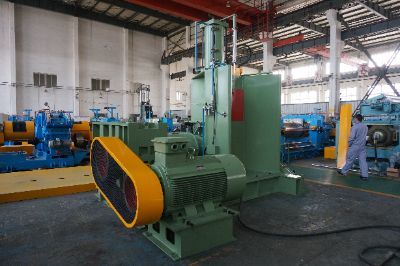
The real work happens in the narrow gap between rotor tip and chamber wall. That clearance largely controls shear rate and peak temperature inside the mix. For high-viscosity compounds or heavily filled systems—think carbon black or silica at high loadings—you usually want a tighter tip clearance and a rotor profile that forces material through the high-shear zone repeatedly. The payoff is faster filler dispersion, but the trade-off is heat. If the compound is scorch-sensitive or contains a fast cure system, that same aggressive geometry can kick temperatures past the safe limit before mixing is complete.
Tangential and intermeshing rotor designs don’t just look different; they create very different mixing behaviors. Tangential rotors rely more on friction and pressure to break down agglomerates, which helps with high-viscosity or hard-to-disperse recipes. Intermeshing rotors, on the other hand, generate more even shear and better temperature control because the material is transferred between the two rotors in a more controlled pattern. That often suits softer stocks, peroxide-cured compounds, and any recipe where batch-to-batch consistency matters more than maximum shear intensity.
The chamber shape and fill factor are just as important as the rotor geometry. Overfilling causes poor circulation and hot spots, while underfilling leaves dead zones where compound sits too long. A practical approach is to match the rotor’s flight depth and helix angle to the compound’s Mooney viscosity and filler type, then fine-tune the fill factor and ram pressure on the mixing line. Small changes in wing overlap or chamber radius can shift the balance between dispersive and distributive mixing enough to matter, especially when scaling a formula from lab to production.
Build Quality Clues: Weld Integrity, Shaft Alignment, and Surface Finish
A quick visual scan of a weld bead often reveals more than people expect. Look for undercut along the toe, tiny craters at the stop point, or a rough, uneven cap profile. These aren't just cosmetic flaws; they frequently point to inconsistent heat input or poor filler metal control. If the joint is load-bearing, even a 2mm lack of fusion can turn into a crack initiation site under cyclic stress. Dye penetrant testing on a cleaned surface is the cheapest way to catch surface-breaking defects, while ultrasonic testing will flag buried porosity that a visual check misses.
Shaft alignment gets blamed for a lot of vibration problems, and rightly so. Even a fraction of a degree of angular misalignment between a motor and pump can generate axial thrust forces that chew up bearings within months. The old straightedge-and-feeler-gauge method works for rough checks, but a laser alignment tool will show you both offset and angular error simultaneously. One trick not everyone remembers: check alignment again after the unit reaches operating temperature. Thermal growth of the casing can shift the shaft centerline by 0.1mm or more, which is enough to push a marginal setup into failure territory.
Surface finish is often treated as a purely aesthetic spec, but it has real functional consequences. A turned shaft with a roughness average above Ra 3.2 will show visible tool marks that act as micro stress risers, especially near a step or keyway. For sealing surfaces, anything rougher than Ra 0.8 will chew up lip seals quickly. If you don't have a profilometer handy, a simple comparison gauge with tactile reference patches gets you in the ballpark. Also pay attention to the lay direction - spiral feed marks from a lathe can pump oil along the shaft, while a ground finish with a crosshatch pattern retains lubricant better for sliding contact.
After-Sales Reality: Response Times and Spare Parts Availability
A service hotline that promises a four-hour response sounds reassuring until a critical sensor fails on a Friday afternoon. In practice, the first available technician often arrives the next morning, and if the fault requires diagnosis beyond a routine check, another day slips away. The gap between the advertised response window and the actual visit is rarely explained by incompetence; it usually comes down to how many qualified engineers are covering a given region and how many machines are already waiting ahead of you.
Spare parts add another layer of waiting. Common consumables may sit on a local shelf, but anything beyond filters, belts, or standard seals tends to be ordered from a regional hub or even the factory abroad. A failed control board or a specialized drive motor can mean two weeks of downtime while the part clears customs and makes its way through a courier network. Some manufacturers offer expedited shipping for a premium, but that only shortens the wait, it does not eliminate it.
The real test of after-sales support is not the glossy brochure, but how the service network behaves when several machines go down at once. During peak production periods, response times stretch and spare parts become scarce because every operator is chasing the same limited stock. Third-party service providers sometimes fill the gap with faster local response and salvaged components, yet their involvement can complicate warranty claims. Understanding this reality before purchase is more useful than any spec sheet.
The True Cost of Ownership: Energy Draw and Maintenance Intervals
Sticker price rarely tells the whole story. A machine that runs several hours a day can burn through a surprising amount of electricity, and even a modest difference in efficiency adds up fast over months and years. On top of that, frequent maintenance means more than just replacing filters or belts—it also translates into downtime and labor costs that never show up on the initial invoice.
When you line up two models side by side, the cheaper option can quietly become the expensive one. A unit with longer service intervals and lower idle power draw may cost more upfront, but the gap often closes within the first couple of years. After that, the savings keep compounding without any extra effort.
The real measure of ownership cost is how much money leaves your pocket after the purchase. Pull the recommended maintenance schedule and check the actual power consumption at the wall, then do the math over a realistic lifespan. That combined figure is far more useful than any price tag in the showroom.
Custom Engineering: Can They Adapt the Kneader to Your Process?
Most kneader suppliers offer a standard lineup, but the real question is whether they're willing to dig into your process parameters and build the machine around them. It's not just about swapping a motor or changing the discharge valve. True custom engineering means rethinking the blade geometry, the clearance between the paddles and the barrel, the metallurgy of the wetted parts, and even the way the heating or cooling is zoned. If a manufacturer starts by asking about your material's viscosity curve, your batch time targets, and how you handle cleaning between runs, that's a good sign they can actually adapt the kneader instead of just trying to fit your process into an off-the-shelf design.
What separates a genuine custom build from a cosmetic tweak often shows up in the details. For one client, we had to redesign the discharge screw because their paste was so sticky that standard clearance would have caused material to build up and degrade. For another, the entire jacketing system had to be repositioned so the heat transfer matched the shear profile of the mixing blades. These aren't exotic requests—they're just what happens when you treat the kneader as a tool that serves the process, not the other way around. If the engineering team can walk through those scenarios with you and point to past modifications, you're likely dealing with someone who can adapt the machine to what you actually need.
Ask about the limits of their customization before you commit. Can they change the blade speed range? Will they run a mixing simulation or a pilot test on your material before finalizing the design? Do they offer alternative seal types—mechanical, stuffing box, or gas-purged—for your specific pressure and temperature conditions? The answers will tell you whether their custom engineering is real or just a line in a brochure. A good supplier won't hesitate to show you drawings of previous one-off machines or connect you with an engineer who can talk torque, residence time distribution, and wear protection, just to name a few.
FAQ
Look beyond the spec sheet. A strong manufacturer will invite you to run a trial batch with your own compound, walk you through their rotor geometry choices, and explain how their temperature control system behaves under sustained load. If they hesitate on any of these, keep looking.
Rubber mixing is not a one-size-fits-all process. A manufacturer that has successfully handled high-viscosity silicone or carbon-black-filled compounds will understand the torque curves, cooling demands, and wear points that a general-purpose equipment builder might miss. Ask for references from customers running similar materials.
Expect more than a phone number. You want a manufacturer with a documented spare parts inventory, remote diagnostics capability, and service engineers who can be on-site within a reasonable window. Also check whether they provide operator training and mixing process consulting after installation.
Ask for their inspection reports on critical components like rotors, mixing chamber walls, and gearboxes. A serious manufacturer will share material certifications, heat treatment records, and dimensional inspection data. If all you get is a glossy brochure, that is a warning sign.
If your production involves unusual fillers, high filler loadings, or strict temperature limits, customization usually pays for itself through better dispersion and fewer rejected batches. Standard models work fine for simple compounds, but pushing a standard machine beyond its design envelope often leads to premature wear.
Ask how the rotor geometry affects shear rate and distributive mixing. Request a comparison of mixing curves for your specific compound. A knowledgeable manufacturer will talk about intermeshing versus tangential rotors, cooling channel placement, and wear-resistant coatings rather than just quoting horsepower.
Request a load profile or specific energy consumption data for a compound similar to yours. Compare their numbers against your current mixing process. Honest manufacturers will provide a range rather than a single idealized figure, and they will explain how peak loads during ram pressure affect energy use.
The obvious ones are spare parts and downtime. Less obvious costs include longer mixing cycles, inconsistent batch quality, and rework due to poor temperature control. Over a five-year period, a cheaper machine with mediocre dispersion can cost more in raw material waste than the price difference.
Conclusion
Evaluating a rubber kneader manufacturer goes far beyond comparing technical data sheets. Before committing, ask for a trial mixing run with your actual compound. Pay attention to dispersion quality, temperature control, and batch-to-batch consistency—these reveal more than any brochure. The rotor and chamber geometry must align with your compound's shear sensitivity, filler loading, and viscosity. A design that works for soft masterbatch may tear or overheat a stiff, high-durometer stock. Look closely at build quality: clean weld seams, proper shaft alignment, and a polished surface finish on rotors and chamber walls. Poor welds or misalignment lead to uneven clearances, material hang-up, and premature wear.
After-sales support often decides the real cost of ownership. Check the manufacturer's typical response time and whether they keep critical spare parts like rotors, bearings, seals, and jackets in stock. A kneader that sits idle for weeks waiting on a seal wipes out any upfront savings. Ask about energy draw under full load and recommended maintenance intervals for gearbox oil, bearing lubrication, and seal replacement. If your process is not standard, dig into custom engineering capability. Can the manufacturer modify rotor profiles, add side feed ports, or adjust temperature control zones to fit your line? A supplier that forces you to change your recipe instead of adapting the machine will cost you far more in the long run.
Contact Us
Contact Person: Chen Zhengwei
Email: [email protected]
Tel/WhatsApp: +86-13963975727
Website: https://www.sfcrubbermachine.com