

Recloser Exporter Insights for Modern Power Distribution Systems
2026-11-02
Grid reliability has never been more demanding, yet aging infrastructure and rising outage costs continue to challenge utilities worldwide. Reclosers—the unsung heroes of fault isolation and service restoration—now carry far greater weight than their compact size suggests. For engineers and procurement teams navigating the modern power distribution landscape, understanding what truly separates a dependable recloser exporter from a risky one is no longer optional. In this post, we strip away the spec-sheet noise and share field-driven insights into what makes a recloser solution fit for today's smart grid. Along the way, you'll see why Deepwill has become a name worth watching when every millisecond of outage time counts against your bottom line.
Why Recloser Exporters Are Rethinking Grid Resilience
The old playbook for recloser manufacturing assumed that reliability came mostly from mechanical endurance and faster trip curves. Exporters are now seeing that assumption crack under the weight of real grid stress. Voltage sags from intermittent renewables, bidirectional fault currents from distributed generation, and unpredictable load swings in rapidly electrifying regions have pushed traditional auto-reclosing logic past its comfort zone. Instead of selling the same hardware with minor firmware tweaks, forward-looking suppliers are re-examining how these devices communicate, self-diagnose, and cooperate with other protection assets across a feeder.
A key shift is the move away from standalone performance metrics toward system-level resilience. That means designing reclosers that can hold off on a trip long enough for a downstream fuse to clear a temporary fault, or that can coordinate with grid-edge storage to ride through a voltage dip without dropping critical laterals. Exporters who once competed on interrupting ratings and contact wear are now differentiating through adaptive logic, remote parameter updates, and the ability to ingest substation-level data for real-time decision making. The focus has moved from preventing damage to the recloser itself to preserving service continuity for the entire feeder segment.
This rethinking also reflects a pragmatic response to supply chain volatility and field service constraints. Utilities in emerging markets often lack the specialized crews to recalibrate protection settings after every network change. Exporters are therefore baking in more autonomy: self-tuning sensitivity, automatic event reporting, and modular firmware that can be adjusted without a laptop on-site. Rather than shipping a box that simply opens on fault current, they are delivering a node that participates in the broader resilience of the grid, one that learns from local conditions and communicates its health before a failure becomes an outage.
The Rise of Solid-State Reclosers in Modern Distribution
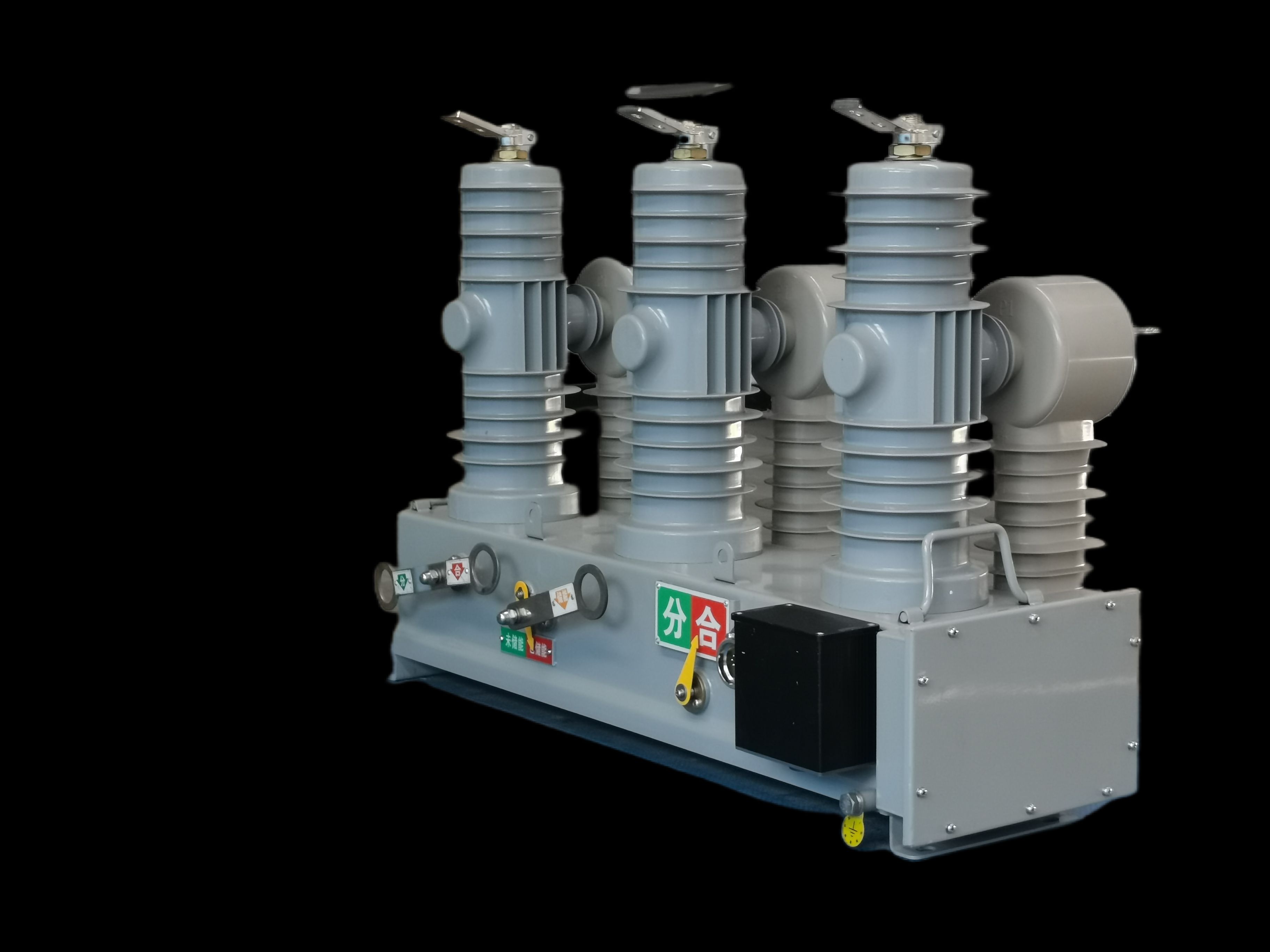
Utilities have long relied on conventional reclosers with mechanical actuators and oil or vacuum interrupters to clear temporary faults and restore service automatically. But as distribution grids absorb more distributed generation, electric vehicle charging, and sensitive electronic loads, the limitations of those electromechanical designs become harder to ignore. Solid-state reclosers replace moving contacts with power semiconductors, eliminating arc flash, contact wear, and the need for regular maintenance cycles. The result is a device that can interrupt fault current in microseconds rather than milliseconds, often before the current reaches its first peak.
What sets modern solid-state reclosers apart is not just speed, but the way they change how utilities think about protection coordination. Because there is no mechanical inertia, the recloser can be programmed for very short dead times and multiple fast trip-reclose sequences without stressing components. This allows distribution engineers to ride through transient events that would have caused a conventional recloser to lock out, keeping more customers online during storms or vegetation contact. At the same time, the semiconductor-based switching path enables precise current limiting and inrush control, which helps avoid nuisance trips when large transformers or capacitor banks energize.
Adoption has been gradual but steady, driven by falling costs of silicon carbide and improvements in thermal management that make solid-state designs practical at medium-voltage levels. Field pilots in North America and Europe have shown that the reclosers can handle repeated fault duties without degradation, and their compact footprint suits pad-mounted and underground applications where space is tight. While initial capital cost remains higher than conventional equivalents, utilities are beginning to weigh that against reduced maintenance, longer asset life, and the ability to maintain power quality for digitally dependent customers.
What Overseas Buyers Really Want from Recloser Suppliers
Overseas buyers rarely fixate on headline specifications alone. What they scrutinize most is whether a supplier can keep delivery timelines stable after the order is placed. Too many projects stall because the initial quotation promises a short lead time, but later production slips week after week, or the test certificates provided do not match the units actually shipped. Buyers therefore look for verifiable export records, third-party type test reports, and a clear manufacturing schedule before they commit to a purchase.
Local support matters just as much as the recloser itself. Many utilities require the device to integrate with existing SCADA or distribution automation platforms, and if a supplier cannot provide detailed communication protocol documents or offer remote debugging assistance, overseas buyers quickly move on. Spare parts availability and realistic field service response times often outweigh minor price differences in the final decision.
Small logistical details also shape trust. Buyers appreciate suppliers who proactively flag issues like ocean freight packaging, moisture protection, and the exact set of documents needed for customs clearance at the destination port. A supplier that raises these risks early and suggests practical solutions will often retain long-term customers more effectively than one that only competes on the lowest quote.
Mapping the Fastest-Growing Regions for Recloser Exports
Demand for reclosers is moving unevenly across global markets, with growth no longer dominated by traditional industrialized buyers. Utilities in Southeast Asia and East Africa are expanding medium-voltage distribution into peri-urban and rural areas, where overhead lines suffer frequent transient faults. This has made single-phase and three-phase reclosers a practical alternative to building redundant feeder routes. Export data from the past three years shows a clear shift toward Indonesia, Vietnam, Kenya, and Tanzania, where grid reliability targets and donor-backed rural electrification programs are pushing up order volumes.
Latin America presents a second cluster of fast growth, though driven by different pressures. In Brazil, Chile, and Colombia, aging substations and rising penetration of distributed solar are forcing utilities to add reclosers at points where bidirectional flows create protection blind spots. Mexico’s northern industrial corridors are another bright spot, as manufacturers and logistics parks demand fewer outage minutes. Shipment records indicate that compact, pole-mounted reclosers with vacuum interrupters now account for the majority of new orders in these markets, replacing older oil-filled units.
The Middle East and parts of Central Asia are also emerging, but with a focus on grid hardening rather than expansion. Saudi Arabia, the UAE, and Uzbekistan are retrofitting existing feeders with smart reclosers that support remote fault isolation and automatic restoration. This upgrade cycle is shorter than greenfield demand but offers higher margins and recurring software service revenue. Exporters that map these regional drivers separately—rural access, renewable integration, and reliability retrofits—are better positioned to allocate inventory and local technical support where growth is most durable.
How Digital Monitoring Is Changing Recloser Maintenance
For years, recloser upkeep meant sending a crew out on a fixed schedule, often checking components that were still perfectly fine while real problems hid between inspections. Digital monitoring flips that approach by streaming operational data straight from the field. Voltage levels, trip counts, contact wear, and even battery health now arrive in real time, so maintenance teams see exactly what's happening without rolling a truck.
The shift isn't just about more data—it's about knowing which numbers actually matter. Instead of replacing parts based on a generic lifespan, utilities can track subtle changes in trip timing or motor current that signal trouble weeks before a failure. That means fewer unplanned outages and fewer unnecessary replacements, which adds up quickly across hundreds of reclosers.
Remote access also changes the nature of the work itself. A technician can pull event logs or adjust settings from a laptop instead of suiting up for a pole climb. When a crew does go out, they already know what they're fixing. The result is less guesswork, shorter repair windows, and a maintenance budget that goes toward actual problems rather than calendar-driven routines.
Overcoming Logistics Hurdles in Recloser Distribution
Getting reclosers from factory to field is rarely a straight line. The devices are heavy, often exceeding 500 pounds, and their fragile control electronics demand careful handling. Distribution centers frequently lack dedicated lifting equipment, forcing crews to improvise with slings or forklift extensions that can damage the unit's frame. Adding to the friction, many utilities operate across remote or rugged terrain where last-mile delivery turns into a multi-day affair. One practical fix is to standardize crating with integrated lifting points and shock-absorbing foam, which cuts unloading time by nearly half and reduces hidden freight damage claims.
Inventory placement is another quiet bottleneck. Reclosers are not one-size-fits-all; voltage ratings, interrupting capacity, and communication protocols vary by region. Stocking every possible configuration at every warehouse is financially impossible, yet waiting for a custom build during storm season can leave a feeder unprotected for weeks. Forward-thinking utilities are shifting to regional hubs that hold a limited mix of high-demand models and a kit of modular accessories. This hybrid approach preserves response speed without tying up millions in slow-moving stock. Real-time tracking of field returns and warranty replacements further smooths the flow, so a unit pulled for maintenance is quickly routed to a testing bench rather than sitting forgotten on a dock.
Finally, the human element often decides whether logistics stay lean or spiral out of control. Truck drivers unfamiliar with recloser handling may overtighten straps, warping the enclosure. Warehouse staff might store units outdoors, inviting corrosion before installation. A short, visual handling guide shipped inside each crate—plus a quick online refresher for third-party carriers—can prevent most of these failures. Pair that with a simple barcode scan at every transfer point, and you get the visibility needed to spot delays before they cascade. None of this requires a massive tech overhaul; it's mostly about giving people the right cues at the right moment.
FAQ
They interrupt momentary faults and restore service after a short pause, reducing outage time and avoiding unnecessary crew dispatch. Modern units often include communication and protection logic that adapts to changing grid conditions.
Utilities in emerging economies are moving from basic hydraulic or electromechanical models to microprocessor-based units. Buyers increasingly ask for IEC 61850 compatibility, fault recording, and remote control capabilities, which changes what exporters need to stock and support.
Rated voltage, continuous current, interrupting capacity, minimum trip current, and mechanical endurance. For outdoor use, also check enclosure rating, operating temperature range, and whether the control cabinet accepts standard communication protocols.
Overlooking local utility standards, underestimating spare parts and training needs, and comparing only initial price instead of total lifecycle cost including firmware updates and servicing. Some also ignore the need for local language documentation.
Proper coordination ensures upstream breakers and downstream fuses operate in the correct sequence, so temporary faults clear without taking out larger segments. Poor settings can cause nuisance tripping or delayed fault isolation.
Integrated sensors, low-power voltage transformers, and advanced metering functions. Many newer units support distributed automation schemes like FLISR, where reclosers exchange data with adjacent devices to isolate faults automatically.
Yes, but settings may need revision to handle bidirectional fault currents and reduced inertia. Some vendors offer directional protection and frequency-based features specifically for grids with high solar or wind penetration.
Offer local stock of critical parts, remote diagnostics, and regular firmware updates. Training for utility engineers on parameter settings and event analysis often matters more than hardware discounts.
Conclusion
Recloser exporters are adjusting their product lines and sales arguments because utilities now treat feeder protection as part of a wider resilience strategy rather than a simple fault-clearing task. Solid-state reclosers have gained ground in modern distribution networks, offering faster interruption, lower maintenance burdens, and cleaner integration with distributed energy resources. This shift has made older hydraulic or oil-based designs harder to place in tenders that specify arc-flash safety, remote configurability, and long service intervals. Exporters who once competed mostly on price now find that buyers ask for documented fault-interruption test data, interoperability with existing SCADA systems, and clear upgrade paths as digital substations evolve.
Overseas buyers show a strong preference for suppliers who can handle local grid codes, provide training in regional languages, and offer modular spare parts instead of full-unit replacements. Demand is rising unevenly: Southeast Asia, parts of Africa, and Latin America are expanding rural electrification and feeder automation, while the Middle East and Eastern Europe focus on upgrading aging infrastructure. Digital monitoring has changed routine maintenance from calendar-based servicing to condition-based alerts, pushing exporters to bundle sensors, communication modules, and cloud dashboards with the recloser itself. At the same time, shipping bulky reclosers through congested ports and customs remains a real cost driver, so exporters are redesigning packaging, staging regional warehouses, and building relationships with local logistics partners to avoid penalties and keep lead times predictable.
Contact Us
Contact Person: Julion
Email: [email protected]
Tel/WhatsApp: 8617351370631
Website: https://www.deyunelectric.com