
Professional Superman Costume: The Ultimate Guide to Finding a Perfect Fit for Cosplay and Events
2026-06-03
Stepping into the iconic red cape and blue suit isn't just about dressing up—it's about embodying the hope and power of Superman himself. Whether you're preparing for a cosplay competition, a themed event, or simply reliving your childhood dream, finding a professional Superman costume that fits like a second skin can be a heroic challenge. At CCosplay, we understand that every detail, from the S-shield's curvature to the fabric's stretch, matters when you're aiming to look and feel like the Man of Steel. This guide cuts through the noise, offering practical tips to help you choose a costume that not only looks screen-accurate but also moves with you gracefully, so you can soar with confidence.
Cracking the Size Code: Getting a Superman Suit That Feels Like Second Skin
Nailing the fit on a Superman suit isn’t just about grabbing a tape measure and jotting down numbers. It’s about understanding how the fabric will actually move with you—because spandex that fights every lunge or shoulder roll will look like a costume, not a second skin. Think beyond the standard chest/waist/hip approach. The real secret lies in mapping your body’s pivot points: the distance from your shoulder blade to the top of your tricep when your arm is fully extended, the drop from your natural waist to your hip flexor in a slight crouch, and the width of your lats when your arms are overhead. These dynamic measurements reveal where the suit will bunch or pull long before you ever zip it up.
Most off-the-rack options assume a static mannequin shape—broad shoulders, narrow waist, straight posture—which is why even “your size” can ride up or dig in. If you’re built like a swimmer with a longer torso, or a weightlifter with thicker thighs, you’ll need to sacrifice nothing to symmetry. Look for makers who offer mixed sizing: a Medium torso with Large arms, or a custom gusset that doesn’t strangle your groin every time you take a knee. The trick is to prioritize movement over measurements. A suit that fits like a glove when you’re just standing still might become a straightjacket the moment you try to save the day. Pay attention to the underarm curve and the crotch seam placement—these are the silent saboteurs of comfort.
Finally, don’t mistake tight for tailored. A true second-skin feel comes from compression that follows your muscles, not constriction that fights them. The goal is a gentle, consistent hug from neck to ankle that eliminates air gaps without throttling circulation. If you’re ordering custom, send in a video of yourself doing a slow-motion squat, a overhead reach, and a twist—not just photos. The best makers read the way fabric shifts across your body in motion, adjusting panel cuts so the suit almost disappears. When you finally put it on, you shouldn’t feel like you’re wearing a Superman suit; you should feel like you’re just a little more super than before.
Beyond Spandex: Choosing Materials Worthy of Kryptonian Heritage
Spandex might have been the go-to for early superhero suits, but when you're channeling the legacy of a Kryptonian, ordinary stretch fabric simply won't cut it. The tactile memory of nylon and Lycra blends feels almost laughably terrestrial—these materials lack the subtle sheen and dense, liquid-like drape that something woven from advanced crystalline polymers would carry. It's not just about appearance; it's about how the material holds light, the way it whispers with movement instead of creaking, and the faint hum of latent energy that should emanate from a truly superhuman garment.
Start with a base that mimics the organic yet impermeable nature of Kryptonian textiles. Think beyond mere metallic finishes—opt for a matrix of micro-scale hexagonal scales, laser-cut from a titanium-infused silicone composite. This isn't costume armor; it's a second skin that breathes while turning a blade, its surface shifting between matte charcoal and liquid silver depending on the angle of the light. The inner lining deserves equal attention: a kinetic-responsive gel layer that stiffens on impact yet maintains pliability, ensuring the suit never betrays its wearer with restrictive folds or unsightly wrinkles even in the vacuum of space.
Finally, embrace chromatic reticence. A Kryptonian-derived ensemble shouldn't scream for attention with glossy reds and primary blues; instead, let the colors emerge from the material's depth, as if radiating from a contained sun. Deep indigo with shifting cyan undertones, a cape that holds the black of interstellar void until movement reveals subtle crimson filaments—these are details that speak of heritage rather than cosplay. The goal is a material that feels simultaneously ancient and far ahead of modern science, something a being with dual planetary identities would wear not as disguise, but as a quiet declaration of origin.
Tailored or Ready-to-Wear? Deciding Your Costume's Origin Story
Every costume has a backstory, whether you craft it stitch by stitch or pull it off a rack. The choice between tailored and ready‑to‑wear is more than a question of fit—it’s about how much of yourself you want to pour into the fabric. A bespoke piece carries the scars of late‑night pinning sessions and the quiet triumph of a perfectly set sleeve, while off‑the‑peg brings instant transformation, a character handed to you fully formed.
Think about the role you’re stepping into. If the devil is truly in the details, a tailored costume lets you control every pleat, every hidden pocket, every shade of thread that catches the light. It’s slow fashion for the stage, where the process becomes a private rehearsal. Ready‑to‑wear, on the other hand, is a springboard—it leaves room for you to improvise and layer your own accessories, turning a store‑bought base into something unmistakably yours.
Neither path is lesser; they simply open different doors. A manufactured ensemble might anchor you in tradition or nostalgia, while a custom build can make a fictional character walk straight out of your imagination. Ask yourself what story you want the costume to tell before you even put it on—that answer will point you toward the origin it deserves.
Capes, Boots, and Shields: The Details That Define Your Superman Look
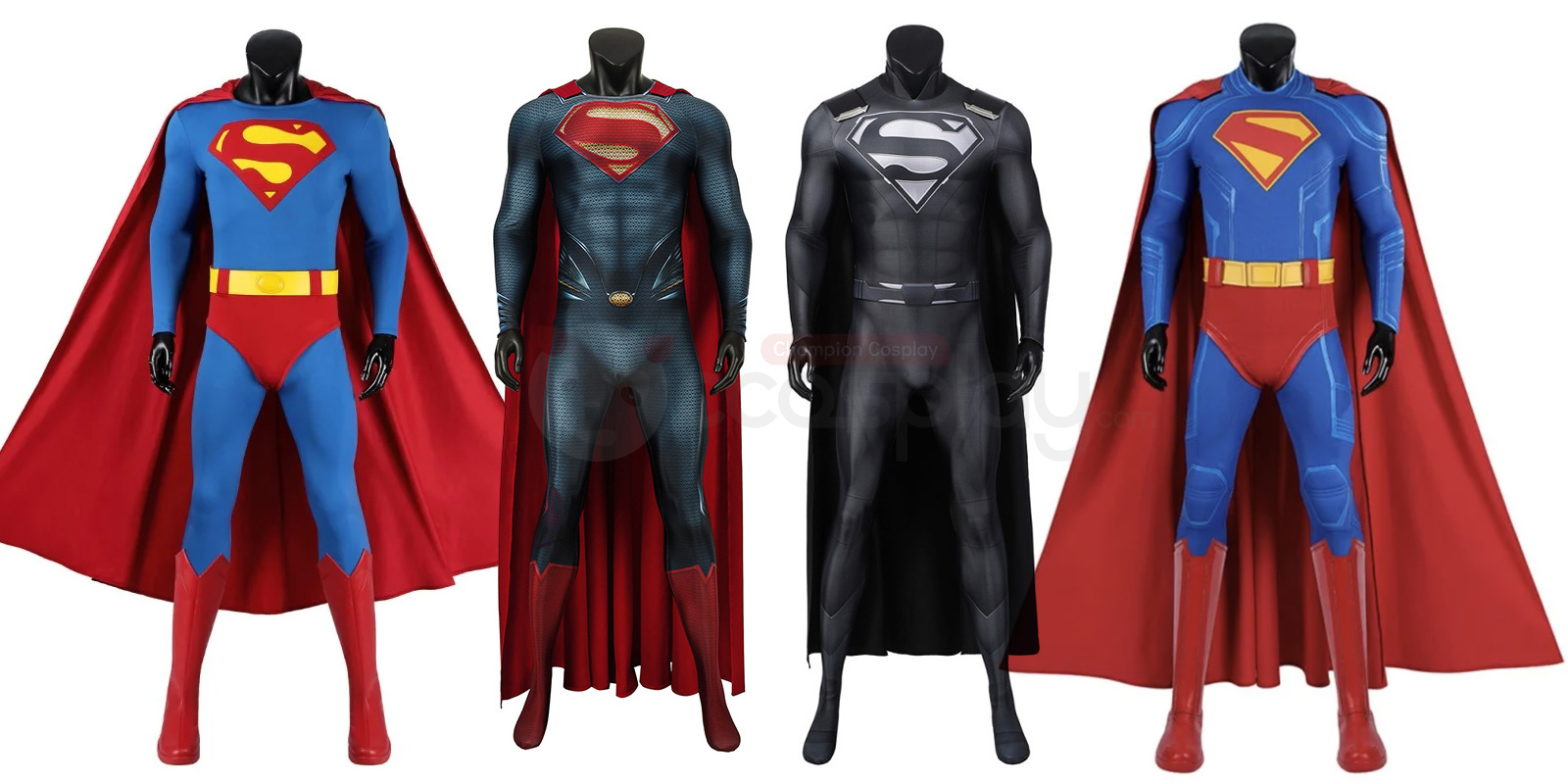
When you picture Superman, it’s rarely the full silhouette that strikes first—it’s the way his cape catches the light, folding and snapping as he descends from the sky. That crimson fabric isn’t just for show; it’s a piece of theater, a nod to the strongmen of old circuses who wrapped themselves in drama before lifting impossible weights. Over the decades, its length and texture have shifted from the heavy velvet of serials to weightless digital ripples in modern films, but the promise remains: a flutter that signals arrival, protection, and just a hint of the impossible.
Down on the ground, the boots anchor the entire costume. They’ve been rendered in everything from spray-painted leather to sculpted rubber, yet they always manage to walk the line between heroic and practical. The classic knee-high design, usually a deep blue with a bold red cuff, gives him a rooted, almost invincible stance—like he could stand against a tidal wave and not lose his footing. More recent takes have traded the pirate swagger for armored panels and treads, imagining what it actually takes to land on concrete at Mach speeds. Still, there’s something undeniably comforting about the slight curl at the toe, a reminder that this alien protector also knows how to make an entrance.
Then there’s the shield, that s-shaped emblem resting on his chest. It’s often called a shield, but truly it’s a beacon—a simplified hope in a diamond frame. The palette alone tells you everything: yellow background pure as sunlight, red letterform sharp with resolve, all outlined in black so it reads from a block away. Some artists thicken the curves, others stretch it into an angular crest, but the geometry stays familiar. It’s a mark that doesn’t just represent a hero; it defines the entire visual language of altruism. No other emblem can claim such instant recognition, and no other detail of the Superman look carries weightier expectations.
Surviving the Spotlight: Keeping Cool and Collected in Your Super Suit
Stepping into the glare with your super suit on isn’t just about the flashy exterior—it’s a psychological gauntlet. The suit might give you powers, but it also heaps on expectations. Everyone’s watching, and the sheer weight of that attention can make your heart hammer like a drum solo. The trick isn’t to ignore the nerves but to acknowledge them as a sign you’re about to do something that matters.
Physical tricks help more than you’d think. Before you make your entrance, slow your breathing way, way down. Feel the fabric against your skin—its texture, its temperature—and use it as an anchor. Inside the suit, you’re not just a hero; you’re a thermostat, regulating your own pressure. A steady exhale can pull you back from the edge when a thousand cameras are snapping.
Once you find that calm, everything else sharpens. The jitters turn into electricity you can channel. Your super suit stops feeling like a costume and starts feeling like armor, a second skin that reminds you why you’re there. That collected energy is contagious, too—the crowd senses it, and chaos starts to bend around you instead of crashing over you.
After the Landing: Maintaining Your Superman Costume for Future Flights
You’ve just returned from saving the day, and your cape is probably sporting a few new battle scars. Give your suit a gentle once-over as soon as you can—check for any snags, burn marks, or mysterious alien goo that might have hitched a ride. The cape, in particular, takes a beating from high-speed flight and atmospheric re-entry, so pay extra attention to the hem and stitching near the shoulders. A handheld fabric steamer can work wonders on minor creases, but steer clear of standard irons; Kryptonian weaves don’t react kindly to direct heat from Earthly appliances.
Cleaning your costume isn’t just about looks—built-up grime can weaken the fibers over time. Hand-wash it in cool water with a drop of mild detergent, and avoid wringing or twisting the fabric. If you’ve been through a particularly dusty or oily environment, soak it for about ten minutes, then rinse thoroughly. For stubborn stains, a soft-bristle brush with a little baking soda paste usually does the trick without damaging the suit’s iconic sheen. Let it air-dry flat, away from direct sunlight, since UV rays can fade that bold primary-color palette faster than a speeding bullet.
Storage matters more than most heroes realize. Fold the suit carefully along its natural seams, rolling the cape instead of folding it to prevent permanent crease lines. Keep everything in a breathable garment bag in a cool, dry closet—plastic containers can trap humidity and lead to mildew, which is the last thing you want near your emblem. If you’re planning to hang the suit, use padded hangers to preserve the shoulder shape. And every few months, give it a quick test stretch: the material should still snap back with the same resilience it had when Ma Kent first stitched it together.
FAQ
Focus on fabric quality, accurate colors, and muscle definition. The suit should have a tailored fit with reinforced stitching, a high-definition chest emblem, and a cape that drapes well without being too heavy.
Always check the size chart and measure your chest, waist, hips, and height. Compare those numbers to the costume’s measurements, leaving a little room for movement. Custom sizing is best if you're between standard sizes.
Yes, if it's made from breathable materials like spandex blends and has minimal inner seams. Look for costumes with moisture-wicking linings and consider adding padding only where needed to avoid overheating.
Cosplay suits are built for accuracy and durability, with screen-printed details, structured muscle padding, and higher-quality fabrics. Halloween versions often sacrifice detail for cost and might not hold up to repeated wear.
Spot-clean with a damp cloth and mild detergent, and let it air dry away from direct sunlight. Avoid machine washing and high heat, as they can damage the print and elastic fibers.
Absolutely, if you want a perfect fit and movie-accurate details. Custom suits let you choose fabrics, adjust measurements, and even modify the emblem style, which makes a huge difference for competitions or long-term use.
Conclusion
Finding a Superman costume that looks and feels authentic isn't just about picking the right shade of blue. It starts with understanding how the suit should move with your body—almost like a second skin. Getting the size right means diving into measurements that go beyond standard charts, paying attention to shoulder width, torso length, and how the fabric stretches. You'll also need to move past simple spandex if you want durability and a heroic silhouette; modern blends with reinforced stitching can mimic the textured, armor-like quality of Kryptonian attire without sacrificing flexibility. And before you commit, consider whether an off-the-rack option can ever truly honor the Man of Steel, or if a custom-tailored piece is the only way to achieve that museum-quality fit. The choice often comes down to how often you plan to wear it and how important every seam is to your overall look.
Once the foundation is set, the smaller elements give your costume its legendary status. The cape shouldn't just hang—it needs weight, flow, and secure attachment to avoid choking or slipping during dynamic poses. Boots must balance screen-accurate styling with the comfort needed for long convention days, and the iconic shield should pop with dimensional detail rather than looking like a simple printed patch. But a great suit also works for you while you wear it: strategic ventilation and moisture-wicking liners make a sweat-drenched adventure less likely, so you stay camera-ready. After the event, proper care—like gentle cleaning and shaped storage—protects your investment. By combining these thoughtful choices, you'll have a Superman costume that not only turns heads but holds up through every flight, photo, and future mission.
Contact Us
Contact Person: Sunny
Email: [email protected]
Tel/WhatsApp: +86-180-1086-8579
Website: https://www.ccosplay.com