

Professional Glucomannan Fiber Supplement Benefits and Usage Tips
2026-10-31
Are you tired of fiber supplements that promise results but fail to deliver? Glucomannan, a natural dietary fiber, has been clinically studied for its potential to support weight management and healthy blood sugar levels. However, not all glucomannan products are created equal. In this article, we’ll dive into the key benefits of a professional-grade glucomannan supplement and share practical usage tips to maximize its effects. Learn how INT Medical ensures purity and potency, so you can trust what you’re putting into your body.
Why This Fiber Cuts Cravings Without Making You Feel Stuffed
Most fibers work by bulking up in your stomach, which is why they leave you feeling heavy or bloated. This one takes a different route. It forms a soft, gel-like matrix that slows down digestion just enough to keep blood sugar steady, so your brain stops sending urgent 'eat something now' signals. You get the calm, even energy of a balanced meal without the uncomfortable fullness.
Instead of stretching your stomach lining, it interacts with receptors in the gut that signal satisfaction early. That means cravings fade naturally within minutes, not because you're physically full, but because your body believes it has been well fed. The result is a quiet appetite, not a stuffed one.
The Water Rule That Makes or Breaks Your Results
Most people obsess over macros, training volume, or supplement timing while treating water as an afterthought. Yet the body has no storage tank for water—every lipolytic enzyme, every muscle contraction, and every neural signal depends on an aqueous environment. Lose just two percent of body weight in fluid, and strength output drops double digits, perceived exertion spikes, and your brain starts confusing thirst with hunger. That single oversight quietly caps your results more than any missed rep.
The rule that actually moves the needle is pattern consistency, not a rigid eight-glasses quota. Begin each morning with 500 milliliters before caffeine touches your lips. During exercise, sip 150 to 250 milliliters every 15 to 20 minutes—not before you feel thirsty. Afterward, replace 125 to 150 percent of sweat losses within the next two hours. Most people rush this final step, overdrink plain water, and dilute serum sodium, leaving them bloated and sluggish instead of recovered.
Forget obsessing over urine color alone. Track your overnight body weight and workout performance instead. If you wake up down more than one percent without food intake, you are already behind before the day starts. Follow this hydration sequence consistently for two weeks, and the shift in energy, muscle fullness, and recovery speed becomes impossible to ignore.
What Happens to Blood Sugar and Cholesterol After Regular Use
After several weeks of consistent use, fasting glucose readings often settle into a narrower range, with fewer sharp spikes after meals. Some people also notice that mid-afternoon cravings for sugary snacks fade, which can further help keep daily blood sugar curves flatter.
On the cholesterol side, the changes tend to show up more slowly. LDL levels may drift downward while HDL edges up a few points, and post-meal triglyceride surges become less pronounced. These shifts are usually gradual, so a lipid panel at the eight- or twelve-week mark gives a clearer picture than testing too early.
Individual results can vary quite a bit, especially if other habits like meal timing, exercise, and sleep remain unchanged. Regular use appears to support steadier metabolic patterns, but it works best alongside a routine that already includes whole foods and some movement.
Starting Small: Why Your First Week Should Look Different
Most people start too big. They launch into a new routine with grand plans, expecting to sustain an intense pace from day one. But your first week isn't about proving anything—it's about laying a foundation that won't crumble by Thursday. When you keep things deliberately small, you give yourself room to adjust, observe, and actually enjoy the process. The goal isn't to feel exhausted or impressive; it's to feel like this is something you could keep doing without counting down the days until it's over.
A smaller start also protects you from the all-or-nothing trap. If you schedule an hour of exercise every day, one missed session can feel like failure. But if your first week only asks for fifteen minutes of movement, skipping a day barely registers. That psychological buffer matters more than we admit. You're not lowering your standards—you're building trust with yourself. And trust, not intensity, is what keeps you showing up in week two.
Finally, a lighter first week lets you learn what actually works. Maybe you discover that mornings are too rushed, or that the new habit pairs better with your lunch break. These small calibrations are almost impossible to notice when you're white-knuckling through an overloaded schedule. By starting small, you turn the first week into a series of low-stakes experiments rather than a test of willpower. That shift alone makes the whole experience feel less like a punishment and more like a genuine beginning.
Timing It Around Meals for the Strongest Effect
The window around your meals isn't just about what's on the plate—it's about when your body is primed to use it. Taking certain supplements or medications on an empty stomach can blunt their impact, but sliding them into the thirty minutes before or after eating often changes how well they're absorbed. Fat-soluble compounds, for instance, hitch a ride on the lipids from your food, while some minerals compete less fiercely for transport when there's a buffer of other nutrients present.
There's also a rhythm to how fullness and fasting states shift enzymatic activity in the gut. A capsule swallowed right before a meal might get pushed through too quickly by incoming food, reducing contact time with the intestinal wall. Waiting until the first few bites have settled gives the digestive tract a chance to slow down and work more deliberately. This is why many practitioners suggest splitting doses across the day rather than front-loading everything at once—your absorption capacity isn't a constant.
Pay attention to how your own body reacts to different meal offsets. Some people notice sharper effects when they take something 15 minutes after finishing a meal, while others do better with a pre-meal window of about 20 minutes. Keep a short note of what you tried and how you felt two hours later. Over a week, patterns usually emerge that no generic guideline can match.
The Gut Health Shift You Might Miss if You're Not Watching
Most people think of gut health as a digestion issue—bloating, irregularity, or food sensitivities. But there's a quieter shift happening in your microbiome that often goes unnoticed until it shows up elsewhere: your skin, your mood, even your energy levels. The bacteria in your gut are constantly communicating with your brain and immune system, and when that balance tips, the first warning signs rarely appear where you'd expect. You might blame a bad night's sleep or a stressful week, but the root cause could be living lower down.
What makes this shift easy to miss is its gradual nature. There's no sudden pain or urgent symptom, just a slow accumulation of small changes: a new sensitivity to foods you used to eat without issue, a dip in focus by mid-afternoon, or skin that feels more reactive than before. By the time you connect the dots, your gut diversity may have already narrowed significantly. The bacteria that once kept inflammation in check have been crowded out by less helpful strains, and the effects ripple outward in ways modern medicine often treats as separate problems.
Paying attention to this shift means looking beyond your stomach. Notice patterns: do you feel foggy after certain meals? Is your sleep more fragmented on days you eat late? These aren't random inconveniences—they're signals from an ecosystem under stress. Restoring balance isn't about a single superfood or probiotic pill; it's about consistency in what you feed your microbiome daily. Fiber variety, fermented foods, and enough downtime for your gut to rest between meals can slowly steer that invisible shift back toward resilience, often improving things you never thought were connected to digestion at all.
FAQ
It forms an unusually thick gel when mixed with water, which slows stomach emptying far more than psyllium or oat fiber. That gel creates a physical fullness signal, so a small dose can feel like a larger meal.
Better to separate them. Coffee is a diuretic and may pull water away from the glucomannan before it fully expands in your stomach. Take it 15–30 minutes before a meal with a full glass of plain water, then enjoy coffee later.
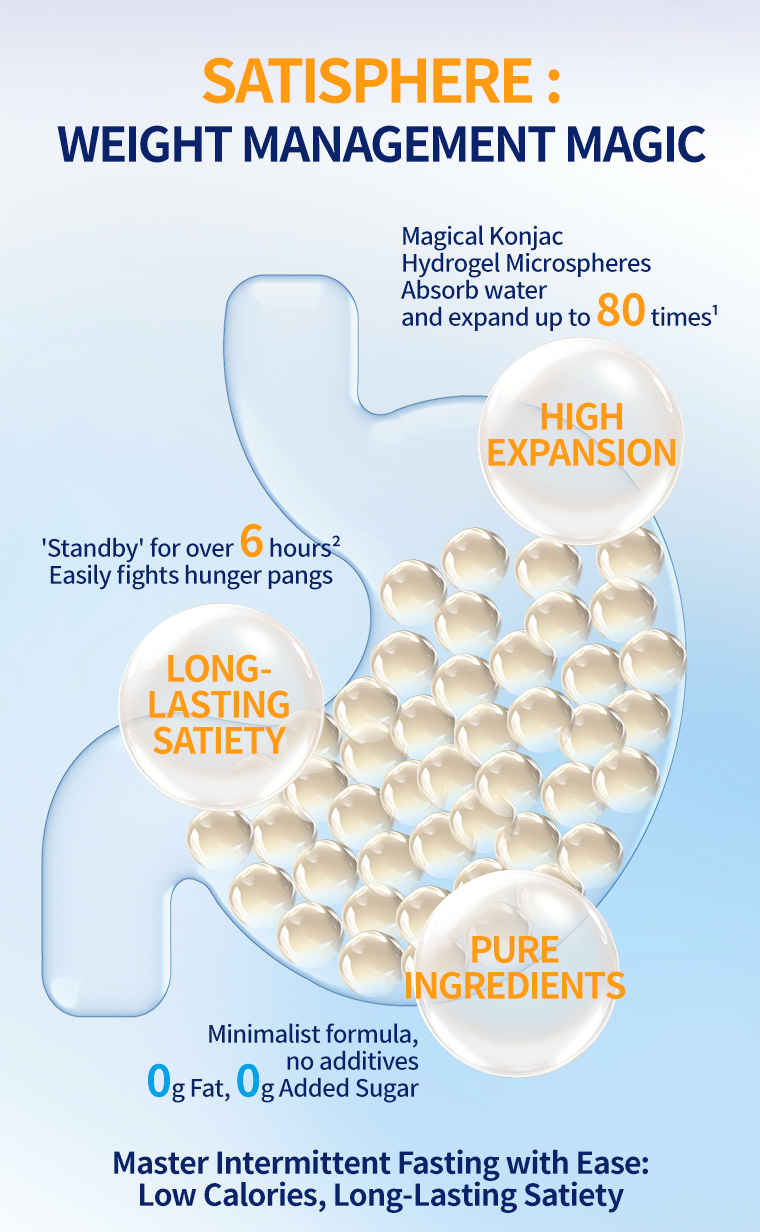
Once swallowed, each gram absorbs up to 50 times its weight in water and turns into a viscous mass. That mass occupies stomach volume and delays gastric emptying, which keeps you feeling satisfied longer and reduces the urge to snack.
Never take it dry or with just a sip. Swallow capsules one at a time with at least 250 ml of water, and stay upright for a few minutes. Avoid taking it right before bed because the gel can linger in the esophagus during sleep.
Yes, it can trap medications inside the gel and reduce absorption. Take glucomannan either one hour before or two hours after any medication. If you're on diabetes or thyroid drugs, check with a pharmacist about spacing.
Start with 1 g once daily with a large glass of water before your biggest meal. After four to five days, if there's no bloating, increase to 1 g before two meals, then up to 1 g before three meals. Never jump straight to 3 g at once.
Your gut bacteria suddenly get a huge amount of fermentable fiber and produce gas as they adjust. Prevent it by starting with a low dose, increasing slowly over two weeks, and drinking extra water throughout the day. A short walk after meals also helps move gas along.
Conclusion
Glucomannan works differently than typical fiber supplements because it expands into a thick gel shortly after you take it, which gently signals fullness without the heavy, bloated feeling that comes from bulky insoluble fibers. The trick is to drink it with a full glass of water—at least eight ounces—and then another glass right after. Skipping the extra liquid can cause the gel to form too early in your throat or chest, which ranges from uncomfortable to outright dangerous. Once you get the water timing right, the payoff goes beyond appetite control: regular use has been shown to support healthier blood sugar responses after meals and to nudge LDL cholesterol downward by binding to bile acids in the gut. People often expect a dramatic first week, but the smart approach is to start with half a teaspoon once daily, letting your digestive system adapt before moving to the full dose twice a day. Timing matters too—taking it fifteen to thirty minutes before lunch and dinner gives the gel time to form in your stomach, so you naturally eat less without feeling deprived. One change that flies under the radar is the shift in your gut microbiome; because glucomannan ferments slowly in the colon, it feeds beneficial bacteria, which can improve regularity and reduce occasional bloating over a few weeks. If you rush the dose or ignore the water rule, you miss most of those benefits and may just end up constipated. The most practical way to use it is to treat the water as part of the supplement itself, not an afterthought, and to pair the pre-meal dose with a short walk or a glass of sparkling water to bridge the wait before eating. That small habit makes the appetite-suppressing effect feel more natural and less like a willpower battle.
Contact Us
Contact Person: Jeffrey
Email: [email protected]
Tel/WhatsApp: 86-0633-2230056
Website: https://www.sd-intmedical.com