
OEM Sliding Head Lathe: Unlocking Manufacturing Efficiency
2026-07-25
In precision manufacturing, where every micron counts, the OEM sliding head lathe has quietly revolutionized how complex parts come to life. Yet many workshops still overlook its potential to slash cycle times and boost consistency. Enter WINNRUI CNC—a name redefining what these machines can deliver. This isn’t just about faster turning; it’s about rethinking efficiency from the ground up. Read on to discover why the sliding head lathe might be the smartest investment your production line hasn’t made yet.
Beyond Conventional Turning: How Sliding Head Technology Redefines Precision
In traditional turning, the workpiece rotates while the cutting tool remains largely static, a method that imposes natural limits on stability and precision, especially with slender or complex parts. Sliding head technology inverts this relationship: the bar stock moves axially through a guide bushing, allowing the cutting tool to engage the material mere millimeters from a rigid support point. This fundamental shift slashes deflection, dampens vibration, and opens the door to tolerances that conventional lathes can only aspire to.
The real genius of sliding head machines lies in their ability to perform multiple operations simultaneously without sacrificing accuracy. While the main spindle is turning a feature, a subspindle can pick off the part for back machining, and live tooling can drill, mill, or tap at any angle. Because the material is always supported close to the cut, even the most delicate features maintain their dimensional integrity. This eliminates secondary setups, reduces handling errors, and compresses production cycles in ways that go far beyond mere speed.
More than just a manufacturing technique, sliding head technology rethinks the relationship between tool, material, and movement. It thrives where conventional wisdom sees limitations—ultra-long, thin components, intricate medical parts, or connectors with micron-level concentricity demands. By continuously feeding the bar through a fixed tool zone and coordinating cutting sequences down to the millisecond, it produces parts that are not just precise on paper, but functionally superior in the real world, often eliminating polishing or post-processing entirely.
The Hidden Advantage: OEM Customization Without Compromise
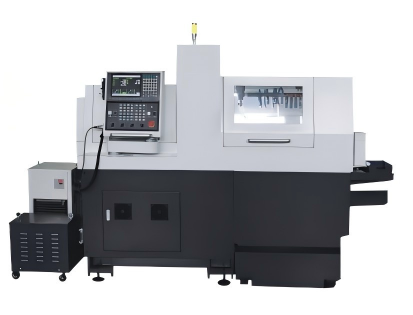
True OEM customization often gets tangled in a web of trade-offs—longer lead times, inflated costs, or diluted brand identity. But what if you could sidestep those traps? The real edge sits in a process that bends to your exact specs without breaking the core strengths of the product. It's not about slapping a logo on; it's engineering every detail around your vision while keeping performance rock-solid.
This approach thrives on transparency and agility. Instead of re-inventing the wheel, it smartly modifies proven frameworks—tweaking materials, interfaces, or firmware—so you launch faster with zero quality drift. You get a bespoke solution that feels native to your lineup, not a forced adaptation. The best part? Your customers never sense the seams; they just experience a seamless extension of what makes your brand unique.
From Prototype to Production: Streamlining Complex Parts Manufacturing
Turning a rough prototype into a market-ready product is rarely a straight line. Complex parts often expose weaknesses in early designs—fits that bind, tool paths that chatter, or materials that behave unexpectedly under load. The real challenge isn't just making one perfect piece; it's designing a process that yields a hundred identical ones without constant hand-holding. By mapping every variable early—from fixture offsets to coolant flow—you create a feedback loop that hardens the prototype into a repeatable build recipe.
The chasm between the prototype shop and full-scale production is filled with soft details. Component vendors may quote long lead times for the alloys you chose, or a coated tool might show promising lab results but wear unpredictably on the factory floor. These mismatches don't surface in CAD, which is why cross-functional reviews with machinists, purchasing, and quality engineers become essential before scaling. Often, a subtle geometry tweak or a different heat-treatment sequence can slash cost and boost throughput without compromising performance.
Standardizing the way data moves—from first-article inspection reports to machine health logs—closes the loop. When every batch calls up the same probing routines and dynamically adjusts feeds based on tool wear, you stop chasing variations and start predicting outcomes. The result isn't just a shorter time-to-market; it's a manufacturing line that learns from its own mistakes and continually refines the transition from prototype to production.
Material Mastery: Slashing Waste and Maximizing Output
Every scrap of material holds potential, but we often overlook the small inefficiencies that quietly drain resources. True mastery isn't about grand overhauls—it's in the granular details: recalibrating cutting paths to nest parts tighter, retraining teams to spot reusable offcuts, and shifting mindsets from "good enough" to "every inch counts." When you start treating waste as a design flaw rather than a byproduct, the entire production rhythm begins to change.
The real art lies in balancing precision with adaptability. We've seen lines where simply adjusting feed rates reduced trim loss by double digits, and others where storing leftovers by dimension instead of job number made all the difference. It's rarely about expensive new machinery; more often, it's the unglamorous work of mapping your material flow, calling out hidden scrap hotspots, and giving operators the authority to pause and correct before a small misalignment becomes a pile of wasted stock.
Maximizing output goes hand in hand with a stubborn refusal to accept "expected waste" norms. One team I worked with started weighing their floor sweepings at the end of each shift, posting the numbers for everyone to see. Within a month, they'd slashed waste by a third, not because of a new policy, but because people started competing to find clever ways to reclaim what used to hit the bin. That's the core of material mastery: making waste visible, making frugality a point of pride, and watching your throughput climb without adding a single machine or extra hour.
Compact Footprint, Colossal Capability: Rethinking Shop Floor Layout
Modern manufacturing is shedding the old belief that more square footage automatically translates to higher output. Today’s smart factories are proving that a tightly designed shop floor can pack an outsized punch. By scrutinizing every inch of space, we’re uncovering opportunities to weave together workflows that once sprawled across vast areas, now condensed into agile cells that boost throughput without adding a single square meter.
The secret lies in vertical thinking and modular setups. Instead of spreading equipment horizontally, we’re stacking processes, using mezzanines, and embedding tools into the very structure of the floor. Movable workstations on casters, tool boards that swing out from pillars, and overhead material handling systems turn idle airspace into productive zones. It’s not about cramming more into less; it’s about recognizing that traditional layouts waste up to 40% of their potential on non-value-adding movement and storage.
What emerges is a facility that adapts in hours, not weeks. When a product line shifts, teams reconfigure modules as easily as rearranging furniture. This agility doesn’t just shrink the facility’s physical shadow – it dramatically cuts energy use, maintenance overhead, and the time from raw material to shipment. The result is a plant that feels almost organic, flexing with demand while delivering output that rivals spaces three times its size.
Future-Proofing Your Operations: The Scalability of Sliding Head Lathes
Investing in machinery that can adapt to shifting production demands is no longer optional—it's a strategic imperative. Sliding head lathes, often overlooked in favor of conventional CNC systems, bring a level of flexibility that fundamentally alters how shops respond to variability. Their inherent design, with a movable headstock feeding bar stock through a fixed guide bushing, allows for exceptionally long, slender parts to be machined in a single pass without sacrificing precision. But the real edge comes from their interchangeable tooling and modular setup, which lets operators pivot between high-volume runs and complex, low-batch orders without extensive retooling. This fluidity makes them ideal for industries where product lifecycles are shrinking, and customisation is becoming the norm.
Beyond adaptability, the scalability of these machines is what truly future-proofs an operation. With the right accessory configuration—sub-spindles, live tooling, automatic bar feeders—a single sliding head lathe can handle multiple operations that would typically require several dedicated machines. This consolidation reduces floor space and streamlines workflows, all while maintaining tight tolerances even during unattended overnight shifts. As demand grows, shops can add complementary automation or secondary machines without overhauling the entire cell, since sliding head platforms are built for seamless integration. The result is a production environment that can scale up or down with minimal disruption, a critical factor when navigating volatile markets or sudden surges in workload.
FAQ
An OEM sliding head lathe, often called a Swiss-type lathe, is a precision machine where the bar stock moves axially through a guide bushing while the cutting tools are fixed in position. This design drastically reduces deflection, making it ideal for long, slender parts. Unlike standard CNC lathes where the workpiece remains fixed and tools move, the sliding head setup provides superior stability and accuracy for small, complex components.
Efficiency gains come from several features: simultaneous multi-axis machining reduces cycle times, high-pressure coolant systems allow faster cutting speeds, and the ability to perform multiple operations (turning, milling, drilling, threading) in one setup eliminates secondary processing. Additionally, these machines often run unattended for long periods thanks to automatic bar feeders and tool monitoring, maximizing spindle utilization.
They’re heavily used in medical device manufacturing (bone screws, dental implants), automotive (fuel injector parts, fittings), electronics (connector pins), aerospace (fasteners), and horology. Basically any sector needing high-precision, high-volume production of small, intricate turned parts benefits from this technology.
Key factors include the supplier’s engineering support for customization, build quality and machine rigidity, control system compatibility with existing workflows, availability of turnkey solutions including tooling and programming, and after-sales service responsiveness. A supplier with deep application knowledge can help tailor the machine to specific part families, ensuring long-term productivity.
Main challenges include tool wear management due to high cutting speeds, proper chip control in confined working zones, and the learning curve for programming synchronized movements. These are addressed through robust tool monitoring systems, optimized coolant strategies, and investing in comprehensive training. Many OEMs now offer simulation software to streamline programming and reduce setup time.
Absolutely. Modern sliding head lathes are built for Industry 4.0 integration with features like robotic part handling, in-process gauging, barcode scanning for traceability, and seamless data exchange via MES/ERP systems. Some setups connect directly to part cleaning and packaging stations, enabling a hands-off production cell from raw bar stock to finished, inspected components.
While the initial investment is higher, the cost per part is often significantly lower due to reduced cycle times, fewer setups, lower scrap rates, and less labor. High productivity and 24/7 operation potential mean faster ROI. For high-mix, medium-to-high volume production, it frequently outperforms multiple conventional machines spread across several operations.
Advancements include direct-drive spindles for faster acceleration and higher torque at low speeds, high-pressure coolant systems up to 2000 psi for improved chip breaking, automatic tool presetting, and smart features like vibration monitoring and adaptive control. Software has also evolved with conversational programming and digital twin simulation, making complex part programming much more accessible.
Conclusion
OEM sliding head lathes are reshaping precision manufacturing by tackling challenges conventional turning simply cannot. Instead of multiple setups, these machines perform complex operations in one streamlined pass, using a guide bushing that supports the bar stock right where the cutting happens. This means even the longest, most delicate parts hold tight tolerances without deflection. It’s a redefinition of what’s possible, merging roughing and finishing into a seamless workflow. The real hidden edge, though, is customization: OEMs don’t just pick off a shelf—they collaborate to engineer machines that fit exact component geometries, tooling layouts, and automation needs. Nothing is left to chance, from spindle configurations to chip management, so manufacturers can produce specialized parts without sacrificing speed or quality.
That agility proves vital when moving from prototype to full-scale production. Quick changeovers and multi-axis capabilities collapse the timeline between concept and volume output, eliminating bottlenecks that plague job shops. Material efficiency surges too—swiss-style turning significantly reduces waste by machining close to the final shape, maximizing output per bar. And despite their compact footprint, these lathes pack colossal capability, often combining turning, milling, drilling, and thread whipping in a single machine that slips into tight floor plans. It’s a smarter shop layout that saves space while boosting throughput. Best of all, their scalability future-proofs operations: as demand grows, adding auxiliary spindles, bar feeders, or robotic unloaders integrates effortlessly. Investing in sliding head technology today means building a foundation that evolves with tomorrow’s orders, making it a strategic move for any shop aiming to stay lean, agile, and ahead of the curve.
Contact Us
Contact Person: Tim
Email: [email protected]
Tel/WhatsApp: +86 15522553731
Website: https://www.winnrui-cnc.com/