ODM Investment Casting Explained: Benefits, Process, and Applications
2026-10-07
Investment casting has long been the go-to for complex metal parts, but when you hand the reins to an ODM partner, the game changes entirely. With BOYIKUN, you’re not just getting a supplier—you’re getting a team that owns every step from pattern design to final surface finish. Yet many engineers still wonder: does ODM investment casting really save time, reduce costs, or improve quality compared to traditional OEM routes? In this post, we’ll break down the real benefits, walk through the exact process, and highlight which applications benefit most. Whether you’re prototyping a new bracket or scaling up a valve body, you’ll see why this approach is quietly reshaping how manufacturers think about precision casting.
What Makes ODM Investment Casting Different from Sand Casting and Die Casting?
ODM investment casting builds parts layer by layer from a wax pattern, which gets coated in a ceramic shell before the wax is melted away. That leaves a precise, smooth mold ready for molten metal. Sand casting, by contrast, relies on compacted sand around a pattern, and the result often shows rougher surfaces and looser tolerances. Die casting forces metal into a reusable steel mold at high speed, but the upfront tooling cost is steep and geometry flexibility takes a hit. With investment casting, you get near-net shapes with fine details, thin walls, and almost no draft angles — something the other two methods struggle to match.
Another key difference shows up in material range and part size. Investment casting handles both ferrous and non-ferrous alloys, including stainless steels and high-temperature nickel alloys, without much trouble. Sand casting can manage large components but sacrifices dimensional accuracy as size grows. Die casting is mostly limited to non-ferrous metals like aluminum and zinc, and part size is capped by machine capacity. ODM investment casting sits in a sweet spot: it handles complex, smaller-to-medium parts with tight tolerances and excellent surface finish, while avoiding the porosity issues that often plague die cast parts.
The design freedom is hard to overstate. Investment casting allows undercuts, internal passages, and intricate geometries that would require cores or secondary machining in sand casting, or be impossible to eject in die casting. Tooling costs for investment casting are lower than die casting for moderate volumes, and lead times are shorter when changes are needed. That makes ODM investment casting a practical choice for prototypes, functional metal parts, and low-to-medium production runs where surface quality and dimensional control matter more than raw speed.
The ODM Investment Casting Process: Wax, Shell, Pour, Repeat
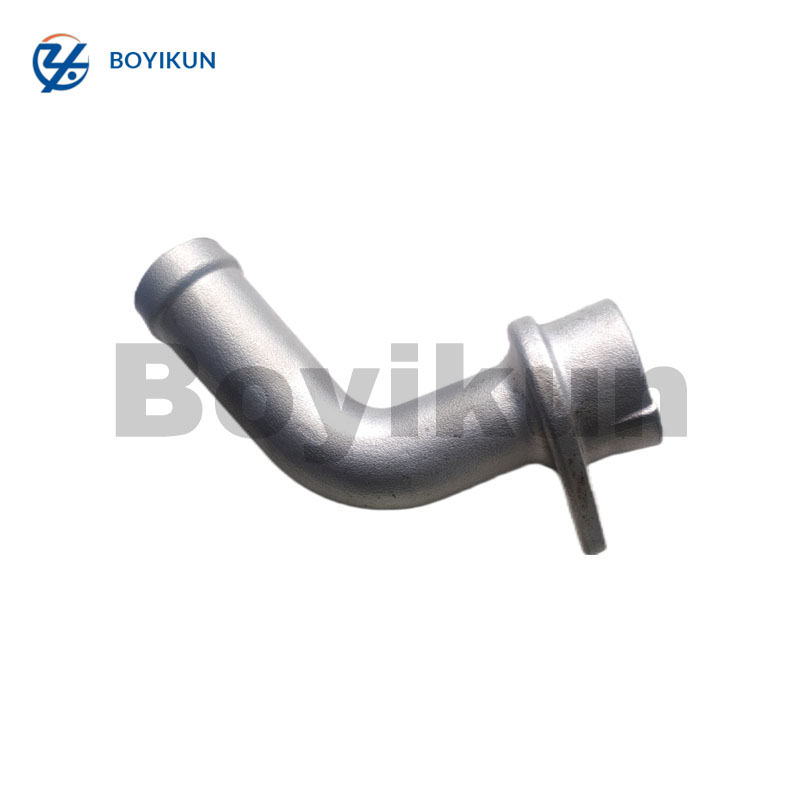
Wax isn’t just a placeholder here—it’s the quiet architect of every dimension to come. A precision die shapes molten wax into a replica of the final part, and those replicas are then welded onto a central sprue, forming a cluster that looks more like a frozen candelabra than an industrial component. Each joint gets a quick sealing pass; any wax bead left behind will later become a ceramic flaw you can’t unmake.
That cluster is dipped into a fine ceramic slurry, dusted with stucco, and left to dry—again and again until a rigid shell builds up. Once the shell is thick enough, steam or a flash furnace melts the wax out, leaving a hollow negative. Molten metal takes its place, filling every contour with a pressure that tolerates no hesitation. After cooling, the shell is broken away, and the cycle starts over: new wax, new shell, another pour. The repetition isn’t routine; it’s how sub-millimeter consistency survives from first cast to ten-thousandth.
Why Engineers Pick ODM Investment Casting for Complex, High-Strength Parts
When a design calls for a single component to replace an assembly of machined or welded pieces, investment casting often becomes the default choice. ODM’s process handles thin walls, deep recesses, and internal passageways that would drive up machining time or force compromises in other manufacturing methods. The wax pattern approach lets engineers place radii, bosses, and stiffening ribs exactly where finite element analysis says they need to be, without being constrained by tool access or chip evacuation.
Material selection is another driver. Many high-strength alloys used in aerospace, medical, and energy applications are difficult to machine or forge into complex forms. Investment casting accepts stainless steels, cobalt-chrome, nickel-based superalloys, and titanium grades with tight control over chemistry and solidification. The near-net shape reduces wasted stock and preserves more of the original alloy’s integrity, which matters when the part must hold up under cyclic loading, high temperature, or corrosive conditions.
Engineers also value the consistency that comes from a controlled casting process. ODM’s investment casting workflow combines rapid prototyping iterations with production runs, so a geometry proven in prototype can move into volume without retooling surprises. Surface finishes and dimensional tolerances arrive close enough to final requirements that finish machining is limited to critical interfaces, not every feature. That keeps lead times shorter and total cost per part lower than many subtractive alternatives.
Real-World Applications Where ODM Investment Casting Is the Only Option
When a patient needs a custom hip stem or a spinal fusion cage, the geometry often includes porous surfaces, internal lattices, and undercuts that no machining or forging process can replicate. ODM investment casting lets manufacturers pour cobalt-chrome or titanium alloys into a ceramic shell built around a disposable wax pattern, capturing every intricate detail without secondary operations that might compromise the implant's fatigue life. For small-batch, patient-specific devices, this method isn't just preferred—it's the only practical route to a one-piece, biocompatible component.
Jet engine turbine blades operate at temperatures above the melting point of their nickel-based superalloys, relying on internal cooling channels that snake through the airfoil. These channels are too narrow and too contorted to drill, and the blade's single-crystal structure demands a controlled solidification process. Only investment casting, with its disposable pattern and ceramic mold, can form both the external aerodynamic shape and the internal cooling labyrinth in a single pour, while also allowing the precise thermal gradients needed for directional solidification.
Downhole tools for high-pressure oil and gas wells—like safety valves, packer mandrels, and flow control components—must handle corrosive brines, hydrogen sulfide, and pressures exceeding 20,000 psi. Their internal passages, sealing profiles, and thin-walled sections cannot be welded or assembled from multiple parts without creating leak paths. ODM investment casting produces these parts as monolithic bodies from duplex stainless steels or nickel alloys, eliminating joints and providing the dimensional consistency that keeps a well from blowing out.
Design Tips for ODM Investment Casting: Draft Angles, Tolerances, and More
Draft angles in ODM investment casting are often unnecessary in the traditional sense, because the wax pattern is flexible enough to be pulled from the die without a large taper and the ceramic shell is eventually broken away. However, a slight draft of 0.5 to 1 degree on tall bosses or deep pockets can greatly reduce wax injection pressure and prevent the pattern from tearing when it is ejected. If a feature stands less than 5 mm above the surrounding surface, you can usually leave it vertical and still get a clean result.
Tolerance expectations need to differ from machining or die casting. For small parts under 25 mm, a general linear tolerance of ±0.1 mm is realistic, but dimensions crossing a parting line may shift by ±0.2 mm or more. For every additional 25 mm of length, add roughly ±0.05 mm. Geometric controls such as flatness, straightness, and true position require extra allowance because the ceramic shell moves slightly during firing and cooling. It is usually cheaper to specify only a handful of critical tolerances than to put tight numbers on every feature.
Beyond draft and tolerance, pay attention to wall thickness and section transitions. Most alloys cast well at a 1.5 mm minimum wall, but stainless and high-temperature alloys often need 2 mm on large flat faces. Avoid abrupt changes in thickness; a blend radius of at least 25% of the adjacent wall thickness reduces stress and shrinkage defects. Sharp internal corners should be rounded to prevent hot tears, and isolated heavy sections are better cored out or replaced with ribs to keep solidification uniform.
How to Vet an ODM Investment Casting Supplier Without Getting Burned
Start by demanding a full audit trail from the supplier. Do not settle for glossy brochures or a handful of sample parts. Ask for their internal rejection rate data, not just the final inspection pass rate. A supplier that cannot produce monthly scrap reports or that hesitates to share them is hiding something. Also, check the actual foundry floor, not the showroom. Walk through the wax injection area with a thermometer in hand. If the wax room temperature swings more than two degrees Celsius, expect dimensional drift in your castings.
Next, interrogate their gating and riser design process. Many ODM suppliers reuse generic gating systems for every part, which leads to shrinkage porosity in thick sections. Ask to see simulation reports for your specific part geometry. If they do not use solidification modeling software, run. Also, check how they handle shell building. The number of ceramic coats and the slurry viscosity directly affect surface finish. A supplier that slaps on six coats for every part regardless of wall thickness is not tailoring the process. Look for a documented shell recipe per part number.
Finally, lock down the commercial terms before you place a tooling deposit. Hidden costs often appear in secondary operations, such as heat treatment, straightening, or non-destructive testing. Get a line-item quote that includes all post-casting steps, not just the raw casting price. Also, verify their on-time delivery record for repeat orders, not just prototypes. A supplier that delivers samples in two weeks but takes three months for production runs will burn you on inventory. Ask for three customer references with order volumes similar to yours and call them directly.
FAQ
ODM investment casting means the supplier takes on both design and manufacturing responsibilities. You provide functional requirements or rough concepts, and their engineering team refines the design for castability, creates the tooling, and produces the parts. Standard investment casting usually assumes you already have a finished 3D model and just need it cast. The ODM route saves time when you lack precise casting expertise but still need high-quality metal components.
Medical device makers, aerospace companies, automotive parts suppliers, food processing equipment builders, and marine hardware manufacturers often rely on it. These sectors need complex geometries, corrosion-resistant alloys, and relatively low production volumes with tight tolerances. ODM partners help bridge the gap between a rough idea and a production-ready cast component without in-house foundry knowledge.
The biggest benefit is shared risk. The ODM provider handles design for manufacturability, tooling adjustments, gating and riser placement, and material selection. You avoid the back-and-forth of sending drawings to a foundry and then getting parts that can't be cast properly. ODM also shortens lead time because the same team owns the entire process, and you gain access to their special alloys and finishing processes. Cost can be lower when you factor in reduced engineering hours and fewer scrap parts.
It starts with a wax pattern, usually injection molded to match the final part geometry. Those patterns are attached to a central wax sprue to form a tree. The tree is dipped repeatedly into a ceramic slurry, building up a shell. The wax is melted out in an autoclave, leaving a hollow ceramic mold. The mold gets fired to remove moisture and improve strength, then molten metal is poured in. After cooling, the shell is broken away, parts are cut from the tree, and they go through finishing steps like grinding, heat treatment, machining, and surface treatment.
Common choices include stainless steels (304, 316, 17-4 PH), carbon steels, aluminum alloys, titanium, cobalt-chrome, and nickel-based superalloys. The choice depends on corrosion requirements, mechanical loads, operating temperature, and whether the part needs to be welded or passivated. A good ODM partner will ask about the service environment first, then recommend a few grades that balance performance and cost. Avoid selecting only by name of alloy; instead specify the performance requirements.
They control the entire process: wax tooling temperature, ceramic shell thickness, metal pour temperature, and cooling rate. Many use coordinate measuring machines (CMMs) and X-ray or dye penetrant inspection for critical parts. ISO 9001 or IATF 16949 certification is common. Good suppliers will also do first article inspection and provide material certificates with each batch. Communication about acceptable tolerances early in the design phase is key—don't ask for tighter than needed.
Investment casting wins when you need complex internal cavities, thin walls, or smooth as-cast surfaces that would be expensive or impossible to machine. It also beats sand casting when surface finish and dimensional accuracy matter. CNC machining is better for very simple shapes or extremely low quantities where tooling cost for casting is not justified. ODM investment casting is usually ideal for annual volumes from a few hundred to tens of thousands of pieces.
Conclusion
ODM investment casting earns its place when neither sand casting nor die casting can handle the geometry, surface finish, or alloy demands of a part. The process starts with a wax pattern, coats it in ceramic shell layers, melts the wax out, and then pours molten metal into the void—repeating this cycle with tight process control yields near-net shapes that often need zero secondary machining. Engineers keep returning to it for complex, high-strength components because it removes draft-angle compromises, holds tolerances down to ±0.1 mm, and lets them specify alloys like Inconel or duplex stainless that would crack or warp in other methods. In aerospace fuel nozzles, surgical robotics joints, and impellers with internal cooling channels, investment casting is frequently the only viable route, not just a cost trade-off.
To make the most of the process, designers should treat draft angles as suggestions rather than rules, use generous radii to prevent shell cracking, and communicate tolerance bands early instead of defaulting to generic standards. Vetting a supplier means more than checking a certificate—ask about their wax-room humidity control, shell drying time logs, and which foundry actually pours your alloy, because many brokers claim ODM expertise without owning a single autoclave. A supplier that walks you through their scrap-rate data for thin-wall sections and can explain how they handle hot tears in nickel-based alloys is one worth trusting. That level of transparency, combined with a design that respects the process, is what separates a frustrating first article from a casting that drops into assembly without a single rework order.
Contact Us
Contact Person: Xianchen Hu
Email: [email protected]
Tel/WhatsApp: 86-13248645200
Website: https://www.hexnb.com/