

Mesoporous Silica Manufacturing Concerns: Key Challenges and Practical Solutions
2026-06-05
Scaling up mesoporous silica production isn’t just a recipe-following exercise—it’s a delicate dance with pore size control, surface chemistry, and batch consistency. Unexpected deviations can quietly escalate into costly downtime or off-spec material. In this post, we unpack the most stubborn manufacturing headaches and counter them with grounded, practical fixes. Along the way, you’ll see how Zhonglian’s process know-how turns recurring problems into manageable checkpoints. Let’s get into it.
Navigating Template Extraction While Preserving Pore Integrity
Extracting sacrificial templates from porous scaffolds often feels like performing delicate surgery—one wrong move and the entire pore architecture can collapse. The real challenge lies not just in removing the template material, but doing so without leaving behind residues or causing micro-cracks that propagate through the thin pore walls. Even slight swelling during solvent-based extraction can distort pores irreversibly, turning a well-ordered network into a chaotic jumble.
We’ve found that a staged extraction approach works wonders, where solvents are gradually introduced at low concentrations before ramping up. This gentle ramp allows the template to soften and detach cleanly, rather than being ripped out abruptly. Temperature control is equally critical—keeping conditions just below the glass transition point of the scaffold matrix can prevent thermal collapse while still mobilizing the template phase. In some cases, using supercritical fluids has been a game-changer, as they can penetrate nanoscale pores and carry away template remnants without the surface tension that wreaks havoc in liquid-phase methods.
Ultimately, preserving pore integrity isn’t about a single magic step; it’s a harmony of parameters—solvent selection, extraction duration, and post-treatment rinsing all play their part. Real-time monitoring, like tracking mass loss or using in-situ spectroscopy, helps catch problems before they become disasters. The goal is to emerge with a scaffold that breathes exactly as designed, where every pore is intact and ready for its role, be it cell infiltration or catalytic flow.
Taming Pore Size Distribution in Scaled-Up Syntheses
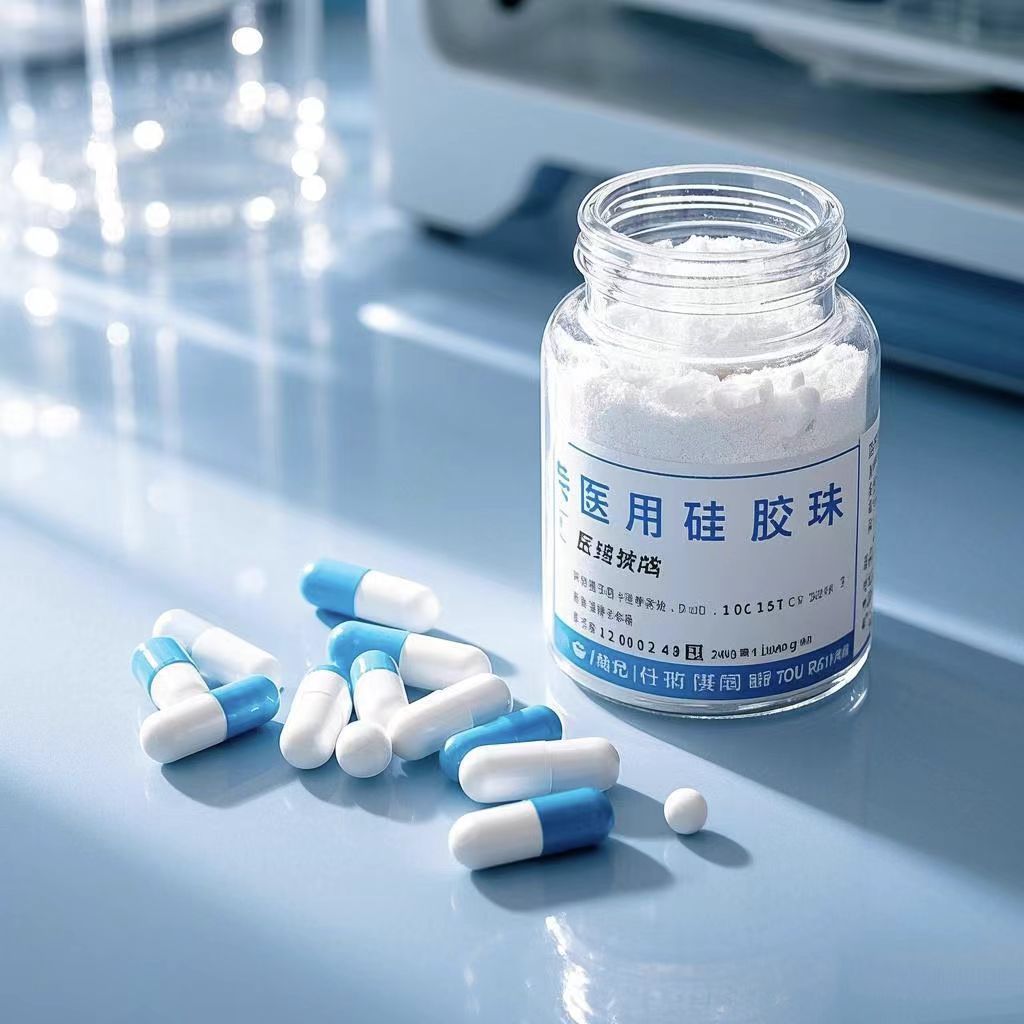
Achieving uniform pore size distribution becomes markedly more complex when reactions transition from milligram to kilogram scale. In the early stages of process development, small variations in mixing rate, temperature gradients, or reagent stoichiometry can pass unnoticed, but upon scale-up these factors exert an outsized influence on nucleation and crystal growth kinetics. Subtle inhomogeneities in the reaction medium can lead to broad or even bimodal pore size distributions, which in turn compromise downstream performance in adsorption, catalysis, or gas storage applications. Careful mapping of the parameter space through statistically designed experiments often reveals that the sweet spot for narrow pore size distribution shifts with vessel geometry and impeller type, making a direct linear scale-up recipe insufficient.
Flow chemistry offers an elegant alternative to traditional batch scale-up for controlling pore architecture. By confining the synthesis within a tubular reactor and precisely regulating residence time, temperature, and reagent mixing through segmented flow, one can maintain a nearly identical microenvironment across scales. This approach effectively decouples scale from transport phenomena, allowing the same narrow pore size distribution achieved in a laboratory syringe pump to be reproduced in a production-scale continuous platform. The use of in-line analytics, such as Raman spectroscopy or particle size monitors, enables real-time feedback control, ensuring that any drift in pore dimensions is corrected before an entire lot is affected. Such strategies have been successfully applied to metal-organic frameworks and ordered mesoporous silicas, where a deviation of just a few angstroms can render the material unsuitable for molecular sieving.
Post-synthetic modifications provide another lever for taming pore size heterogeneity after the primary synthesis is complete. Methods such as acid etching, solvent-assisted linker exchange, or calcination under carefully ramped atmospheres can selectively widen or narrow specific pore populations. For instance, in zeolite synthesis, stepwise dealumination with mild steam treatment can progressively alter the micropore landscape without collapsing the framework. Similarly, the controlled deposition of metal oxides inside mesopores via atomic layer deposition has proven effective in trimming the pore size distribution by precisely filling the larger cavities while leaving smaller ones intact. Ultimately, a holistic approach that combines robust scale-up protocols with real-time monitoring and targeted post-processing holds the key to reliably delivering materials with the desired pore size distribution in commercial quantities.
From Milligram to Ton: Translating Precision to Industrial Scale
Achieving milligram-level precision in a controlled lab environment is no small feat, but the real challenge emerges when these processes are scaled to handle tons of material. Early-stage research often relies on meticulous hand-tuning and small-batch synthesis where even tiny variations can be observed and corrected instantly. This granular control fosters a deep understanding of reaction mechanisms and material properties, laying a foundation of accuracy that seems almost impossible to replicate on a massive scale.
As production volumes soar, factors like heat distribution, mixing uniformity, and raw material heterogeneity become magnified. The very sensitivity that made milligram-scale experiments insightful now introduces risks of inconsistency, waste, and even safety hazards. Engineers and chemists must translate the nuanced insights gained at small scale into robust, reproducible protocols that account for the inherent variability of industrial processes, all without sacrificing the quality that defines the product.
The journey from milligram to ton is bridged through strategic methodologies such as process intensification, real-time analytics, and modular reactor design. By leveraging continuous flow chemistry, in-line spectroscopy, and predictive modeling, manufacturers can maintain tight tolerances even when handling thousands of litres. The art lies in distilling the essential parameters that govern precision and embedding them into scalable systems, ensuring that every gram that leaves the plant is as reliable as the original lab sample.
Reducing Reliance on Costly Structure-Directing Agents
For years, the synthesis of zeolites and related microporous materials leaned heavily on organic structure-directing agents, often requiring elaborate and expensive molecules to guide framework formation. While effective, this dependency introduced prohibitive costs and environmental drawbacks, especially in industrial-scale production where agent removal and waste management became significant hurdles.
Efforts to circumvent these challenges have gained remarkable traction. Researchers are now harnessing alternative strategies such as seed-assisted synthesis, where pre-formed crystals direct growth without continuous organic input, and the creative use of simple inorganic cations or even water as the templating medium under adjusted conditions. These methods not only slash material expenses but also streamline downstream processing, making large-scale manufacturing more sustainable.
The shift also opens doors to exploring interzeolite transformations, where one framework converts into another under controlled chemical environments, bypassing the need for fresh organic templates altogether. This evolving toolkit is steadily proving that complex porous architectures can be achieved with minimal or no artificial direction, challenging a long-held assumption in the field.
Maintaining Uniformity Across Production Batches
Batch-to-batch consistency is the cornerstone of reliable manufacturing. It’s not just about following a recipe, but about understanding how subtle shifts in raw materials, ambient conditions, or equipment wear can cause variations. True uniformity demands a proactive approach: continuous monitoring of critical process parameters, rigorous statistical analysis, and a culture where operators are trained to interpret data, not just react to alarms. When every batch is a carbon copy of the last, trust in the product becomes automatic.
Achieving uniformity involves a delicate balance between automation and craftsmanship. While automated systems control temperature, pressure, and flow rates, the human eye remains invaluable for spotting anomalies that sensors miss. Ingredient sourcing plays a pivotal role—even minor impurities or particle size differences can cascade into batch failures. A robust incoming material inspection protocol, paired with real-time process adjustments, ensures that every unit meets the same exacting standards, no matter when it was made.
Documentation transforms consistency from a goal into a repeatable system. Detailed batch records, alongside clear standard operating procedures, create a blueprint that survives staff turnover and equipment upgrades. Auditing these records not only catches drift early but also highlights opportunities to fine-tune processes. Ultimately, maintaining uniformity is a commitment to precision that resonates through every bottle, pill, or unit that rolls off the line, reinforcing the message that quality is never left to chance.
Managing Waste Streams and Solvent Recovery Responsibly
Effective waste management in chemical processes isn't just about regulatory compliance—it's about designing systems that minimize waste at the source. By conducting thorough material-flow analyses and identifying points where solvents are lost, facilities can implement targeted reductions. This might mean switching to closed-loop equipment or tweaking reaction parameters to improve yield and cut down on byproducts. The goal is to make waste reduction an integral part of process development, not an afterthought.
Solvent recovery often gets overlooked as a technical hassle, but modern distillation and membrane separation techniques have made it far more practical and economical. Instead of discarding spent solvents as hazardous waste, on-site recovery units can purify and reuse them multiple times. This not only slashes disposal costs and environmental liability but also insulates against supply chain disruptions. When recovery isn't feasible, partnering with specialized recyclers ensures solvents are re-refined rather than incinerated, turning a waste stream into a resource loop.
Tracking and transparency are what separate responsible programs from greenwashing. Detailed record-keeping of all waste streams and recovery rates allows for continuous improvement and honest reporting. Some organizations have moved beyond basic metrics, adopting mass balance approaches or third-party certifications to verify their claims. Sharing these results openly—with both internal teams and external stakeholders—builds trust and drives a culture where waste is viewed as a design flaw waiting to be engineered out.
FAQ
Scaling up from lab to industrial quantities often leads to inconsistent pore structures. The precise control of micelle formation and silica condensation becomes difficult in larger reactors, causing batch-to-batch variations.
Strict temperature regulation and controlled addition of the silica source are vital. Using flow reactors instead of batch systems can improve mixing and heat transfer, resulting in more consistent pore diameters.
Residual surfactants can block pores and reduce material performance. Calcination is common but can cause structural collapse; solvent extraction with supercritical CO₂ or mild oxidation methods like ozone treatment are gentler alternatives that preserve the mesostructure.
The use of large volumes of organic solvents and high-temperature calcination generates volatile organic compounds and significant energy consumption. Switching to aqueous-based synthesis and recycling solvents reduces both ecological footprint and workplace hazards.
Metal ion contaminants can disrupt self-assembly and catalyze unwanted side reactions. Rigorous purification of starting reagents and implementing in-line spectroscopy for real-time monitoring ensure consistent product quality.
Optimizing surfactant concentrations, using cheaper silica precursors like sodium silicate, and recovering and reusing templating agents can cut costs. Continuous manufacturing further lowers labor and energy expenses.
Post-synthetic grafting often clogs pores. Co-condensation during synthesis integrates organic groups while preserving openness, but it requires careful tuning of the organosilane ratio to avoid framework disruption.
PEGylation or coating with zwitterionic polymers creates a hydration layer that prevents aggregation. Adjusting surface charge by incorporating functional groups also enhances stability in complex media.
Conclusion
Scaling up mesoporous silica production introduces a cascade of interconnected challenges that demand both chemical insight and engineering finesse. Template removal, for instance, must strip organic surfactants without compromising the fragile pore walls, a balance often upset by aggressive thermal or solvent treatments that can cause partial collapse. Simultaneously, controlling pore size distribution becomes far trickier in large reactors, where mixing inconsistencies and thermal gradients broaden the range of pore diameters, eroding the consistency needed for catalysis and adsorption. The leap from laboratory-scale syntheses to multi-ton batches magnifies these issues: precise stoichiometries and self-assembly kinetics that work in a beaker rarely hold true in an industrial vessel, forcing manufacturers to rethink every parameter.
Cost pressures further complicate the picture, especially the reliance on expensive structure-directing agents that inflate raw material expenses. Practical workarounds include recycling or replacing these agents with cheaper templates, though each substitution raises fresh concerns about pore uniformity. Maintaining lot-to-lot consistency then becomes a quality battleground, requiring real-time analytics and tightened feedback loops to keep product specs on target. On the environmental front, managing solvent waste and recovering effluents proves essential: closed-loop systems that recycle alcohols and quench acidic streams not only cut disposal costs but also shrink the plant’s ecological footprint. Together, these measures form a pragmatic roadmap for reliable, large-scale mesoporous silica manufacturing.
Contact Us
Contact Person: Levin Wang
Email: [email protected]
Tel/WhatsApp: 8618668999988
Website: https://www.silicaplant.com/