

Liquid Crystal Display Solutions: Powering Advanced Visual Innovation
2026-05-10
In an era where visual excellence defines user experience, liquid crystal display (LCD) technology continues to evolve, pushing the boundaries of clarity, color accuracy, and energy efficiency. From immersive digital signage to precision medical monitors, advanced LCD solutions are at the heart of today's most compelling visual innovations. At Jingda-Display, we harness decades of engineering expertise to transform these possibilities into reality, delivering customized displays that not only meet but anticipate the needs of tomorrow's applications. This blog explores the cutting-edge of LCD technology and how it powers breakthroughs across industries, inviting you to see beyond the screen.
The Inner Workings of Liquid Crystal Clarity
Liquid crystal clarity originates from the substance's dual nature—neither fully solid nor liquid, these molecules flow yet maintain orientational order. When sandwiched between glass plates and subjected to electric fields, they twist and untwist in precise, predictable ways. This controlled reorientation determines how much light passes through, but it's the uniform alignment across the entire display that decides whether an image looks crisp or blurred. Even micro-scale disruptions in that alignment scatter light, dulling sharp edges and muting contrasts.
The magic really happens at the interface between the crystal layer and the polarizing filters. Each filter allows only light waves vibrating in a specific direction to pass, and the liquid crystal layer rotates that polarization in steps. When a voltage applies, the molecules tilt coherently, altering the rotation angle. Clarity demands that this rotation be identical for millions of adjacent pixels, with no stray electric fields bleeding from one to another. Engineers fight a constant battle against ionic impurities and electrode edge effects—tiny flaws that would otherwise wash out the deep blacks and sharp transitions essential to perceived sharpness.
Modern advancements push clarity further by refining the transistor backplane beneath each pixel. Smaller, faster-switching transistors reduce the time liquid crystals spend in transitional states, where borders smudge. Meanwhile, new alignment materials and photo-patterning techniques lock molecule orientations with nanometer precision, minimizing static patterns that cause a hazy veil over bright scenes. The result is a display where every pixel behaves as a perfectly synchronized shutter, delivering the illusion of seamless, glass-like transparency even when rendering the finest details.
Shaping Displays to Fit Unusual Spaces
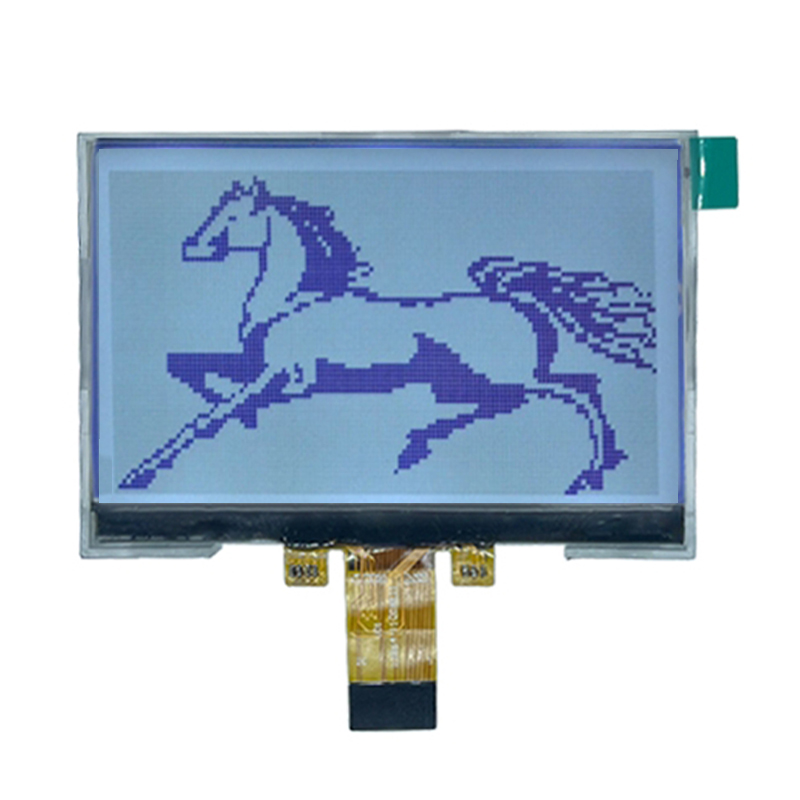
Straight edges and sharp corners have defined displays for decades, but the world around us rarely adheres to such rigid geometry. When a screen needs to wrap around a curved lobby pillar or sink into a dashboard with a flowing, organic contour, the old rectangular rulebook falls apart. Designers and architects are increasingly pushing back against the tyranny of the 16:9 slab, asking for displays that can bend, curve, or even take a completely bespoke silhouette without sacrificing visual quality.
This is where materials and manufacturing break their own boundaries. Flexible OLED substrates can be formed into gentle waves or tight radii, while tiled MicroLED panels let you craft massive, mosaic-like canvases that follow the crazy angles of an accent wall. Advances in laser cutting and in-glass circuit printing mean that irregular notches, rounded corners, and even holes for sensors or ventilation can be introduced without ruining the seamless look. The trick isn’t just making the display flex once—it’s ensuring it remains reliable and uniform across every odd bend and bump for years.
The payoff is more than just aesthetic novelty. A shaped display can guide attention in ways a flat panel never could, turning a static information kiosk into a sculptural element that pulls people in. In retail, custom-contoured screens can mirror brand logos or wrap product displays, bridging the gap between physical and digital. Even in homes, a display molded to fit a corner or built into a curved headboard changes the relationship between technology and interior space, making screens feel less like add-ons and more like natural extensions of the architecture itself.
Sunlight-Readable Screens Without Extra Bulk
Achieving crisp, outdoor-readable displays rarely demands the chunky, battery-draining backlights of the past. The trick lies in a clever blend of optically bonded layers and carefully chosen polarizers that suppress internal reflections. Instead of fighting the sun with brute brightness, these screens redirect ambient light, using it to illuminate the pixels themselves. The result is a panel that stays lean—often no thicker than a standard tablet display—yet delivers strong contrast under direct noon glare.
A close look at the panel stack reveals the real innovation: semi-transflective films that sit behind the liquid crystal layer, bouncing natural light back through the pixels while still permitting a subtle LED glow in dimmer settings. This dual-mode behavior eliminates the need for a power-hungry, heat-generating high‑brightness backlight array. The absence of those extra optical sheets and cooling hardware keeps the whole assembly remarkably slim, slipping easily into rugged handhelds and vehicle dashboards without forcing design compromises.
Engineers have also refined the anti-glare and anti-fingerprint top coats to handle finger smudges and harsh reflections without softening the image. Rather than piling on diffuser films that muddy sharpness, they engineered micro‑textured surfaces that scatter incoming light just enough to kill mirror-like glare while preserving pixel‑level clarity. Paired with low‑reflection bonding between the cover glass and the LCD, the screen reads almost like e‑paper in daylight, but retains full color and smooth motion—all without adding a millimeter of unnecessary thickness.
Touch and Display: A Single Seamless Surface
When your fingertip meets the screen, there’s no longer a barrier between intention and action. The latest devices fuse touch sensors directly into the display stack, creating a surface that feels like an unbroken extension of the glass. Taps, swipes, and gestures register with almost unnerving speed, as if the interface anticipates your next move. This integration not only makes the screen thinner but also eliminates the subtle air gap that used to dull colors and add a faint shadow between touch layers. The result is a panel that feels alive under your fingers, responding with a fluidity that blurs the line between hardware and the digital world.
Behind this unified surface, the engineering is just as elegant. Instead of sandwiching separate touch films or sensors, the display’s pixel array itself doubles as a touch receptor. Capacitive electrodes are woven into the sub-pixel structure, allowing the screen to detect pressure and contact without any extra thickness. This means the panel can be bonded directly to the cover glass with a single optically clear adhesive, boosting brightness and viewing angles. Designers get a cleaner look, free of bezel warping or distracting parallax, while you enjoy a display that appears to float right on the surface. The seamlessness is not just cosmetic—it fundamentally changes how light passes through, delivering sharper text and richer images.
What truly sets this approach apart is how it transforms everyday interactions. Because touch and display are so tightly coupled, the system can sample touch input at the exact refresh rate of the screen, syncing every stroke with pixel-level precision. Drawing or handwriting feels more natural, with almost zero latency between the stylus tip and the line that appears. Even casual gestures like pinch-to-zoom or a gentle long press gain a tactile smoothness that makes the experience more immersive. It’s a quiet revolution in industrial design, where removing a single layer doesn’t just save space—it redefines what a screen can be. The result is a device that feels less like a gadget and more like a pane of intelligent glass, inviting you to touch it without hesitation.
Cutting Power Use Without Dimming the Experience
Modern devices often guzzle energy behind the scenes, even when we’re not actively tapping and swiping. The secret to trimming that hidden consumption lies in smarter standby modes that learn your habits—dimming the backlight just before you typically put the phone down, or letting Wi-Fi snooze when you’re asleep. It’s less about stripping features and more about tuning the rhythm of power use to your life, so the battery drains slower without you ever noticing a lag or a missing notification.
Engineers are also rethinking the guts of our gadgets, swapping out power-hungry components for ones that sip electricity yet deliver the same punch. A display might refresh only the moving parts of an image instead of the whole screen, or a processor might dynamically split its workload across efficient cores for simple tasks. These adjustments happen in milliseconds, invisible to the user, but they add up to hours of extra life on a single charge.
Then there’s the software side—clever algorithms that predict what you need next and pre-load it smartly, avoiding wasteful churn. They might compress data more aggressively when the signal is strong, or defer non-urgent updates until you plug in. The result is a device that feels just as responsive, with a screen that’s just as crisp, while quietly conserving enough energy to make a genuine dent in your electric bill.
Long-Life Panels for Always-On Applications
Built from materials that resist gradual degradation, these displays maintain brightness and color accuracy far longer than typical screens. The key lies in advanced organic compounds and robust encapsulation techniques that shield against moisture and oxygen—two primary culprits of early burnout. Even after tens of thousands of hours, you’ll notice only minimal shift in luminance, ensuring the content remains readable without frequent recalibration.
Designed specifically for continuous operation, the panels intelligently manage static elements to prevent ghosting or uneven wear. Pixel-shifting algorithms subtly move on-screen components, while automatic brightness adjustments respond to ambient conditions, reducing stress on the emitters. This preserves uniformity across the entire display area, so you won’t find persistent shadows or fading patches even after years of showing the same interface elements.
Their low power draw is another standout trait, making them ideal for devices that rarely switch off. By optimizing the driving circuitry, these screens achieve consistent performance without generating excessive heat, which can otherwise shorten lifespan. The result is a display that stays vibrant and dependable, whether it’s part of a factory monitoring system, a digital signage installation, or a smart home control panel.
FAQ
Liquid crystal display solutions go beyond off-the-shelf screens. They encompass customized modules, integrated touch interfaces, ruggedized builds, and tailored firmware that meet specific industrial, medical, or automotive requirements. Unlike standard consumer panels, these solutions often involve optical bonding, wide temperature tolerance, and specialized backlighting to perform reliably in demanding environments.
Medical imaging, automotive dashboards and infotainment, industrial automation, marine navigation, and avionics are prime examples. Each demands displays that can withstand shock, vibration, extreme temperatures, or direct sunlight while maintaining crisp readability and color accuracy. Advanced LCDs with features like transflective modes or high-brightness LEDs are often the go-to choice.
We're seeing incredible strides in local dimming for deeper blacks, quantum dot enhancement for wider color gamuts, and integrated optical sensors for ambient light adaptation. Touch capabilities have evolved from simple finger taps to gloved-hand operation, stylus precision, and even haptic feedback, making interfaces much more intuitive and responsive in professional settings.
When you tailor the display's resolution, aspect ratio, bonding method, and cover glass, you eliminate reflection issues, improve contrast under bright conditions, and extend the operational lifespan. For instance, an outdoor kiosk with a custom-bonded, high-nit display remains readable at noon and resists condensation better than a generic panel. This directly enhances user trust and reduces maintenance calls.
Longevity and consistent brightness are usually the deciding factors. LCDs typically have a longer usable life without burn-in, making them safer for static, 24/7 content like monitoring dashboards. They also tend to be more cost-effective in sizes above 10 inches. OLEDs offer perfect blacks and thinner profiles but can degrade faster under constant high-brightness operation, which limits their industrial value.
Many suppliers now emphasize reduced power consumption through efficient LED backlights and adaptive brightness. The move to modular designs means a faulty backlight or driver board can be replaced without scrapping the entire display, cutting e-waste. Lead-free solder and mercury-free backlights are becoming standard, and some programs accept panels for component recovery at end of life.
Transparent LCDs are already being used in retail showcases and automotive heads-up displays, blending digital overlays with real-world views. High-resolution, low-latency panels are critical for AR simulation instruments. In smart homes and offices, LCD-embedded surfaces double as control hubs and decorative elements, responding discreetly to touch or gestures without dominating the aesthetics.
Conclusion
Liquid crystal display technology remains at the heart of modern visual interfaces, blending precision optics with materials science to deliver crisp, artifact-free images. The inner workings depend on a careful arrangement of polarizers, liquid crystal molecules, and thin-film transistors that modulate light with remarkable control—enabling deep blacks and vibrant colors even in challenging lighting. This foundation allows manufacturers to push past conventional rectangular bounds, creating shaped panels that curve around architectural contours or fit into cutouts without sacrificing edge-to-edge clarity. Equally impressive is the ability to maintain perfect legibility under intense sunlight without resorting to bulky, power-hungry backlights. Through optical bonding and low-reflectance surface treatments, screens stay slim and readable outdoors, a must for kiosks, marine instruments, and digital signage exposed to the elements.
The evolution continues with interfaces where touch and display fuse into a single, flawless sheet of glass. Advanced projective capacitive sensors lay hidden beneath the surface, responding instantly to gloved hands or wet conditions while keeping the visual path unbroken. Behind the scenes, smart power management trims consumption dramatically—adaptive refresh rates and selective backlight dimming ensure that brightness and color richness never compromise energy efficiency. Such tuning is critical for always-on devices like industrial control panels and medical monitors that must perform reliably around the clock. The panels themselves are engineered for longevity, resisting image retention and gradual dimming over tens of thousands of hours. From uniquely shaped dashboards to sunlight-vivid outdoor installations, these LCD solutions bring together clarity, resilience, and low-maintenance operation, quietly powering the visual innovation woven into daily life.
Contact Us
Contact Person: Vincent
Email: [email protected]
Tel/WhatsApp: 86 135 5485 1379
Website: https://www.jda-display.com/