

Isopropylated Triphenyl Phosphate Dealer: Key Factors for Sourcing Quality Chemicals
2026-11-02
Sourcing isopropylated triphenyl phosphate (IPTPP) isn’t just about checking a spec sheet—it’s about trusting the hands behind the molecule. As a flame retardant and plasticizer that quietly shapes performance in polyurethane foams, PVC, and engineering resins, IPTPP demands more than a transactional dealer. At Fortune, we’ve seen buyers burned by inconsistent purity, vague supply chains, and batch-to-batch drift that no certificate of analysis can hide. This guide cuts through the noise to show you what actually separates a reliable IPTPP partner from a costly gamble—because the right chemical source shouldn’t be your biggest unknown.
Reading Between the Lines of a Purity Spec Sheet
Most people glance at the purity percentage and move on, but that number is more like a headline than the full story. A 99.5% assay can look nearly identical to a 99.8% assay until you realize the remaining 0.2% might be a catalyst residue that poisons your reaction. The spec sheet rarely volunteers such context; you have to ask what the impurities are, not just how much of the main component is present.
The real value in a purity spec sheet often hides in what is not listed. Residual solvents, moisture content, and trace metal profiles are frequently tucked away in separate documents or omitted entirely unless requested. For pharmaceutical intermediates or electronic-grade materials, a missing moisture spec can be more dangerous than a low purity number because water can silently degrade performance or cause side reactions.
Comparing two spec sheets side by side can reveal more than either one alone. One supplier might report purity by area percent from a GC trace, which counts volatile impurities but ignores non-volatile salts, while another uses a wet chemical assay that includes everything. The detection limit also matters: a spec sheet that claims no detectable heavy metals with a 10 ppm limit tells you far less than one that used a 0.1 ppm ICP-MS method. Reading between the lines means recognizing which analytical door was left open.
Regulatory Documentation That Holds Up Under Audit
When an inspector asks to see the complete history of a protocol amendment, the difference between a well-built documentation package and a pile of loose files shows up fast. Each substantial change should have a dated entry, the name of the person who authorized it, and a written rationale that doesn't require a hallway conversation to decode. Keeping original approvals, superseded versions, and cross-references to related documents in one place makes the route from draft to final release traceable without relying on anyone's memory.
Version control is where many records fall apart. Numbers need to be sequential and unambiguous, and signatures should carry a timestamp plus the signer's role. When a deviation from standard procedure happens, the explanation has to sit beside the record, not in a separate email thread. For any document that pulls data from another system, include a direct link or a dated printout of the query so a reviewer can see what information was available at the time of the decision.
A useful test is whether an external reviewer who has never met your team can open the file set and determine what happened, when, and why. That level of clarity comes from treating documentation as part of the process instead of an afterthought. Before finalizing a regulatory submission, walk through each required record and confirm that the approving authority, the effective date, and the change rationale are visible in the same view. If any element needs a separate conversation to explain, it belongs in the documentation itself.
Why Lot-to-Lot Uniformity Can Make or Break Your Formulation
In pharmaceutical and nutraceutical development, consistency between batches isn't a luxury—it's the silent backbone of every successful formulation. When active ingredients shift in particle size, polymorphic form, or moisture content from one lot to the next, downstream processes like blending, compression, and dissolution can veer off course. A tablet that disintegrates perfectly with one supplier's lot may fail with the next, forcing reformulation work or, worse, a recall. That kind of variability doesn't just cost money; it erodes trust with regulators and patients alike.
Consider how excipient behavior amplifies these differences. A binder with slightly higher viscosity in one lot can change granulation endpoints, while a disintegrant with different swelling kinetics alters release profiles. These aren't theoretical concerns—they show up as content uniformity failures, sticking during compression, or unexpected changes in bioavailability. Teams that overlook lot-to-lot drift often find themselves chasing root causes long after the batch is shipped, when the real issue traces back to raw material specifications that were too broad to begin with.
The fix starts with rigorous supplier qualification and tightened incoming material controls, but it also demands a formulation designed for robustness. Using wider manufacturing windows, pre-blending multiple lots, or selecting excipients with inherently stable physical properties can absorb minor fluctuations before they become product failures. Ultimately, lot-to-lot uniformity isn't just about avoiding problems—it's what separates a formulation that performs in the lab from one that performs in the real world, every single time.
Mapping the Supply Chain Before You Sign the Contract
Most companies wait until after a deal closes to notice that their supplier's supplier can't actually deliver on time. By then, the contract is locked and every missed deadline becomes someone else's emergency. Instead, pull out a blank sheet and sketch the entire material flow while the ink is still wet on the negotiation table. That includes second-tier vendors, freight forwarders, customs brokers, and any warehouse that touches your inventory before it reaches your dock. If a node looks vague or someone shrugs and says "we don't really track that far back," treat that as a red flag with a price tag attached.
Walk through a real order scenario from purchase order to final delivery, writing down each handoff and the typical lag time. Ask the supplier to name their own bottleneck weeks rather than best-case weeks. If they cannot tell you which of their raw materials has the longest lead time or which shipping lane consistently runs late, you are not negotiating with a partner who manages risk. You are negotiating with a sales team. That distinction matters more than any penalty clause buried on page forty.
Once the map is in front of you, mark the points where a delay could cascade into a missed launch or stockout. Then pick two or three of those points and demand transparency triggers: regular lead-time updates, alternative routing plans, or a shared dashboard for critical milestones. Do not accept a generic promise that they will "communicate proactively." Put the map into the contract as an appendix, so the signed agreement reflects the supply chain you actually need, not the simplified one that looked fine during the pitch.
Technical Expertise That Goes Deeper Than a Price Quote
Most teams only see the number at the bottom of a quote. We see the assumptions, the material limits, and the manufacturing trade-offs hiding behind it. That’s why our engineers sit in on early design reviews instead of waiting for a final spec — because catching a tolerance mismatch or a weld distortion risk before it reaches the drawing board saves weeks, not just dollars.
Our depth comes from working backward from your actual load case, corrosion environment, and assembly sequence — not from a generic catalog. Whether it’s a custom pressure vessel, a high-cycle fatigue bracket, or a precision-machined manifold, the quote you receive is backed by a stack of hand calculations, FEA screenshots, and notes from a machinist who’s built something similar before.
That’s the difference between a vendor who prices your part and a partner who pressures your design. You don’t just get a number — you get a sanity check on wall thickness, a suggestion for a more weld-friendly joint, or a call about why that surface finish tolerance will double your cost for no functional reason. Technical expertise isn’t a line item. It’s the reason the line item is realistic.
Evaluating Total Cost Beyond the Invoice Line
A supplier's invoice rarely tells the whole story. The line item for a component might look competitive, but once you layer in freight, customs brokerage, inventory carrying costs, and the engineering time spent qualifying a new part, the true cost can be two or three times higher. Smart procurement teams start with the invoice, then dig into the less visible expenses that accumulate across the supply chain.
Consider how those hidden costs behave over the product lifecycle. A cheaper unit price may come with longer lead times, forcing you to hold more safety stock or pay for expedited shipping when demand shifts. There's also the cost of quality escapes—returns, rework, line stoppages—that never appear on the original purchase order but hit the P&L just the same. Mapping these variables for each supplier gives you a clearer picture than unit price alone.
The most useful approach is to build a simple total-cost model for the categories that matter most. Start with three to five cost drivers beyond the invoice line: logistics, inventory, quality, and switching or onboarding. Then, plug in real data from your own operations rather than industry averages. You'll quickly see which suppliers are genuinely cost-effective and which ones only look good on paper.
FAQ
Inconsistent batch numbers, vague origin information, or a reluctance to share detailed specifications often point to a sourcing risk. A dealer with no direct contact to the manufacturer and long intermediary chains may also struggle to resolve quality disputes later.
These two parameters directly influence downstream performance. Elevated acid value can accelerate equipment corrosion or affect resin reactivity, while excess moisture may cause hydrolysis during storage. Request target ranges, not just maximum limits, and compare them with your own application tolerances.
Stock inventory samples are more indicative of what you will actually receive. Production lot samples may look cleaner because they were taken before months of warehouse storage. If possible, ask for a sample drawn from the specific drum or IBC being quoted.
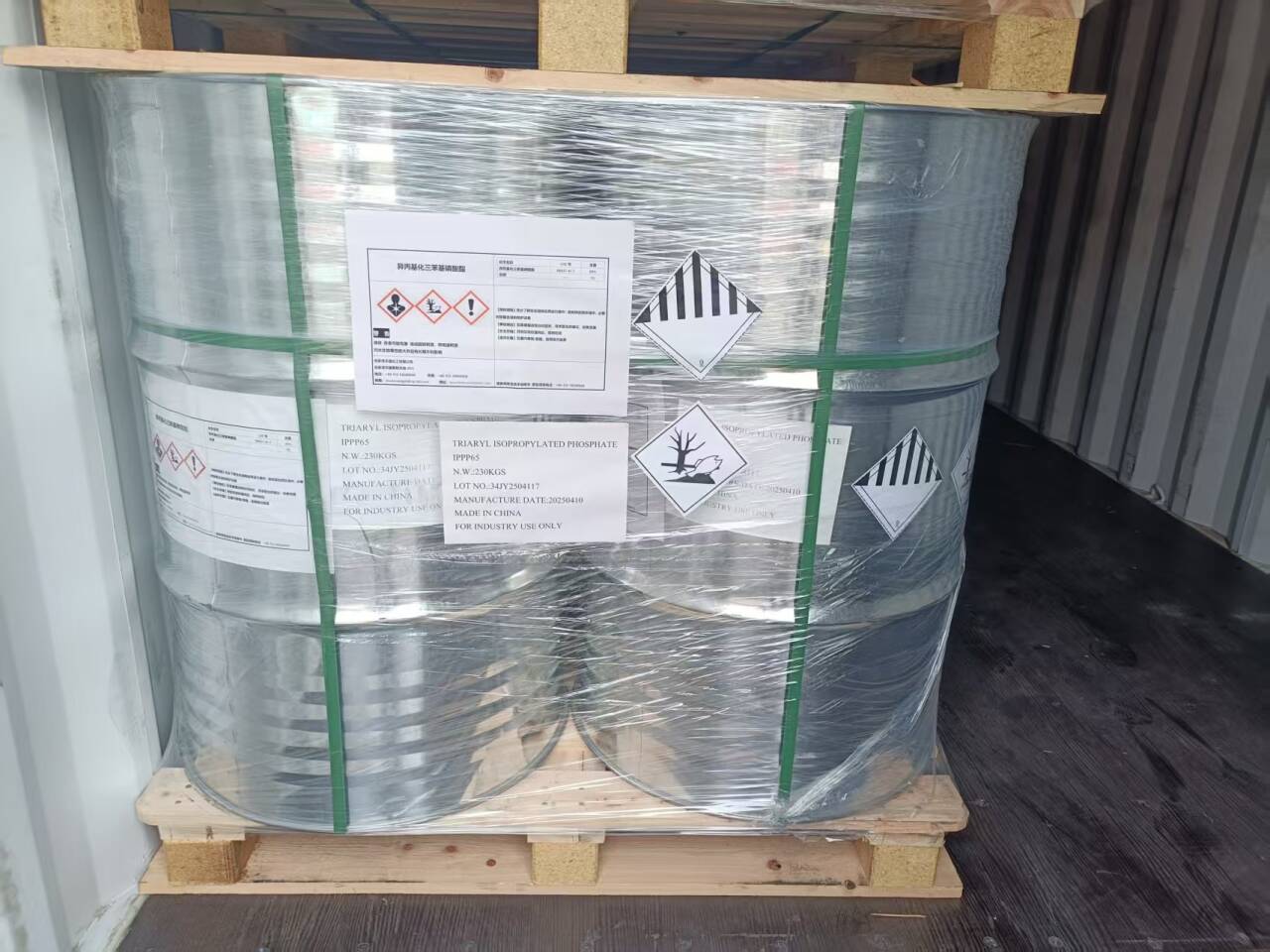
Look for nitrogen blanketing or sealed headspace to limit oxidation, epoxy-lined or stainless steel containers for long-term stability, and clear labeling that shows the fill date. Dealers who repackage under uncontrolled conditions often introduce moisture and particulate contamination.
Ask for a detailed GC or HPLC report showing the distribution of isopropylated triphenyl phosphate isomers. Some flame-retardant and plasticizer applications are sensitive to the ratio of mono-, di-, and tri-substituted species. If the dealer cannot provide this, you may need in-house testing before switching suppliers.
At minimum, you should receive a certificate of analysis, safety data sheet, and proof of compliance for the regions involved, such as REACH or TSCA. For certain electronics or automotive uses, additional declarations on restricted substances may be requested and should not be treated as optional extras.
Not always, but it often reflects diluted specification, older inventory, or less rigorous quality control. Ask for a cost breakdown that shows testing, packaging, and logistics rather than accepting a vague quote. A modest premium for tighter controls usually pays off in fewer production interruptions.
A good dealer will track batch performance, notify you of any specification deviations found later, and help with troubleshooting if your process shows unexpected viscosity or color shifts. They should also hold retain samples for a defined period so any dispute can be investigated against the original material.
Conclusion
A dependable isopropylated triphenyl phosphate dealer rarely hides behind a single impressive purity number. The real story sits in the finer print of the spec sheet: trace metal profiles, acidity levels, moisture content, and the analytical methods used to measure them. Those details matter because a 99% assay means little if the remaining fraction interferes with your polymer system or coating. Equally important is documentation that can survive a serious audit—not just a certificate of analysis, but full REACH, TSCA, or regional compliance records plus batch-specific test data. Lot-to-lot uniformity is another silent dealbreaker. A sample that performs well in a trial run does not guarantee the next drum will behave the same. Ask for historical batch data, process control charts, or a retention sample program before committing to a long-term purchase.
Mapping the upstream supply chain is just as critical as checking the product itself. You want to know where the phosphate intermediate comes from, how the isopropylation step is controlled, and whether any toll processing introduces variability. A dealer who can walk you through that chain—and share corrective action reports when something drifts—offers far more than a competitive quote. Technical expertise should go beyond restating a data sheet; the right partner can discuss solubility in your base oil, flame-retardant synergy with other additives, or storage conditions that prevent hydrolysis. Finally, look past the invoice line. Freight, inventory carrying costs, quality rejections, reformulation time, and even the risk of a failed customer audit all shape the true cost of a low-priced material. A slightly higher unit price often disappears once you factor in reliable delivery, stable viscosity, and fewer production interruptions.
Contact Us
Contact Person: WANG SIHAI
Email: [email protected]
Tel/WhatsApp: +86-13815295628
Website: https://www.fortunechemtech.com/index_en.html