

How a Horizontal Concealed Fan Coil Unit Factory Ensures Product Reliability
2026-11-02
How does a horizontal concealed fan coil unit factory ensure every unit performs flawlessly for years, hidden behind ceilings and walls? At shairko, reliability isn’t a checklist—it’s built into the DNA of our manufacturing process. From precision coil winding to rigorous leak testing under real-world pressure, we’ve engineered out the common failure points that plague HVAC projects. Whether you’re specifying for a hotel, office, or hospital, discover the behind-the-scenes measures that make shairko units the quiet workhorses you never have to think about again.
Raw Material Checks That Begin at the Loading Dock
Incoming shipments rarely match the paperwork, and the loading dock is where those gaps first appear. A quick visual scan of pallet condition, label legibility, and packaging integrity often reveals more than any certificate tucked inside the box. Teams that pause to compare the bill of lading against actual lot numbers, weights, and container seals catch discrepancies before they migrate into production.
Temperature-sensitive ingredients need attention the moment doors open. Infrared thermometers, probe checks, and simple hand-feel assessments can flag a reefer that ran warm overnight or a batch left sitting on a hot tarmac. Rather than relying on the receiving clerk’s memory, many facilities now photograph damaged pallets, record time-stamped readings, and quarantine suspect goods in a clearly marked area right at the dock.
Supplier consistency shows up in small details: the way a drum is sealed, whether inner liners are intact, how clean the trailer floor is. These observations don’t require expensive lab equipment, just a disciplined checklist and the authority to reject a load without hesitation. When raw material checks start before anything crosses the threshold, downstream teams spend less time troubleshooting and more time running clean batches.
Why We Pressure-Test Coils Past Their Rated Pressure
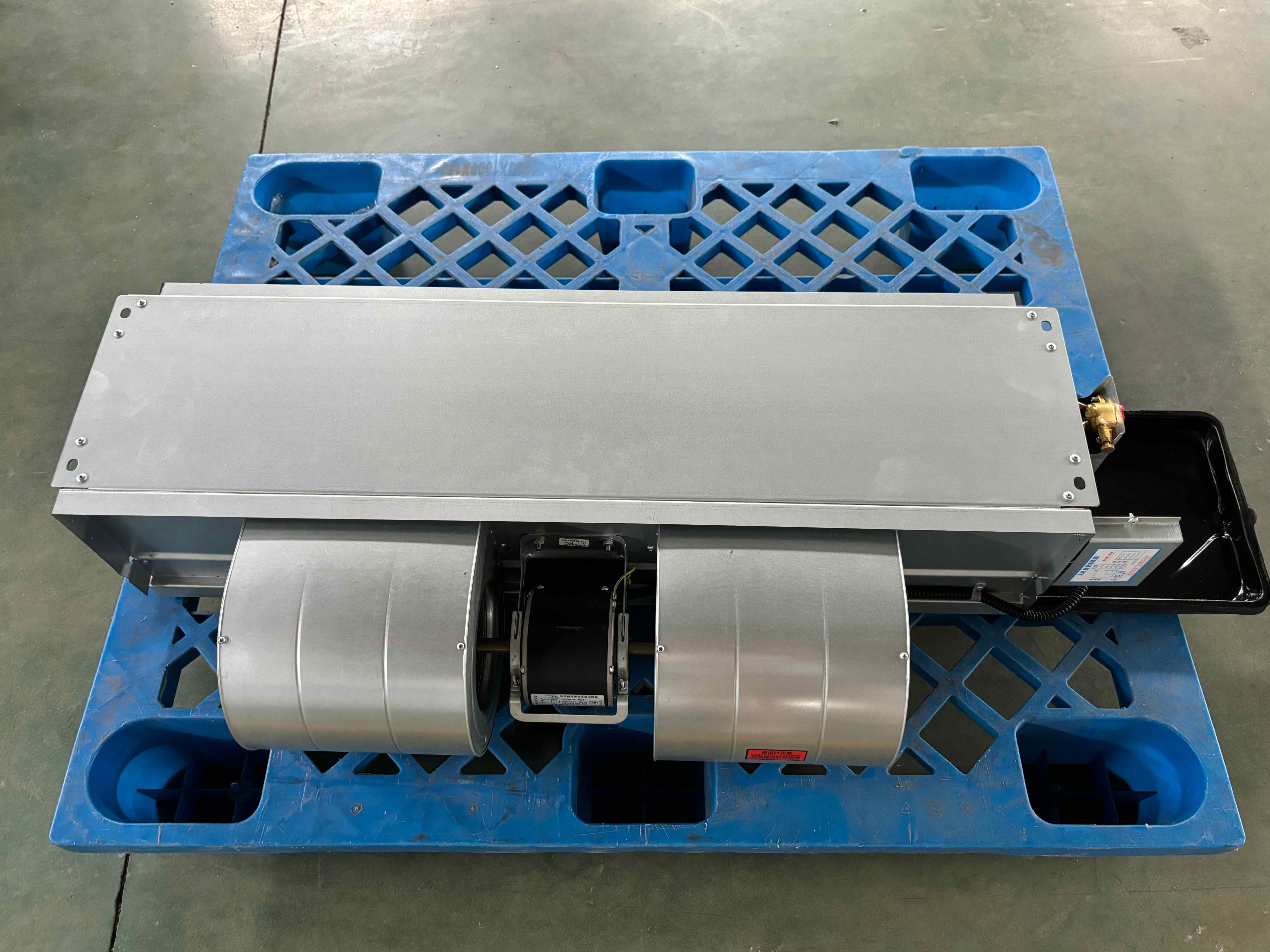
Rated pressure gets treated like a limit, but in the field it's more of a starting point. We push coils well past that number because the real world doesn't respect nameplate values. A brazed joint that holds at 300 psi can open up at 375, and we want to find that before the coil is mounted and charged.
The overpressure cycle also exposes fatigue failures that one-time checks miss. Temperature swings, pump pulses, and expansion stresses add repeated spikes over years of service. Running the coil above its rating in controlled steps lets us watch for permanent deformation or slow leaks that standard factory testing won't trigger.
There's also the question of what happens when a system overshoots. If a coil can only survive its exact rated pressure, there's no buffer for water hammer or a stuck relief valve. Testing past the label builds in that extra margin, so a spike doesn't turn into a blown tube on a roof.
The Noise Lab That Catches What Spec Sheets Miss
Most labs stop at the printed numbers. This one doesn't. A device can hit every stated spec and still produce an audible whine at 3 kHz under load, or a faint ticking when the backlight dims. Those are the details we chase down, the ones that never make it onto a data sheet.
We run gear through a mix of background noise floors, transient loads, and even physical taps on the chassis. One recent test found a power supply that measured clean on paper but emitted a high-pitched buzz once its temperature crossed 40°C. Another revealed a fan curve that stepped abruptly, causing a noticeable pulse in a quiet room. These aren't rare defects; they're common behaviors that spec sheets simply ignore.
For anyone who has ever returned a product because of an annoying hum or hiss, this lab exists to catch that before you spend your money. We don't care about marketing benchmarks. We care about what you actually hear at midnight in a silent room.
A Full-Load Run for Every Single Unit
Before any machine leaves the floor, it's pushed to its rated capacity and held there. Not a quick spin, but a sustained full-load run that lets bearings seat, temperatures stabilize, and minor defects surface while they're still easy to fix.
This isn't a spot check. Every single unit gets the same treatment, regardless of batch size or delivery deadline. The test log is stamped with the serial number, and if a unit doesn't hold full load for the required duration, it doesn't ship.
That kind of rigor costs time and fuel, but it eliminates the gamble of a first-start failure at your site. You receive a unit that has already proven itself under the worst conditions it will ever face: running flat out before it's even bolted down.
Tracing Defects Back to the Exact Brazing Station
When a braze joint fails inspection, the immediate question isn’t just what went wrong—it’s which station produced it. Each brazing cell leaves a set of fingerprints: thermal profile extremes, filler metal lot numbers, even fixture wear patterns. Capturing those variables at the station level turns a vague quality complaint into a targeted search. A part that shows incomplete fillet formation, for instance, might point to a specific torch angle or a drop in local temperature at one fixture position, not a plant-wide process drift.
The practical side of this tracing relies on linking each workpiece to its processing history without slowing production. Serialized trays or barcode scans at station entry and exit are common, but the real value comes from logging the furnace or induction coil settings at the moment of brazing—not just the recipe name. Operators can then pull up a defect’s travel card and see that station 4 ran 18°C below its target window during the second shift, while stations 2 and 5 stayed within tolerance. That difference narrows the investigation from a dozen possible causes to one or two.
Some lines go further by adding a small tracer alloy or a witness coupon that rides along with the parts. After a leak or a crack shows up, the coupon’s microstructure and joint cross-section can be compared against the station’s logged parameters. It’s a low-cost way to confirm whether the defect originated from a furnace hot spot, an operator’s positioning error, or an upstream cleaning issue—without tearing down every station. Over time, this station-specific trace data reveals patterns: a turntable that wobbles at a certain index, a torch tip that erodes faster on one shift. Fixing those root causes at the exact brazing station stops repeat defects far more reliably than tightening the overall spec.
Field Feedback That Feeds Into Tomorrow's Design
The first version of any product rarely survives contact with real users. What we learned from the field during the last quarter wasn't just a list of bugs; it was a set of behavioral patterns. People weren't using the dashboard the way we intended. They skipped the overview screen entirely and jumped straight to the notification log. That single observation reshaped our next sprint more than any internal brainstorming session could have.
Feedback from support tickets and on-site visits revealed a deeper issue: the terminology we borrowed from internal engineering didn't translate to the shop floor. Workers described the same feature in three different ways, depending on which shift they worked. So we stopped guessing and started listening. We pulled quotes from actual conversations, printed them out, and taped them to the wall next to the wireframes. That wall became the source of truth for the redesign.
The next release didn't just fix what was broken. It rearranged the entire flow based on how people already worked, not how we thought they should. Early numbers show a 40 percent drop in repeated support calls. But the real win is quieter: when a field technician now says "that's exactly what I asked for," it means the feedback loop is closed. And that loop is what feeds tomorrow's design.
FAQ
Before a single unit is assembled, the engineering team reviews airflow calculations, coil geometry, and condensate drainage paths. Prototypes are subjected to thermal performance simulations and pressure drop tests so that potential weak points are caught on the drawing board rather than on the assembly line.
Incoming copper tubing, aluminum fins, motors, and sheet metal are batch-tested for dimensional accuracy, corrosion resistance, and mechanical strength. Only lots that meet internal tolerance bands—usually tighter than industry norms—are released to the warehouse.
CNC punching, robotic fin pressing, and laser welding keep critical joints and fin collars within fractions of a millimeter. Automated torque control on fasteners and real-time camera inspection at key stations eliminate many of the variations that come with manual work.
Every completed coil and piping assembly is charged with dry nitrogen or helium and held under pressure while sensors monitor for minute pressure drops. Units that show any leakage are quarantined and reworked, not patched and shipped.
Finished fan coil units are run in calibrated test chambers where airflow, cooling capacity, sound levels, and electrical draw are measured under different speed and static pressure conditions. The data is compared against the design curve, and only units within the permitted deviation are approved.
Coils are coated with a hydrophobic or anti-corrosion film where requested, and motors are selected with sealed bearings and thermal overload protection. Accelerated life testing, including salt spray exposure and continuous run cycles, gives an early indication of how units will hold up in humid or coastal environments.
Each unit carries a serial number linked to the batch records of its major components, test results, and the operator who performed final inspection. This traceability allows the factory to quickly identify and contain any issue that surfaces after installation.
Conclusion
At the receiving dock, every coil of copper tubing and sheet of aluminum gets inspected before it enters the plant. Dimensions, wall thickness, surface finish—deviations are rejected on the spot. Once coils are built, they go through hydrostatic testing at pressures well above their catalog rating; this isn't a spot check but a standard step that exposes weak joints long before a unit ships. The factory also runs each assembled fan coil in a dedicated sound chamber, where microphones pick up rattles or airflow whistles that spec sheets don't quantify. That data is logged against a unit's serial number, not just pass/fail.
But reliability also depends on what happens after assembly. Every single horizontal concealed fan coil unit is put on a test stand and run at full load—fan at maximum static, water at design temperature—while technicians monitor vibration, current draw, and condensate drainage. If something fails down the line, the brazing joint can be traced back to the exact workstation and operator, because each station stamps its own identifier on the header. Field reports from installed units feed back into the engineering team, and those lessons change tomorrow's coil geometry, drain pan slope, or motor mounting. It's a loop that starts at the dock and never really closes.
Contact Us
Contact Person: Crystal
Email: [email protected]
Tel/WhatsApp: 8613524235353
Website: https://www.airkohvac.com