

High Quality Nickel Tabs: Essential Guide to Materials, Performance, and Applications
2026-11-17
Nickel tabs rarely get the spotlight, yet they quietly decide whether a battery pack delivers reliable power or fails under stress. This guide cuts through the usual supplier jargon and focuses on what actually matters: how materials, welding behavior, and real-world performance separate premium strips from cheap imitations. Whether you’re prototyping a high-drain pack or scaling production, understanding these details can save you from costly rework. Along the way, you’ll see why teams that prioritize consistency often turn to BOSI for nickel tabs that hold up when it counts.
Where Nickel Tabs Earn Their Reputation in Real Cells
Reputation isn't built on a spec sheet. It's forged inside the cell, where nickel tabs face constant mechanical stress and varying electrochemical conditions. In real cells, the point where a tab meets the electrode stack is rarely a clean line. Slight misalignments, weld penetration differences, and pressure distribution from the winding or stacking process all show up there. A nickel tab either holds its shape and keeps the current path smooth, or it develops micro-cracks that quietly raise internal resistance over hundreds of cycles.
What separates a dependable tab from a risky one often appears only after prolonged aging. Cells stored at elevated temperatures, cycled at high rates, or vibrated during transport push tabs into failure modes you'd never see in a fresh sample. The real test is whether the tab maintains contact without becoming a hot spot. If a tab's grain structure allows uneven current distribution, localized oxidation sets in and accelerates degradation far beyond what the overall cell data would suggest.
Field experience also counts for a lot. Tabs that perform well in pilot batches can still struggle in high-volume production because small variations in material temper, surface cleanliness, or weld timing get amplified across millions of cells. The nickel tabs that earn a solid reputation are the ones that tolerate those everyday inconsistencies without forcing engineers to tighten every process parameter to an unrealistic degree. That practical margin is what ultimately decides whether a tab survives in a real cell or only in a controlled lab setup.
Reading Purity and Alloy Choices Beyond the Datasheet
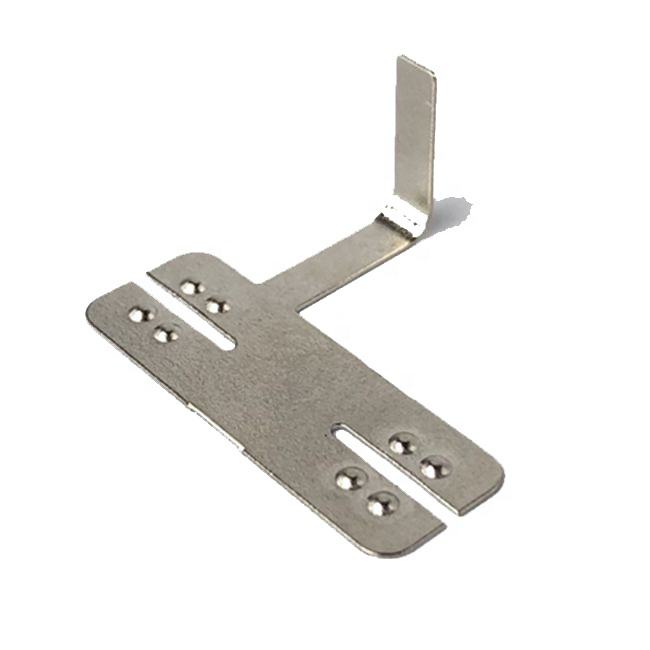
A datasheet gives the listed alloy composition, but it says little about what sits between those elements. Purity claims such as 99.9% or 'low interstitial' describe a family of possible ingots, not one material. Two lots with the same nominal grade can differ in oxygen, nitrogen, hydrogen, sulfur, and trace metals, and those traces frequently decide how the alloy welds, anodizes, forms, or survives cyclic loading. The number alone rarely tells you which impurities are present, whether they gather at grain boundaries, or how they shift behavior after heating, machining, or exposure to a chloride-heavy environment.
Alloy choice moves further from the datasheet when a standard grade allows a range. 316L can contain carbon from a trace level up to 0.03%, and the low end is not automatically 'better' in every service condition; the higher end can add a little strength but asks for faster cooling after welding to avoid sensitization. Similarly, 7075 aluminum can carry different iron and silicon residuals inside the accepted limits, and those residuals alter quench sensitivity and fatigue crack growth. Reading a material this way means requesting the actual heat analysis and the processing path behind it, not just the published typical properties.
For a part that will see repeated temperature swings or aggressive media, treat the datasheet as a filter rather than a guarantee. Buy a small sample of the exact heat you plan to run, test it in the condition you will ship, and keep that result tied to the lot number. A supplier can usually provide the actual chemistry and sometimes inclusion ratings or grain size if you ask before ordering. That extra step is less about distrust and more about knowing which variable—cleanliness, residual elements, or thermal history—will control the failure mode you cannot afford to meet later.
Dimensions That Change Weld Quality More Than You Expect
Most welders assume voltage, wire feed speed, and travel angle drive the bulk of weld quality. But a handful of quieter variables can shift results faster than any dial on the machine. Joint fit-up rarely gets the attention it deserves—a gap that varies by half a millimeter changes heat distribution enough to turn a clean bead into undercut or cold lap. Even the same nominal gap behaves differently when plates are slightly out of plane, forcing the arc to hunt for the shortest path and leaving uneven fusion along the toe line.
Ground clamp placement is another silent lever. Tucked near the arc, it returns current predictably. Move it to the far end of a long workpiece and resistance climbs, dropping effective amperage and altering penetration depth without a single setting change. Welders who chase “mystery” porosity often find the real culprit in a ground cable half-buried in rust or hanging loosely from a painted surface.
Thermal history matters more than the prep table suggests. Thick sections that soaked in overnight cold storage behave like heat sinks, pulling energy from the puddle and narrowing the wetting line. Conversely, a part preheated by sun or an earlier weld pass flows too easily, encouraging sag in the vertical position. The fix is rarely a new technique—it is learning to read the metal’s temperature with the back of a gloved hand before striking an arc.
Conductivity, Heat Rise, and Mechanical Stress in Daily Cycling
In daily cycling, conductivity rarely behaves as a fixed material constant. Current crowding at tab welds, slight relaxation of electrode coatings, and gradual growth of surface films all push local resistance upward long before capacity drops become obvious. Those small resistive shifts change where heat is generated, so temperature readings at the cell surface often miss hotspots forming near the core or along the edges.
Heat rise is equally shaped by the rhythm of real use. A cold morning start raises internal resistance just as the first fast-charge pulse arrives, while a hot afternoon followed by immediate charging leaves less margin for heat to escape. Repeated thermal gradients force the outer and inner regions of the electrode stack to expand at different rates. The resulting strain concentrates around transitions and seams, gradually loosening contact points and making local heating more uneven.
Mechanical stress in daily cycling is not limited to vibration or impact. Insertion and extraction of lithium cause the active material to breathe at the grain level, and the positive and negative electrodes never swell in perfect unison. These small reversals act like low-cycle fatigue on the coated foils and the interfaces between them. Once microcracks appear, they raise local resistivity, which raises local temperature, which widens the stress range. Over hundreds of ordinary cycles this feedback loop quietly shifts the cell from reversible expansion toward permanent deformation and faster degradation.
Matching a Tab to Cylindrical, Pouch, and Prismatic Builds
Cylindrical cells hide most of their tab complexity inside the can. A common layout uses one positive tab near the middle of the jellyroll and a negative tab at the outer edge or on the can itself, but the exact tab height and fold radius decide whether the cell survives vibration and thermal cycling. A tab that stands slightly too tall can reach the can wall, while one folded too flat can crack at the bend before the pack reaches its first major service interval.
Pouch builds shift the focus from short-circuit risk to fatigue at the seal. The foil pouch offers little mechanical support, so the tab must flex through thousands of small movements without work-hardening or tearing near the heat-sealed edge. Opposite-end tabs keep current distribution balanced in high-drain applications, but only when the added tab thickness is reflected in the cell pocket and stack compression, otherwise the cell sits unevenly and pressure builds in the wrong places.
Prismatic cells combine a rigid can with layered internals, which makes tab placement a compromise between service access and thermal behavior. Same-side tabs simplify busbar attachment but pull heat into one corner and can warp the terminal plate during high-current welding. The tab cross-section should be matched to the cell's peak current so it does not become the hottest part of the assembly, and the transition from foil stack to solid tab needs support to avoid tearing under shock or prolonged vibration.
Field Failures That Trace Back to Tab Selection
Several field returns arrived with the same symptom, intermittent opens after thermal cycling. The failed units shared a connector family, but the real commonality was a narrow copper tab that had been substituted late in the design phase to save space. Once the tab selection changed, the contact area shrank enough to concentrate stress at the bend radius, and cracks appeared after a few hundred cycles.
Tab geometry is not just a fitment detail. A thicker or wider tab changes stiffness, current density, and how the joint responds to vibration. In these cases, the original tab had enough cross-section to stay well below the fatigue limit, while the substitute ran hot and flexed more than expected. Field data showed the failures clustered in installations with frequent temperature swings, which matched the accelerated life testing only after the actual tab dimensions were entered into the model.
The corrective action was not a housing redesign but a return to the original tab stock and a minor relief cut at the bend. Since that change, field failure rates on the same product line have dropped to background levels. It is a reminder that small substitutions in metalwork can carry more weight than the assembly drawing suggests.
FAQ
It comes down to far more than thickness. A well-made tab uses refined nickel with a consistent grain structure, tight dimensional tolerances, and clean edges. That translates into lower contact resistance, more repeatable welds, and less risk of cracking under vibration or thermal cycling.
Nickel resists oxidation better than copper, welds more predictably than steel, and stays ductile enough to absorb slight cell swelling. Copper carries current more efficiently but usually needs plating or a nickel layer to avoid corrosion and difficult welding.
Higher purity reduces internal resistance and weak points during welding. Impurities can create hot spots, inconsistent welds, and earlier corrosion, especially in humid or high-temperature environments.
Check the surface finish, edge condition, dimensional consistency, and hardness. A uniform matte or bright finish without burrs or oxidation spots usually indicates controlled rolling and slitting. For high-drain or safety-critical packs, ask for a material certificate as well.
Current capacity scales with cross-sectional area, but heat dissipation also depends on shape and connection quality. Thicker tabs carry more current but can make welding harder and add stiffness. The right choice balances pack layout, cell spacing, and expected continuous versus peak current.
They are critical in e-bike batteries, power tools, medical devices, drones, and stationary storage where repeated charge-discharge cycles, vibration, and narrow safety margins leave little room for poor connections. A failed tab can turn a minor cell imbalance into a dangerous hot spot.
Directly welding nickel to aluminum is difficult because of different melting points and oxide layers. Many builders use nickel-clad copper or transition pieces for that task. For copper busbars, a nickel-plated surface or specialized laser welding settings are usually required.
Look for inconsistent width, ragged edges, uneven surface color, or localized discoloration after welding. These often point to poor slitting, contamination, or inadequate annealing. In an assembled pack, such tabs may show higher resistance spots that heat up under load.
Conclusion
Nickel tabs earn their reputation not from lab certificates but from how steadily they hold a weld inside a real cell. Purity and alloy choices matter in ways a datasheet rarely captures: a 201 grade with slightly higher iron content may feel easier to punch yet shifts resistance and corrosion behavior after electrolyte exposure. Dimensions also change outcomes more than most engineers expect, since a few hundredths of a millimeter in thickness or a poorly deburred edge can turn a reliable parallel gap weld into a high-resistance joint that overheats locally.
During daily cycling, conductivity becomes only part of the story; heat rise concentrates at the tab-to-foil interface while repeated expansion and contraction create mechanical stress that hardens the nickel and can initiate cracks near the weld zone. Matching the tab to cylindrical, pouch, and prismatic builds therefore means balancing width, temper, and surface finish against the cell's current path and assembly method rather than copying a generic size. Many field failures that appear as capacity fade or intermittent voltage drop trace back to a tab that was slightly undersized for pulse currents, incompatible with the busbar material, or welded with settings that left micro-cracks hidden under a shiny surface.
Contact Us
Contact Person: Kristy Wu
Email: [email protected]
Tel/WhatsApp: 8613826954049
Website: https://www.dgbosi.com/