

Hidden Lijiang Attractions International Travelers Will Love
2026-08-03
Beyond Lijiang's famed Old Town lies a world few travelers ever see—secret alleyways, misty peaks, and timeless villages untouched by mass tourism. Among these hidden gems, Jade Water Village stands out as a soulful retreat where Naxi culture thrives beside crystal-clear springs. If you crave authentic experiences away from the crowds, these lesser-known treasures will redefine your journey. Let’s uncover the Lijiang that locals cherish—and you’ll soon love.
Ancient Naxi Villages Where Time Forgets to Tick
Wandering into these ancient Naxi villages feels like stepping through a veil of mist into a world that exists outside modern rhythms. Cobblestone paths, worn smooth by centuries of footsteps, wind past weathered wooden homes adorned with intricate carvings. No rush hour crowds or blaring notifications disturb the quiet hum of daily life—only the distant clatter of a loom, the murmur of a mountain stream, and the occasional bellow of a water buffalo punctuate the stillness. Even the sunlight here moves lazily, filtering through ancient walnut trees to dapple the courtyards where elders sit, smoking long pipes and sharing stories in the melodic Naxi tongue.
The villages seem governed by an older pact with nature. Every home has its courtyard garden, where persimmons ripen to burnt orange against adobe walls and chickens scratch in the shade. You'll notice the iconic squat stone bridges arching over crystal-clear canals that channel snowmelt from Jade Dragon Snow Mountain—still the lifeblood for washing, cooking, and irrigating terraced fields that climb the slopes in emerald steps. Dongba priests in indigo robes might pass you on the path, carrying handmade paper inscribed with pictographs that predate Chinese characters. Their presence is a thread to a belief system where spirits reside in trees, rocks, and water, and rituals unfold by the light of smoky pine torches.
What truly sets these hamlets apart is the sense that nothing is being performed for visitors. An old woman might invite you into her kitchen, where cured pork belly hangs from rafters and a fire crackles under a clay pot of buckwheat tea. Her grandson chases a small pig through the door, laughing, while a radio murmurs Naxi folk songs. You realize that the village doesn't just preserve traditions—it lives them, softly and without self-consciousness. As dusk paints the mountains purple and cooking fires begin to glow, you understand why time itself seems to have forgotten to tick here, gently excusing itself from the haste that defines elsewhere.
Wildflower Meadows Hidden Behind Jade Dragon Snow Mountain
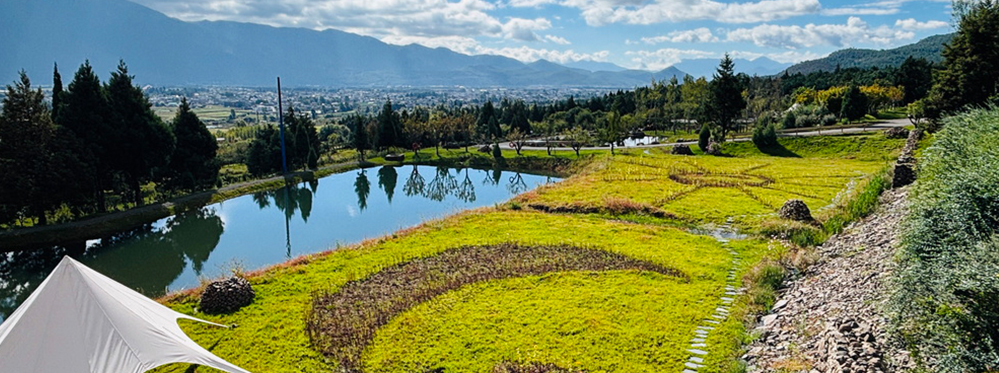
At the foothills of Jade Dragon Snow Mountain, beyond the well-trodden tourist paths, lie secret meadows that burst into a kaleidoscope of color each spring. These hidden pockets of wildflowers are a well-kept secret among local herders and a few intrepid travelers who venture off the beaten track. The contrast between the rugged, snow-capped peaks and the delicate blooms creates a scene that feels almost surreal, as if nature had painted a masterpiece just for those who wander far enough to find it.
Walking through these alpine fields, you’re surrounded by a dizzying array of native flowers—gentians, rhododendrons, and edelweiss, to name a few—each competing for sunlight beneath the mountain’s watchful gaze. The air is crisp, filled with the scent of damp earth and the gentle hum of bees. It’s a place where time slows down, inviting you to sit among the blooms and listen to the whisper of the wind through the grass, a peaceful interlude far from the usual crowds.
Reaching these meadows requires a bit of effort, often involving a hike through narrow trails and rocky terrain, but the reward is unmatched. The best months to experience this hidden spectacle are June and July, when the flowers are at their peak and the weather is mild. Dawn offers an especially magical moment, as the first light catches the dewdrops on the petals, making the entire meadow shimmer. It’s a reminder that some of the most breathtaking wonders are those tucked away, waiting to be discovered by those with a sense of curiosity and a love for the wild.
Following Forgotten Tea Horse Road Trails to Lost Market Towns
The old Tea Horse Road, a tangle of stone paths and weather-beaten bridges, once pulsed with mule caravans carrying tea to Tibet and horses back to China. Today, many of these trails have slipped into obscurity, their once-bustling market towns reduced to quiet relics. To walk them is to follow in the hoofprints of an ancient trade that stitched empires together—and to discover places like Shaxi or Yiwu, where tea-scented air still clings to cobbled lanes.
Away from the well-trodden tourist routes, the forgotten stretches demand a certain stubbornness. You’ll find them overgrown with wild jasmine, the stone treads polished smooth by centuries of rain and hooves. In the silence of a ruined horse station, you can almost hear the jingle of bells and the rasp of Tibetan herders haggling over bricks of pu’er. It’s here, where the maps go blank, that the road feels most alive.
The lost market towns are the real prize. Places like Mekong-side Yezhi, with its single-inn hospitality and stories of salt-traders who vanished long ago, reward those willing to wander off the grid. Each town holds fragments of a shared past—Ming-era courtyards repurposed as drying floors for rice, or a tea broker’s ledger still legible in the dim light of a temple. The Tea Horse Road may have faded, but in these quiet corners, its spirit endures, waiting for a traveler who doesn’t need a signpost.
Artisan Workshops Nestled Under Lijiang’s Ancient Rooftops
Tucked beneath the weathered gray tiles and sweeping eaves of Lijiang’s old town, a quiet world of craft endures. In these low-ceilinged workshops, artisans pass mornings coaxing designs onto copper trays, threading silver jewelry, or stitching intricate patterns into Naxi textiles. The air carries the scent of beeswax and aged wood, punctuated by the rhythmic tap of a hammer on metal. No two doorways are alike, but each reveals a scene that has changed little over centuries—a master at work, a handful of tools worn smooth by use, and a visitor who has wandered off the main lane into something far more personal.
These spaces are not showrooms dressed for tourists but working corners where skill is still measured by the patience of hands. You might find a woodcarver chipping delicate lotus motifs onto a chair back, or a leatherworker burnishing a belt with the same concentration his grandfather once held. Conversations here begin with the smell of tea and often circle around the material itself—where the copper was sourced, how the indigo dye was fermented, why the pattern on a silver bracelet echoes the mountains beyond. It’s not unusual to leave with a small ink brush painting or a pair of embroidered shoes, but what stays longer is the memory of watching someone build meaning into something entirely by hand.
Nestled between the old waterways and the cobbled alleys, these workshops feel like a secret that Lijiang still keeps just for the curious. Their doors are often half-open, their signs modest. Yet inside, the ancient rooftops above serve as a reminder that preservation isn’t only about protecting architecture—it’s also about giving space to the hands and minds that continue to speak a language of carved wood, painted linen, and hammered metal. In a world of the instant, these small, lamp-lit rooms offer a different rhythm, inviting you to slow down just long enough to witness something rare: creation in its most unhurried form.
Courtyard Feasts That Only Locals Know About
Tucked behind unmarked wooden doors and down narrow cobblestone alleys, these courtyard feasts are the city’s best-kept secret. You won’t find them on glossy travel guides or blasted across social media—locals guard these spots like family recipes. The magic happens in centuries-old homes where the owner-chef serves whatever was at the market that morning, often from a garden you’re sitting in. Expect mismatched plates, wine poured from unlabeled bottles, and a sense that you’ve stumbled into someone’s private celebration.
One such hidden gem is a former stable turned vine-draped dining room, run by a retired fisherman and his daughter. There’s no menu, just a parade of small plates: smoky eggplant dip, hand-rolled pasta with slow-simmered ragù, and the catch of the day grilled over olive wood. The feast unfolds at its own pace, often stretching past midnight, with strangers becoming friends over limoncello made from the lemons hanging overhead. It’s not just a meal—it’s an invitation into a way of life that tourists rarely see.
To find your own courtyard feast, skip the reservation apps and head to the old neighborhoods where voices spill over garden walls. Strike up a conversation at a local market or corner bar, and if you’re lucky, someone might share a whispered address. Bring cash, an empty stomach, and a willingness to let the evening surprise you. These meals aren’t about perfection—they’re about the story, the laughter, and the memory of flavors that feel like a well-kept secret.
Dawn Bells Beyond Baisha Murals: A 5 AM Journey
The first bell cuts through the pre-dawn hush like a blade of sound, waking the village of Baisha one bronze wave at a time. By 5 AM, the murals inside the temple are still invisible, sleeping under centuries of pigment, but outside the air is already moving—incense from last night’s offerings still clings to the wooden pillars, mixing with the cold mineral scent of the old town. I sit on the stone steps, listening to the bells shape the silence, each chime a different weight, a different story. The rhythm isn’t mechanical; it’s the pulse of someone’s hand pulling the rope, a monk perhaps, matching his breath to the resonance. This is not a tourist hour. It belongs to the locals padding past in cloth shoes, to the stray dogs stretching under eaves, to the first light tracing the contour of Jade Dragon Snow Mountain. You can’t photograph a sound, which is why these moments resist memory cards and live instead in the texture of the dark, slowly thinning.
By the time the horizon begins to bruise with violet, I’m walking away from the temple, following the bells’ echo down a narrow cobblestone lane. The murals are still behind those walls—Tang dynasty lines, Buddhist paradises, flying apsaras choked by smoke damage and time—but the journey the title hinted at was never really about seeing them. It was about the hour. 5 AM is a kind of key: it unlocks the town before it puts on its makeup, before the shutter sounds and the selfie sticks. I pass a courtyard where an old man is lighting a fire under a blackened kettle; he doesn’t look up, licking the flames into life with the same patience the murals must have required. Somewhere above, the mountain is revealing its spine of snow, one vertebra at a time. The bells have stopped now, their work done, having pulled the sun over the ridge.
What stays with me isn’t the art inside the temple but the architecture of the hour itself. The pattern of sound, the cold stone, the unslept sky—these are the strokes of a living mural, repainted every morning and gone by breakfast. The early quiet has a color: the deep blue-gray of ink wash paintings. The bells didn’t just mark time; they peeled back a layer of the place that no daylight ever sees. If the Baisha murals are a testament to devotion long dead, the 5 AM bells are a testament to one still going, a schedule that cares nothing for the visitor’s sleep. I came for the famous frescoes and left with the memory of sounds arranging the darkness, a journey that asked nothing but to be present at an hour that most cameras miss.
FAQ
For a real escape, head to Wenhai Lake in the dry season when wildflowers carpet the meadows. Most visitors chase the same spots, but this alpine spot sees few foreigners. Pack a picnic from a local shop in Baisha and walk the loop trail that starts behind the eco-lodge. You’ll likely have yaks and bird songs as company.
Skip the staged shows and take a local minibus to Yuhu Village, where Joseph Rock once lived. Walk the stone paths past farmhouses with carved wooden doors, and you'll often see elderly women in traditional blue aprons tending vegetable plots. The Yufeng Temple there is quiet and has an incredible camellia tree that blooms each spring, with hardly any tour groups.
Try the trail from Baisha to Fuguo Temple, tucked in a pine forest at the foot of Jade Dragon Snow Mountain. It’s a gentle uphill through fields and conifers, ending at a secluded lamasery where you can buy tea from the monks. Mornings offer mist drifting through the spires, and you’ll rarely meet other hikers.
Book a cooking experience in Shuhe's outskirts through a platform like EatWith. A Naxi grandmother teaches you to make baba bread in her courtyard oven, and you’ll eat together under a walnut tree. It’s informal, with no menu, and much more memorable than any restaurant.
Skip the usual Wangu Tower. Climb up to the old school grounds behind Puji Temple before dawn. The narrow alley leads to a hidden terrace with an unbroken view of roofs and mountains. A few local photographers might be there, but it's calm enough to hear roosters waking the quarter.
Shaxi Ancient Town is worth the two-hour drive. It's a preserved trading post on the old Tea Horse Road, with a stone bridge and weekly market. Cycle to the nearby caves with Buddhist murals, then have a bowl of er si noodles at a family-run stall in Sideng Square. Far fewer tourists than in Dali or Lijiang.
Fingerprint Temple (Zhiyun Temple) on the Lashi Lake hillside is rarely mentioned in guides. It’s a working monastery with faded murals and a huge prayer wheel. Walk up from the lake path, and if you’re lucky, a monk might invite you for butter tea. The views over the water are stunning, especially as the sun drops.
Conclusion
Tucked away from Lijiang's well-trodden lanes, a handful of ancient Naxi hamlets still hum with a rhythm unchanged for centuries. Here, cobblestone paths wind past weathered wooden homes where elders weave sun-drenched yards into tapestries of daily life, and the only clocks are the shadows creeping across Jade Dragon Snow Mountain. Behind that same mountain, wildflower meadows explode in a riot of color each spring—a secret carpet of blue poppies and rhododendrons that few outsiders ever see. Further along, remnants of the Tea Horse Road lead to forgotten market towns, their stone bridges and crumbling caravanserais whispering tales of mule trains and midnight trades, far from the selfie sticks and souvenir stalls.
Under Lijiang's ancient rooftops, a different magic stirs in artisan workshops where coppersmiths still hammer vessels using centuries-old techniques, and the scent of pine wood mingles with the soft scrape of a master’s chisel. Come evening, locals unlock hidden courtyards for feasts that never appear on tourist menus—think clay-pot chicken simmered with wild herbs, washed down with homemade barley wine, laughter spilling into narrow alleys. And if you can rouse yourself before dawn, Baisha Village offers a 5 AM pilgrimage: the resonant toll of temple bells echoing through the murals' faded Tang dynasty colors, as the first light spills over roofs and the day begins in a way only a handful of travelers will ever know.
Contact Us
Contact Person: Changhong He
Email: [email protected]
Tel/WhatsApp: 086-0888-5190152
Website: https://vip.e-baixing.com/ysh