

HDPE Pipe Machine Manufacturer Checklist for a Smart Investment
2026-11-02
Investing in an HDPE pipe machine is a decision that shapes your production for years. Yet many buyers overlook critical factors—from extrusion consistency to after-sales support—and pay for it later. Before you commit, run through a smart checklist. COMRISE has distilled years of manufacturing expertise into this essential guide, so you can spot the right partner and avoid costly mistakes.
Start With the Manufacturer’s Floor, Not the Brochure
A brochure photograph can make any floor look flawless, but it won't tell you how the boards catch afternoon light or how a low-gloss finish hides scuffs. Head to the manufacturer's floor first—the actual sample display or unretouched planks. That's where you'll notice color shifts, plank variation, and edge details that print simply flattens.
Walking across a manufacturer's laid floor exposes things no spec sheet mentions. You can feel the micro-bevel under your feet, see how joints align from different angles, and drag a key across the surface if the rep allows. These small realities shape daily life far more than a staged room scene.
Once you've studied the physical floor, the brochure becomes a useful reference rather than a decision-maker. You'll know exactly which characteristics to verify, and you'll avoid the common trap of falling for a photo that never matched the material.
Look Past the Motor to Screw Geometry and Barrel Wear
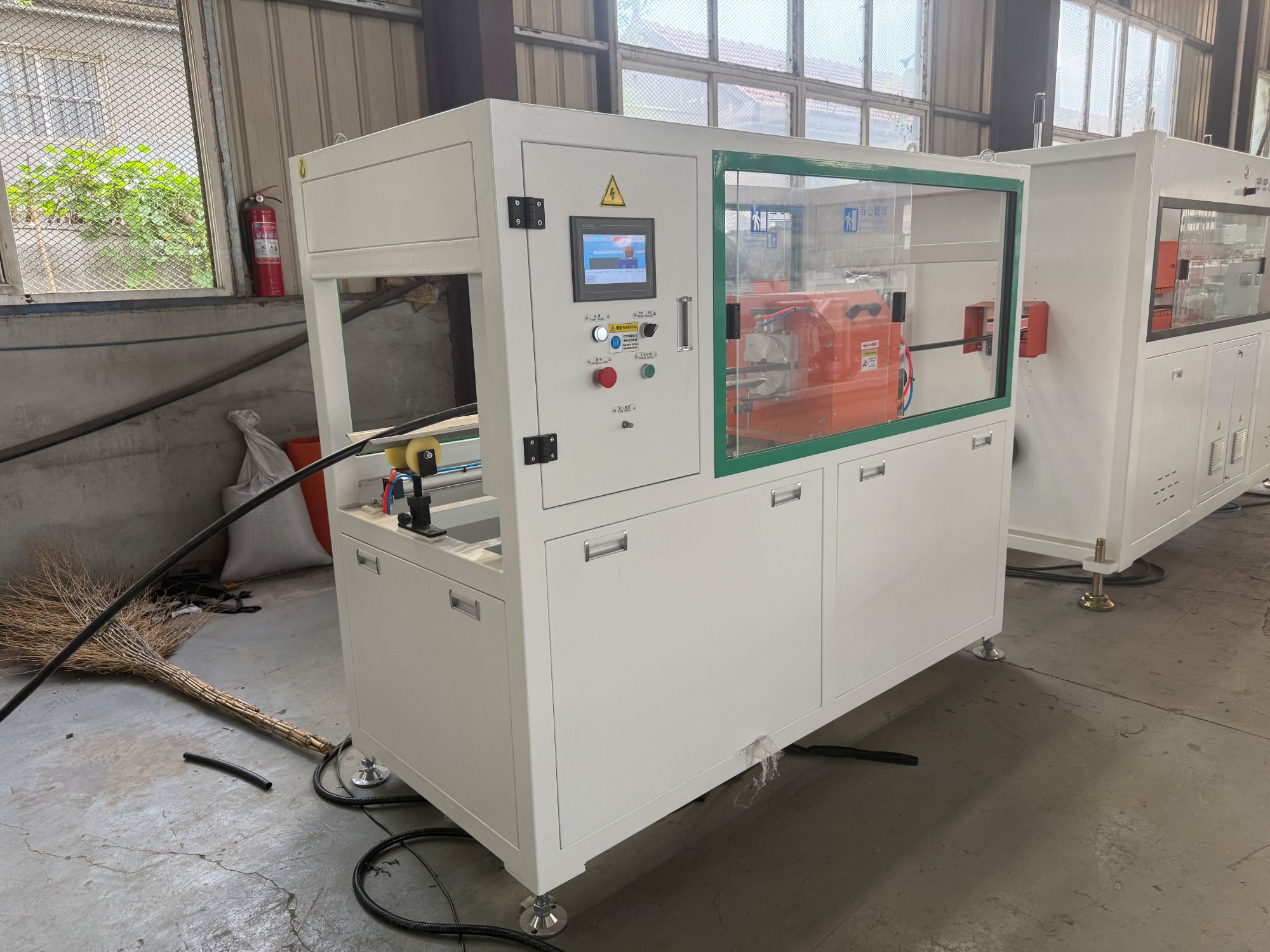
When troubleshooting inconsistent output or melt quality, many processors instinctively reach for motor upgrades or drive tuning. Yet the real culprits often hide in the screw's geometry. A worn or poorly designed screw changes compression ratios, alters residence time distribution, and creates dead spots where material degrades. Even a perfectly matched motor cannot compensate for a screw with rounded flights, excessive clearance, or incorrect channel depths for the resin being run.
Barrel wear follows a similar pattern. As the barrel bore enlarges from abrasive fillers or years of service, the gap between screw flight and barrel wall grows. This increased clearance allows melt to slip backward along the screw, reducing pumping efficiency and raising melt temperature unpredictably. Operators might blame the motor for running hot or drawing extra amps, but the real issue is that the screw is no longer sealing against the barrel. No amount of torque will fix a mechanical gap.
The smartest approach is to measure both screw and barrel before chasing electrical or drive-side fixes. Pull the screw, inspect flight lands, and use a bore gauge on the barrel. Compare actual dimensions against OEM specs. A screw with 0.010 inches of wear on the flights can lose 10-20% of output, while a barrel worn 0.020 inches oversize might require a new screw just to maintain basic throughput. Matching screw geometry to the material and monitoring clearance over time will do more for process stability than any motor swap.
Downstream Sizing and Cooling Are the Quiet Quality Gates
Most attention in a production line goes to the dramatic stages—mixing, forming, extrusion. But the real verdict on a product often arrives later, almost silently. Downstream sizing and cooling rarely get mentioned in design meetings, yet they hold the power to undo everything upstream. A part that leaves the die perfectly shaped can still emerge warped, cracked, or dimensionally off if the sizing plates are slightly misaligned or the cooling gradient is uneven. These are not flashy defects; they are quiet failures that surface only at final inspection or worse, in the customer’s hands.
Sizing tools and cooling baths act like slow-moving arbiters of tolerance. They set the final outer dimensions, lock in crystallinity or stress patterns, and decide whether the material shrinks uniformly or twists over the next few hours. Operators often treat them as passive hardware—something to clean and occasionally adjust—but in practice they function as active quality gates. A two-degree change in water temperature can shift part geometry more than a raw material variation. A worn sizing sleeve can produce a gradual drift that no inline sensor catches until scrap rates spike. Because these effects develop subtly, they evade quick troubleshooting and get blamed on upstream variables instead.
The best process engineers learn to listen to what sizing and cooling are saying. They track cooling water delta-T not as a maintenance afterthought but as a leading indicator of dimensional stability. They map part shrinkage across different zones of the cooling tank, using that data to fine-tune haul-off speed and vacuum pressure. Rather than treating downstream as a fixed constraint, they see it as a final negotiation with the material—one that separates products that merely look right from those that actually stay right. In that sense, sizing and cooling aren’t just steps in the process; they are the last word on whether the line truly delivered what was promised.
Control Systems Determine Where Operators Make or Lose Money
A poorly tuned loop rarely announces itself. It shows up as a slow drift in product quality, extra fuel burned over a month, or a valve that cycles more often than it should. Operators often compensate manually, adding bias or running in manual mode, which masks the real cost. The control system is where small deviations either get corrected in seconds or compound into lost yield.
When a controller pushes a process too aggressively, it can create oscillations that waste raw materials and wear out equipment. When it responds too slowly, the process runs away from the setpoint long enough to produce off-spec product. The difference between profit and loss often sits in the tuning parameters, the sensor placement, and how well the control hierarchy matches the actual process dynamics.
Modern plants don't just need stable loops; they need control strategies that actively chase the economic optimum. That means pushing against constraints—like maximum reactor temperature or minimum reflux ratio—without violating them. An operator's bonus or a plant's margin depends on how precisely the control system can hold the line between safe operation and wasted opportunity.
Power Consumption and Material Waste Need Real Numbers
Vague claims about energy efficiency are everywhere, yet almost none of them survive a simple request for a monthly kilowatt-hour breakdown per production line or server rack. A factory might tout a 20% improvement in energy intensity without stating whether that baseline included seasonal shutdowns, partial shifts, or renewable energy purchases. Until facilities publish real, auditable numbers—watts per unit, PUE under defined weather conditions, or kilowatt-hours per kilogram of output—such percentages remain marketing rather than physics.
Material waste suffers from the same fog. A product labeled as using 30% recycled plastic rarely tells you whether that is post-consumer or post-industrial scrap, nor what fraction ends up in incineration because the mixed polymer stream cannot be separated again. Real tonnage matters: how many kilograms of trim waste per thousand units, what percentage of returned electronics are actually refurbished versus shredded, and how much packaging weight is eliminated rather than just switched to a heavier compostable alternative. Without these data points, circular economy programs can quietly shift waste upstream instead of reducing it.
The fix is not to demand perfect life-cycle assessments from every small supplier. It is to pick a handful of measurable indicators and report them consistently, even when the numbers look bad. A warehouse that logs actual peak demand in kilowatts before and after a lighting retrofit, or a contract manufacturer that tracks solder paste waste in grams per board, gives engineers something to act on. Real numbers expose trade-offs—such as a lower-carbon material that uses more water—and that honesty is what separates operational improvement from public relations.
After the Sale, Prioritize Spare Parts, Training, and Honest Timelines
Most vendors disappear after the invoice clears. That’s where the real cost starts. A missing wear ring or a discontinued control board can idle a line for weeks while procurement scrambles. So we keep a physical stock of high-failure parts for every machine we ship, not just the consumables. If something outside that list breaks, we commit to a shipment window of 72 hours, not “as soon as possible.” And we track every promise against the actual ship date in a shared log, so there’s no guessing.
Training often gets treated as a one-day tour of the control panel. That doesn’t hold up when a third-shift operator faces an alarm they’ve never seen. Our post-sale handoff includes three short, role-specific sessions: one for operators on daily checks and fault codes, one for maintenance on calibration and belt tension, one for supervisors on reading performance data and ordering parts early. Each session ends with a hands-on check, not a sign-in sheet.
Honest timelines start before the sale closes. We’d rather lose a deal on a realistic lead time than win it on a fantasy date and then blame a port strike. After purchase, you get a live milestone tracker with the responsible person’s name next to each step. If a test is delayed because an inspector is backed up, that’s what the note says. Over-communicating bad news keeps trust, and trust keeps the next order from going to someone else.
FAQ
Ask for the screw design drawings, barrel material certifications, and real extrusion output rates under your target pipe diameter. A manufacturer that hesitates to share these details often lacks the engineering depth to support long-term production.
Request a live trial or a recorded video showing the machine running your exact pipe size and wall thickness for at least four continuous hours. Check the actual weight of pellets consumed per hour against the finished pipe weight, allowing for normal scrap. Numbers that can't be reproduced in front of you usually hide inefficiencies.
The vacuum calibration tank and the haul-off unit. These aren't as glamorous as the extruder, but poor temperature control in the tank causes ovality and thickness variation, while an unstable haul-off creates waves and dimensional drift. Those defects quietly eat into your margin through rework and customer rejects.
You want a PLC with a clear data logging function that records temperature, pressure, and motor load every few seconds. If the interface forces operators to manually record values or lacks alarms for parameter drift, you'll lose more money in wasted material and downtime than you saved on the purchase price.
Ask for the last three customers in your region and contact them directly. Inquire about response time for a critical breakdown, availability of spare parts from local stock, and whether the manufacturer provided remote diagnostics. A vendor with no nearby references or slow parts delivery will turn a two-day stop into a two-week loss.
Request the specific energy consumption per kilogram of finished pipe for your target size, not just the installed motor power. Compare the heating zones' insulation thickness and whether the barrel uses ceramic heaters or less efficient mica bands. A machine that costs a bit more upfront but saves eight to twelve percent in electricity will pay back the difference within a few years.
A wide range sounds flexible but usually compromises screw design and downstream sizing. If 80 percent of your business is 110mm to 250mm pipe, buy a machine optimized for that range. You can always outsource the occasional odd size or add a dedicated line later. Trying to cover everything on one line often means nothing runs at peak efficiency.
Ask them to explain how their screw geometry changes when you switch from 100% virgin PE100 to 30% recycled or off-spec material. They should mention specific things like a deeper feed section, a longer barrier zone, and adjusted screen changer frequency. If they give a generic 'it works fine with recycled' answer, they haven't tested it properly.
Conclusion
A smart HDPE pipe machine investment starts on the factory floor, not in a glossy brochure. Watch a machine run actual material before you sign anything—look at the screw geometry and inspect the barrel bore for wear, because that is where plasticating consistency lives or dies. A fancy motor means little if the screw cannot maintain melt quality. Downstream, pay close attention to the vacuum sizing tank and cooling spray design; poor calibration here gives you oval pipe or uneven wall thickness no upstream tweak can fix. Then sit with an operator and watch the control screen. If changing temperature zones or line speed feels like a puzzle, you are already losing money through scrap and downtime.
Ask the manufacturer for real production logs showing power draw per kilogram and waste percentage over a full shift—not a lab demo. Those numbers expose whether the barrel heaters and drives are efficient or quietly bleeding your utility bill. After the sale, the deal either gets better or falls apart. Check their spare parts shelf, not just their warranty wording. Ask how many days of on-site training are included and whether their delivery timeline accounts for actual commissioning, not just crate drop-off. The best machine on paper becomes a liability if you are waiting six weeks for a heater band while your customer waits for pipe. In this market, the smartest investment is one where mechanical honesty, operator-friendly controls, and a responsive after-sales team are visible before you pay the deposit.
Contact Us
Contact Person: LISA LEE
Email: [email protected]
Tel/WhatsApp: +86 13780696467
Website: https://www.qdpipemachine.com