

Glass Filled PTFE Tube Supplier for High-Performance Industrial Applications
2026-11-02
High-performance industrial environments don’t forgive material compromises. When standard PTFE tubes crack under load or creep at elevated temperatures, engineers turn to glass filled PTFE for the stiffness and dimensional stability that critical processes demand. But the tubing is only as good as the supplier behind it. That’s why TAIFNO focuses on precision-engineered glass filled PTFE tubing that holds tolerances, resists deformation, and delivers repeatable performance in seals, bearings, and chemical transfer systems. In this post, we’ll break down what separates reliable glass filled PTFE tube suppliers from the rest—and what to look for before you commit to a long-term partner.
The Real Difference Between Glass-Filled and Virgin PTFE Tubing
Put a rod of virgin PTFE next to glass-filled PTFE and they look almost identical—white, slippery, chemically distant. That similarity ends the moment you clamp them in a fitting or slide a mating part against them. Virgin PTFE is a pure fluoropolymer with outstanding chemical resistance and a very low coefficient of friction, but under sustained load it flows like cold taffy. Glass-filled PTFE, usually compounded with 15–25% milled glass fibers, trades a fraction of that chemical purity for mechanical backbone. The fibers act as internal rebar, limiting creep, raising compressive strength, and keeping dimensions stable under load.
Where they separate fastest is in dynamic applications. Virgin tubing will cold-flow away from a compression fitting, losing seal tension over time, whereas glass-filled versions hold their shape far longer. But glass fibers are abrasive. They score stainless steel, anodized aluminum, and soft polymers, so the tubing often destroys the very thing it rubs against. That's why glass-filled PTFE rarely goes into food, medical, or high-purity lines; the filler also creates micro-voids where bacteria can hide. For chemical transfer at low mechanical stress, virgin PTFE remains unbeatable, but for structural parts like bushings, valve seats, or high-pressure fitting liners, glass-filled PTFE survives where pure PTFE would extrude or wear through.
Temperature adds another wrinkle. Both can handle continuous service around 260°C, but glass-filled PTFE resists deformation at the upper end far better, while virgin PTFE begins to soften and creep much earlier under clamping force. Cost per pound is only part of the story: machining glass-filled rod produces more tool wear, and the finished part may need a secondary polishing step to reduce surface roughness. If you're choosing between the two, ignore the datasheet blurbs and ask two questions—what is touching the tube, and how hard is it being squeezed? The answer usually makes the right material obvious.
Matching Glass Content to Your Pressure and Wear Conditions
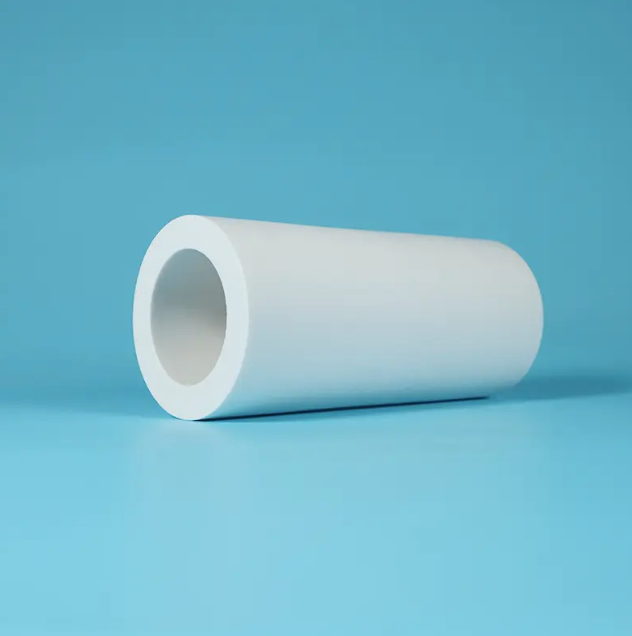
Selecting the right glass composition starts with a clear-eyed look at the mechanical stresses your application will actually face. In high-pressure environments, borosilicate glass often wins out because its lower thermal expansion and tighter molecular network resist cracking under sudden force. But if the main concern is abrasion from sliding parts or particulate flow, a soda-lime glass with a hardened surface—like chemically strengthened or tempered variants—can deliver longer service life without the higher cost of exotic formulations.
Wear conditions rarely act alone. Pressure spikes combined with fine debris can create micro-fractures that grow over time, so matching glass content means balancing compressive strength against scratch resistance. For instance, aluminosilicate glasses bridge this gap well: they handle both high clamping loads and repetitive contact from seals or gaskets. Run a simple bench test with your actual pressure cycle and a representative abrasive, then compare edge chipping and surface haze between candidate glasses—that data will tell you more than any datasheet.
Don't overlook chemical exposure when wear and pressure coexist. A glass that performs beautifully under dry load might etch or weaken in the presence of moisture, cutting fluids, or cleaning agents. Adding a small percentage of zirconia to the batch can boost toughness without sacrificing optical clarity. Ultimately, the right match comes from mapping your worst-case scenario—peak pressure, particle size, humidity, and temperature swing—onto the glass family that historically survives those conditions, then validating with a short pilot run.
What a Reliable Supplier Should Bring to the Table
A dependable partner does more than just ship boxes on time. They anticipate hiccups before they happen, whether it’s a customs delay or a sudden spike in demand, and they already have a workaround in place. When you call with a problem, you’re not starting from zero—they’ve been tracking your order, they know the weather at the port, and they’ve already flagged the batch that needs extra inspection.
Beyond the basics, real reliability shows up in the unglamorous details: transparent pricing that doesn’t shift after the quote, raw material sourcing that can be traced back to the mill, and a quality control process that doesn’t rely on you catching mistakes. A good supplier treats your specs as the floor, not the ceiling, and will push back politely when they see a design choice that will fail in the field.
And when things do go sideways—because they will—the supplier’s response matters more than the problem itself. Do they own the mistake immediately, reroute a replacement air freight at their cost, and send you photos of the corrected parts without being asked? Or do they go quiet for three days and then blame the sub-supplier? That difference is what separates a vendor from a long-term manufacturing partner.
Custom Lengths, Tolerances, and End Finishes Without the Wait
Specify the exact cut length you need, down to the millimeter or fractional inch, and it gets pulled from stock, cut, and shipped without the usual delay for non-standard sizes. There’s no need to redesign around a catalog list or accept an off-the-shelf dimension that’s close enough.
Tight tolerances don’t have to slow things down. Our cutting and finishing stations are set up to hold ±0.005 in. (or tighter on request) even on short runs, so you get parts that drop into your assembly rather than parts that need rework at your bench.
End finishes are handled in the same pass, whether that’s a simple deburr, a chamfer, drilled and tapped holes, or a polished face. Because these operations happen right after cutting, your order arrives ready to install, not as a rough blank waiting for secondary processing.
Preventing Cold Flow and Deformation in High-Load Assemblies
Cold flow, also known as creep, is a silent threat in high-load assemblies where polymers, soft metals, or composites sit under sustained compression. Unlike brittle fracture, it develops gradually as the material slowly displaces away from the stress concentration, reducing preload and creating gaps. This is particularly critical in bolted joints with plastic flanges, elastomeric gaskets, or thermoset spacers, where even a few microns of thickness loss can loosen fasteners and compromise sealing integrity.
Material selection is the first line of defense. Choose high-creep-resistant grades such as glass-filled PEEK, polyimide, or toughened epoxies instead of unfilled thermoplastics for load-bearing inserts. For gaskets, consider expanded PTFE or metal-reinforced graphite rather than pure PTFE, which is notorious for cold flow. Pair this with geometric design: increase the bearing area under bolt heads and nuts by using flanged fasteners or thick washers, reducing the local compressive stress below the material's creep threshold.
Operational strategies also help mitigate deformation. Pre-compressing the assembly during manufacturing—often called stress relaxation cycling—can stabilize the material before final torque application. Additionally, using disc springs or Belleville washers maintains residual load as the joint settles, compensating for any minor cold flow. Regular torque auditing in the first 500 hours of service identifies problematic joints before they become failure points.
From Chemical Processing to Aerospace: Where These Tubes Earn Their Keep
Inside a chemical plant, pipes get battered by things that would eat through ordinary steel in months—hot sulfuric acid, wet chlorine, abrasive slurries. These tubes hold up because they're made from duplex stainless or high-nickel alloys, and their inner surfaces resist pitting and stress corrosion cracking far longer than conventional materials. Maintenance logs show a sharp drop in leak-related shutdowns after the switch, which is exactly why process engineers keep specifying them for reactor feed lines and acid coolers.
Over in aerospace, the demands shift but don't get easier. Hydraulic lines and fuel conduits face pressure spikes beyond 3,000 psi, temperature swings from -50°C to over 200°C, and constant vibration. Titanium variants of these tubes cut weight by roughly 40% compared to stainless, yet they don't crack under fatigue loading. Airframers route them through wing leading edges and landing gear bays, where every millimeter of diameter and gram of mass counts.
What ties these two worlds together is the absence of compromise. A refinery's catalytic cracking unit needs weldability and corrosion resistance at the same time; a jet engine's bleed air system needs thin walls that won't burst under thermal stress. Rather than starting from scratch for each industry, fabricators take the same base tube stock, adjust wall thickness, heat treatment, and end fittings—then send it off to earn its keep in either a chlorine drying tower or a turbofan pylon.
FAQ
The addition of glass fibers significantly improves compressive strength, dimensional stability, and wear resistance, which is why it holds up better under load and in abrasive environments compared to unfilled PTFE.
You'll find them in chemical processing, oil and gas, pump and compressor manufacturing, and anywhere seals or bushings need to withstand aggressive fluids and high pressure without deforming.
Look for documented consistency in glass fiber distribution, tight control over dimensional tolerances, and a willingness to share test data on tensile strength and chemical resistance. A supplier that can customize the glass content or tube dimensions is usually a stronger partner.
Yes, though the glass filler makes the material slightly more abrasive to tooling. Reputable suppliers often provide machining guidance or offer pre-finished parts to reduce your in-house wear and scrap.
It generally performs well from cryogenic levels up to around 260°C (500°F), but the exact ceiling depends on the glass content and the specific application load, so it's wise to confirm with the supplier.
It's less common in those sectors because the glass fibers can leach or create micro-roughness. For high-purity applications, unfilled PTFE or special FDA-compliant grades are usually preferred, though some suppliers offer modified formulations.
Ask for a sample with a documented batch number, tensile strength report, and dimensional inspection sheet. That gives you a baseline to test machinability, chemical exposure, and fit before committing to a larger order.
Poor bonding between the PTFE matrix and glass fibers can lead to micro-cracking under cyclic stress. This often happens when the supplier uses low-grade recycled PTFE or inconsistent fiber sizing, so it's important to verify the raw material source.
Conclusion
When evaluating a glass filled PTFE tube supplier for high-performance industrial applications, the practical distinctions between glass-filled and virgin PTFE tubing often determine whether a project succeeds or stalls. Virgin PTFE offers exceptional chemical resistance and a low friction coefficient, but its tendency to cold flow under sustained load limits its use in demanding assemblies. Introducing glass fibers dramatically improves compressive strength and dimensional stability, yet the percentage of glass content must be matched to the specific pressure and wear conditions of the application. Too little glass yields minimal reinforcement, while too much can compromise flexibility and surface finish. A supplier with deep material knowledge will guide you through this balance rather than simply offering a one-size-fits-all product.
Beyond material selection, a reliable partner distinguishes itself through practical capabilities such as custom lengths, tight tolerances, and a range of end finishes without lengthy lead times. In high-load environments, preventing cold flow and deformation is critical, and the right tube geometry combined with proper glass loading can extend service life significantly. From chemical processing lines that demand inertness under pressure to aerospace systems where weight and reliability are paramount, these tubes earn their keep in places where failure is not an option. The best suppliers treat each order as an engineering conversation, not a catalog transaction, offering consistent wall thickness, burr-free cuts, and traceable raw materials. Ultimately, the difference lies in whether the supplier helps you solve the underlying mechanical challenge or simply ships a length of tubing.
Contact Us
Contact Person: Tommy Xiao
Email: [email protected]
Tel/WhatsApp: 8615651509888
Website: https://www.ptfe-factory.com