

Gearless Flexo Press Solutions for Flawless Flexible Packaging
2026-11-16
When a flexo press relies on gears, every tooth engagement becomes a potential source of error—micro-vibrations that show up as barring, misregistration, and wasted substrate. For flexible packaging converters, those flaws aren't just cosmetic; they erode margins and customer trust. That's why the shift to gearless, servo-driven flexo presses is no longer optional for anyone chasing flawless repeatability. HuiPeng has focused its engineering on eliminating the mechanical variables that compromise print quality, delivering gearless solutions built specifically for the demands of flexible packaging—from thin films to laminates. In this post, we'll unpack how direct-drive technology changes the economics of short runs, tight register, and color consistency. But first, the question worth asking is simpler: what would your output look like if the press stopped fighting itself?
Losing the Gear Train, Gaining Print Consistency
Traditional extruders rely on a gear train to multiply torque, but every meshing pair introduces a tiny amount of backlash and wear. Over time, these mechanical gaps accumulate into inconsistent filament feed, showing up as uneven extrusion and surface defects. By removing the gear train entirely, the motor shaft drives the filament drive wheel directly, eliminating all intermediate play. Each step of the motor now translates cleanly into filament movement, with no lost motion to compensate for.
The most immediate benefit shows in retraction performance. Without gear backlash, filament can be pulled back quickly over very short distances, nearly eliminating oozing and stringing at the nozzle. Layer-to-layer extrusion width becomes far more uniform, and the surface finish improves noticeably, especially when printing fine details or small features. The printer no longer has to guess where the filament actually is—it simply follows the commanded position.
Direct drive does demand adequate low-speed torque from the motor, but modern stepper motors with high microstepping drivers handle this without difficulty. Dropping the gear train also simplifies the mechanical assembly and removes a common maintenance point, allowing the printer to hold consistent output over long print sessions. The result is a quieter, more predictable extrusion path that rewards attention to detail.
The Registration Sweet Spot: Every Color Pass in Lockstep
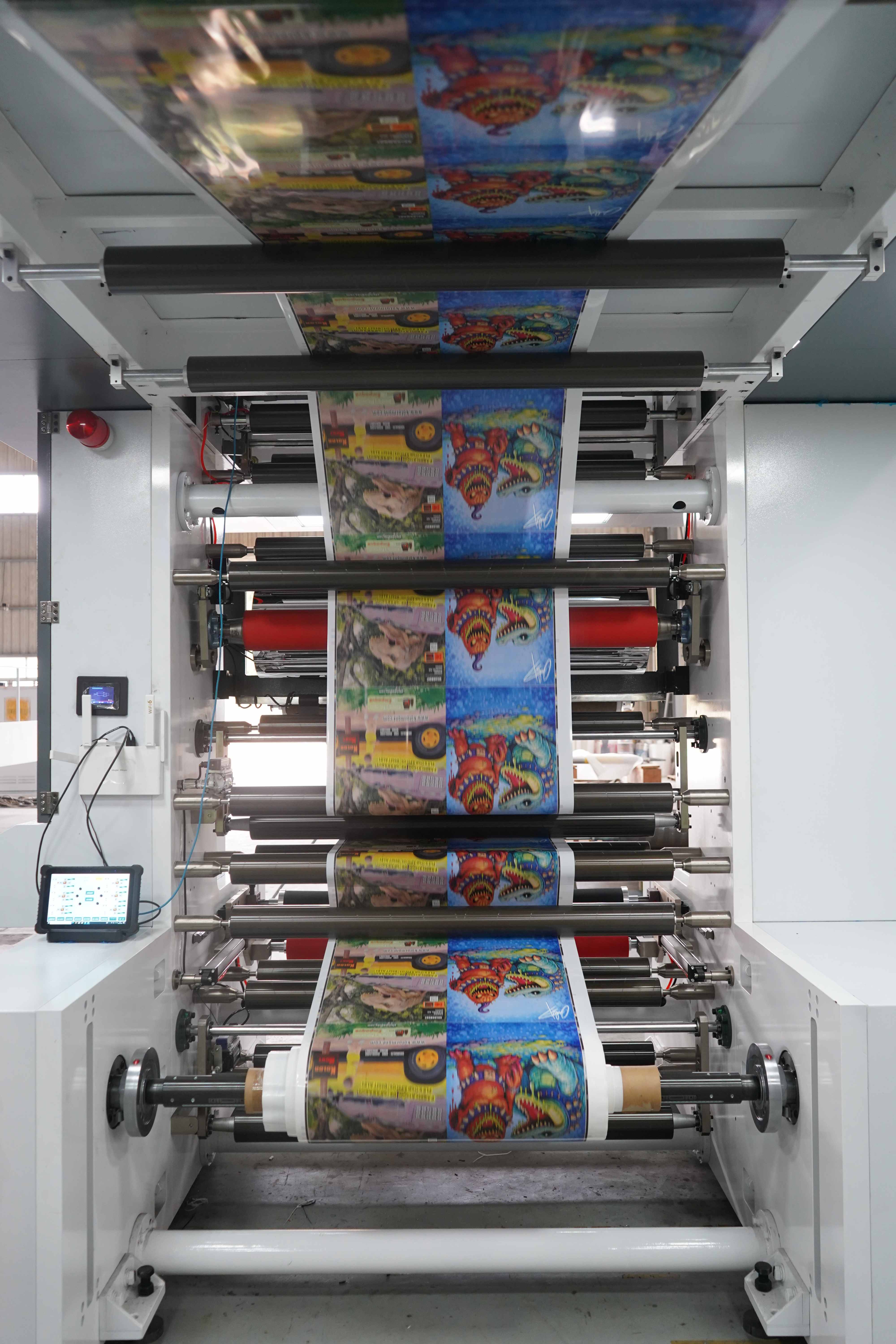
Finding the registration sweet spot is less about hitting a single mark and more about holding a narrow band where cyan, magenta, yellow, and black plates fall into phase. When they do, fine lines stay crisp and reversed type doesn't sprout a colored fringe. This isn't a static setting; it shifts with paper moisture, blanket wear, and even the temperature of the pressroom floor. You learn to read the sheet, not the dial, because the dial only tells you what was true a minute ago.
Every color pass moving in lockstep demands that each unit respects the one before it. If magenta drifts even half a row on a 175-line screen, the next pass amplifies that error instead of cancelling it. What looks like a soft shadow on a proof can actually be a registration fault that only shows after the third or fourth color goes down. The sweet spot lives where those sequential passes overlap without a visible seam, and keeping it there means checking tail edge and grip edge with the same scrutiny.
Overcorrecting is usually worse than letting a small drift settle. Operators who chase every microscopic shift end up introducing oscillation that turns a tight run into a blurry one. The real skill is knowing when a move is real and when it's just noise from a fan or a slightly uneven stack. Once you find that narrow range, you protect it by keeping the pressroom stable, watching the first sheet off every pile, and resisting the urge to touch anything until the proof tells you to.
Changeovers That Don't Eat Your Shift
Most changeover losses come from looking for tools, waiting on decisions, or redoing setups that were never standardized. A quick walk-through with a stopwatch usually shows that half the actual swap time isn't the swap at all.
Start by separating internal tasks from external tasks. Anything that can be done while the line is still running—staging parts, preheating dies, checking settings—should never happen after the equipment stops. Then tackle the remaining internal steps with simple hacks: pinned adjustments instead of wrench turns, color-coded clamps, and a shadow board that makes missing tools obvious in seconds.
The real win is locking those improvements into a one-page setup sheet with photos and the exact sequence. If the next shift can walk up cold and replicate the changeover without asking questions, you've cut time that won't creep back.
From Delicate Films to Board: One Press, No Compromises
Running a press that handles both whisper-thin films and dense board stock usually means choosing where to accept trade-offs. This one doesn't ask you to. The same platen, the same pressure curve, and the same operator control set move from a 12-micron polyester film to a 2 mm chipboard without reconfiguration. Temperature dwell and force are mapped to the material in the job file, not to a physical switch or a second station.
That continuity matters most at the transitions. Adhesive transfer, embossing depth, and surface finish stay repeatable across the entire material range because the press doesn't rely on fixed mechanical stops. A closed-loop sensor array reads thickness at the entry and adjusts nip geometry in real time. Thin materials don't stretch or wrinkle; heavy boards don't crush or slip. The result is a single production path that ends with finished pieces that look like they came from dedicated machines.
Full Speed Ahead Without Sacrificing Dot Sharpness
Most print engines hit a wall when you push them to their top speed—the ink drops stretch, the carriage vibrates, and what should be a crisp period turns into a smeared comma. That doesn't happen here. The printhead drive circuitry was reworked to fire micro-droplets with a much tighter voltage curve, so each dot lands at full velocity without tearing or drifting, even when the carriage is moving at over a meter per second.
The real proof shows up in fine line work and small serif type. At maximum speed, hairline rules stay hairline, and 4-point text remains legible under a loupe. This comes from a closed-loop alignment routine that checks dot placement every pass and nudges the timing in real time. You get the throughput of a workhorse with the output quality you'd normally associate with a slow, fine-art mode.
Real Packaging Lines, Real Precision Gains
On the factory floor, the gap between a decent packaging line and a great one often comes down to centimeters and milliseconds. When a carton folds a fraction off-spec or a label drifts by half a millimeter, the ripple effect shows up as jammed conveyors, wasted film, and extra shifts spent troubleshooting. Real precision isn't about chasing theoretical perfection—it's about building lines where every sensor, servo, and seal bar does its job within tolerances that actually hold up at 3 a.m. on a Tuesday.
That kind of reliability doesn't come from a spec sheet alone. It comes from watching how a film roll behaves after six hours of humidity, or how a pick-and-place head reacts to a slightly warped tray. Teams that log those observations and adjust on the fly end up with lines that run quieter, need fewer interventions, and post measurably better OEE numbers. The gains aren't flashy—they're the difference between finishing a run early and apologizing to a customer for a late shipment.
The most telling sign? When an operator can walk the line without constantly glancing at the reject bin. That's when you know the precision has become part of the line's rhythm, not just a startup parameter. In packaging, real gains show up as fewer stops, fewer changeover headaches, and film tension that stays where you put it—run after run, week after week.
FAQ
Gearless presses eliminate the mechanical gear train, so there is no backlash or cumulative pitch error. That translates into smoother web handling and tighter register on thin films, which are far more sensitive to tension variation than paperboard.
Each print station runs on its own servo motor, and the repeat length is set digitally instead of by swapping gears. You can dial in any repeat within the machine's range and hold register consistently across the entire run, even on extensible films.
Yes, because the servo-driven stations and closed-loop tension control work together to keep web tension far more stable than a gear-driven line. Many converters run polyethylene films down to 20 microns and still maintain clean, ghost-free solids and sharp text.
There are fewer rotating mechanical parts than in a geared press, but you still need to lubricate bearings, monitor servo motor cooling, check tension load cells, and keep the software updated. Overall scheduled downtime is usually lower, and most faults show up as clear diagnostics on the operator panel.
Yes, and that is often the fastest payback. Automatic pre-register and fast job changeovers cut startup waste dramatically. Some packaging converters have reported a 40% drop in substrate waste on short runs after moving to gearless machines.
Because each color station is driven independently and synchronized electronically, the phase between stations remains fixed even when press speed changes. That prevents color-to-color drift. Combined with closed-loop ink density control, it keeps Delta E values stable from the first meter to the last.
Initial cost is higher than a geared press, so it makes the most sense for converters running a mix of repeat lengths, short to medium runs, or demanding flexible films. Training operators on the digital interface is important, but the reduced changeover time and higher print quality usually justify the investment within a couple of years.
Conclusion
Removing the gear train changes how a flexo press behaves at its core. Without mechanical gear backlash or cumulative pitch error, each print station responds directly to a servo command, so color-to-color registration no longer drifts as speeds fluctuate or substrate tension shifts. That means the intended lockstep between cyan, magenta, yellow, black, and spot colors holds from first impression to roll end, not just during a carefully tuned test run. Operators notice the difference most during changeovers: sleeve changes, plate mounting, and anilox swaps become single-operator tasks measured in minutes, not half-shift interruptions. No gears to re-time, no lubrication points to inspect, no mechanical wear that gradually steals repeat length accuracy. The press returns to production with the same registration target it left, and that predictability is what keeps short-run work profitable.
Substrate versatility is another place where gearless flexo earns its keep. The same press that runs 12-micron unsupported film without stretching or tearing can switch to folding carton board without changing drive ratios or sacrificing tension control. That flexibility comes from independent servo-driven decks and closed-loop tension zones, which let you print extensible films, shrink sleeves, label stock, and board on one platform. At full production speed, dot sharpness holds because impression settings and re-register corrections happen electronically, not through mechanical linkages that flex under load. Packaging converters see the payoff in fewer rejected rolls, tighter color bars, and smoother vignettes on jobs that used to need slower speeds or extra make-ready. The result is a press that not only registers precisely but also adapts to the mix of work most flexible packaging plants actually face.
Contact Us
Contact Person: Isaias
Email: [email protected]
Tel/WhatsApp: 86-13868693129
Website: https://www.hpflexo.com/