

Custom Shot Blasting Machine Factory: What to Consider Before Choosing Your Supplier
2026-08-17
Finding a custom shot blasting machine factory that truly understands your surface preparation needs isn’t just about comparing prices. One overlooked spec can lead to costly downtime, inconsistent finishes, or safety risks — and by then the supplier is long gone. So before you sign anything, let’s cut through the noise. This guide walks you through the non-negotiable factors, from engineering capability to after-sales support, with a focus on why so many manufacturers are turning to PuHua to avoid costly mistakes.
Look Beyond the Brochure and Inspect the Factory Floor
A glossy brochure can make any factory look impressive, but it won't tell you whether the assembly line actually stops at 3 p.m. or if the safety signage is just for show. When you walk the floor in person, you notice the small things: the organization of raw materials, the pace of workers, the condition of the machinery. Those details rarely make it into marketing copy.
Ask to see the production schedule, not the sample room. Check whether the equipment matches the list they emailed you. A quick walk past the loading dock tells you more about their real capacity than any quarterly report. And don't be afraid to talk to a line operator - they'll give you the unfiltered version of what it's like to work there.
Can the Supplier Actually Customize Around Your Workpiece?
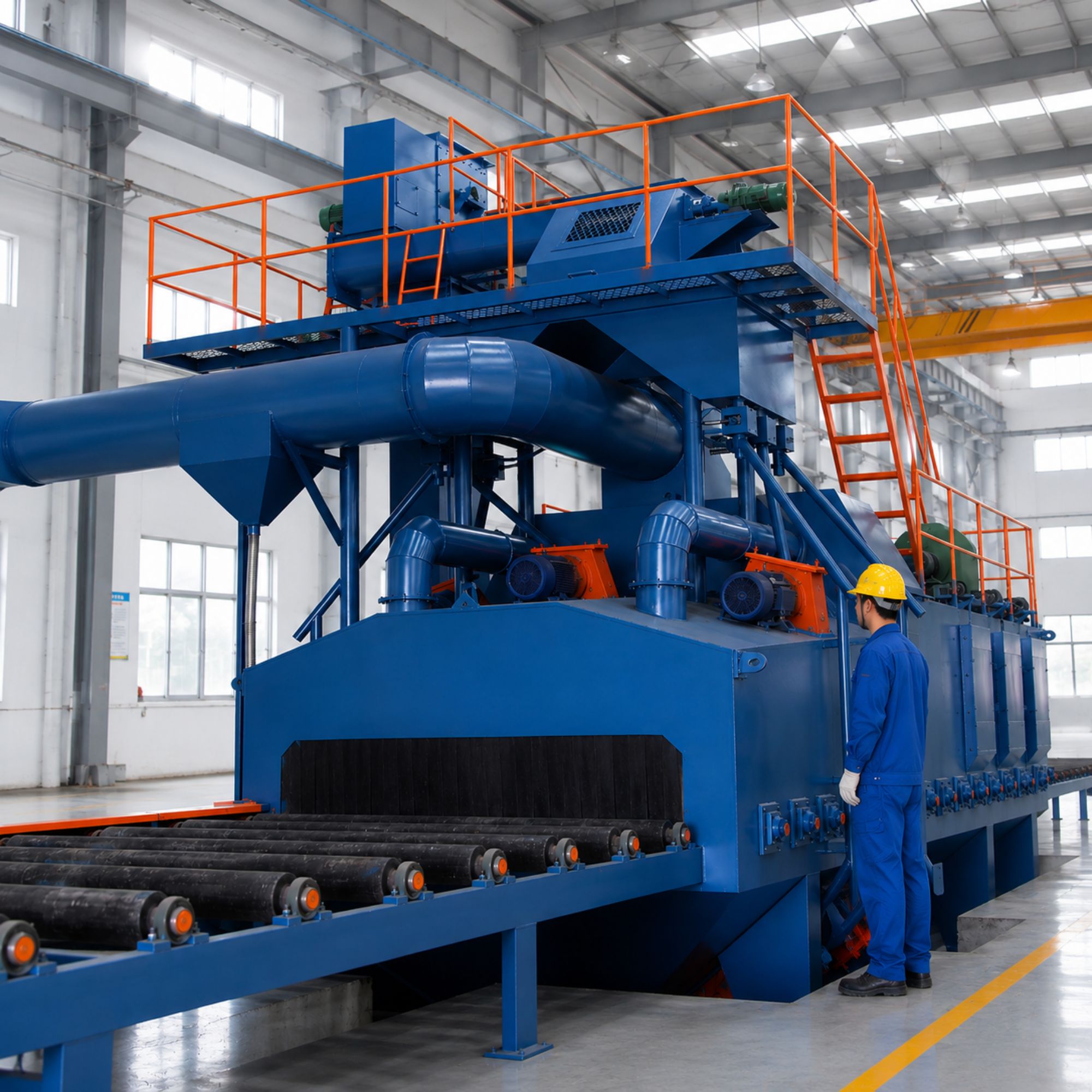
Customization sounds great in a sales call, but the real test is whether the supplier can adapt their process to the actual shape, weight, and material sitting on your shop floor. A workpiece with deep cavities, uneven clamping surfaces, or tight tolerances exposes the difference between a vendor who tweaks a standard fixture and one who builds the entire approach around your part. Ask to see photos or drawings from previous jobs where the geometry wasn’t a simple rectangular block.
The right supplier doesn’t force your component into their standard workflow. They start with your workpiece, map out how it will be held, reached, and measured, and only then decide what tooling or programming changes are needed. That can mean a custom soft jaw, a revised toolpath to avoid collision, or a different sequence entirely. If their answer to every challenge is “we’ve done something similar,” dig deeper — similar is not the same as built around your part.
Which Key Components Are Made In-House and Which Are Outsourced?
In our production setup, the decision to build or buy usually comes down to where the real differentiation lives. We keep the core control electronics, firmware, and any moving assemblies that directly affect performance in-house. That includes the motor drive circuits, sensor calibration routines, and the final assembly of the gimbal or actuator stack. These are the pieces where tolerances and tuning make or break the product, so having our own engineers own them means we can iterate quickly and catch issues before they reach the line.
On the other side, we outsource highly standardized or low-complexity parts: fasteners, cable harnesses, injection-molded enclosures, and most PCB fabrication. These are commodities where outside suppliers already have economies of scale and mature quality systems. We still specify every material and tolerance, and incoming inspection checks critical dimensions, but we don't see value in running our own molding shop or metal stamping line for parts that are basically identical from any qualified vendor. The split lets our team focus on the 20% of components that drive 80% of the product's performance, while keeping overhead and lead times manageable.
Does the Quote Break Down Consumables, Spares, and Long-Term Costs?
A purchase price on its own rarely tells you what a machine or system will actually cost over time. Look closely at whether the quote separates consumables such as filters, cleaning agents, or calibration media from the base equipment. If these items are bundled into a single line, you may be left guessing how often they need replacement and what each cycle adds to your operating budget.
Spare parts are another area where vague wording can hide real expense. A quote that says “essential spares included” without listing belt types, seal kits, or sensor modules leaves too much room for interpretation. Ask for a clear breakdown of recommended spares for the first year or first 2,000 hours, along with unit pricing. This lets you compare vendors on the same basis instead of discovering later that one supplier expected you to stock costly components out of pocket.
Long-term costs often appear outside the main quotation, if they appear at all. Energy draw, preventive maintenance visits, software updates, and consumable disposal can add more to the total cost than the initial hardware. When a quote breaks these into separate categories, you gain a straightforward way to build a realistic operating budget—and you can spot hidden assumptions before they become unplanned invoices.
What Are the Real After-Sales Response Times and On-Site Support Options?
When a machine goes down, every minute of waiting feels like an hour. Most suppliers quote a response time of 24 to 48 hours, but the truth often hides in the fine print. For critical equipment in sectors like manufacturing or healthcare, a delayed reply can stall production or compromise patient care. We've found that the most reliable vendors don't just promise speed—they provide a tiered system: an initial remote diagnostic within 4 to 6 hours, followed by a confirmed technician dispatch within one business day. However, if you're in a remote area or working with a distributor rather than the manufacturer directly, those numbers can stretch to 72 hours or more. Always ask for a written service-level agreement that specifies not just response time, but also the maximum time to on-site arrival.
On-site support options vary wildly depending on the vendor's network. Some companies maintain regional service hubs, which means a trained engineer can be at your door in under 12 hours—often with common spare parts already in the van. Others rely on third-party contractors, which might save them cost but adds unpredictability to your downtime. A practical approach is to map out the vendor's nearest service center before signing a purchase order. Also clarify who covers travel expenses, whether emergency weekend calls cost extra, and if there's a guaranteed fix time or just a guaranteed arrival time. A good supplier will offer a 24/7 hotline, remote access for software issues, and a clear escalation path if the first fix doesn't work.
Real-world after-sales performance is often different from the brochure. One way to test a vendor's honesty is to ask for references from customers who have actually used the on-site service in the last six months. You'll quickly learn whether their "rapid response" means a phone call back or a wrench in hand. Also consider that some equipment is modular enough for overnight part shipping and customer self-replacement—a much faster alternative than waiting for a technician. In the end, the best after-sales strategy isn't just about speed; it's about transparency. You need a partner who tells you, before the breakdown happens, exactly how long you'll wait, who will come, and what it will cost.
Can the Supplier Show You Running Installations for Similar Parts?
A supplier's willingness to let you see similar parts already in production is one of the clearest signals you can get. It's not about a polished demo video or a well-rehearsed pitch. You want to stand next to a machine that's making a comparable component right now, watching how the operator handles tool changes, how the chips clear, and whether the cycle times match what was quoted. If the supplier hesitates or offers only a CAD render, treat that as a data point.
Running installations also reveal things a spec sheet never will. You can check for vibration, listen for unusual noise, and look at how finished parts are stacked or handled after machining. Ask about the batch sizes they typically run, how often they recalibrate, and what happened the last time a batch came out of tolerance. Real production floors always carry scars—a scratched guard, a jig that's been repaired, a logbook with entries. Those details tell you more than a conference room presentation.
If distance or confidentiality makes a physical visit impossible, ask for a live video walkthrough of the shop floor with the specific machine running. Not a recorded clip, but a real-time call where you can ask them to pan to the tool rack or show the chip bin. Some suppliers will push back because they're protecting a customer's proprietary design. That's fair. But they should still be able to show you similar geometry or material being cut under a generic name. If they can't, you're not looking at a production partner—you're looking at a prototype shop that's hoping to figure it out on your order.
FAQ
Ask for a walkthrough of a past project where the factory modified blast wheel placement, cabinet geometry, or media reclaim system for a part similar to yours. Request the actual drawings, not marketing photos, and ask the engineer to explain why they made those changes. If their answer focuses only on dimensions and motor size, they likely do not offer deep customization.
Request a cross-section drawing of the blast cabinet and ask which areas use replaceable wear liners, what material those liners are made from, and how they are attached. Find out if the factory recommends AR400, AR500, or manganese steel for your specific abrasive and workload. Also ask whether they include a spare liner set with the initial order to reduce downtime later.
Focus on total cost of ownership, not freight distance. A distant factory can work if they have a documented spare parts strategy, a local service partner, and clear lead times for critical components. But if their lower price comes from unbranded motors or minimal dust collection, the savings disappear quickly. Ask for a detailed parts list with manufacturers before comparing quotes.
Ask for the airflow volume, filter media type, air-to-cloth ratio, and expected emissions in milligrams per cubic meter. Inquire whether the system includes automatic pulse cleaning and a differential pressure gauge. Also ask how often filters must be replaced under normal use. A factory that cannot answer these specifics is likely not designing for real workplace exposure limits.
Give them a sample part or a 3D model and ask for a preliminary layout showing blast wheel angles, shadow zones, and expected coverage time. Ask whether they can adjust nozzle position, turntable speed, or workpiece orientation. A strong factory will suggest a simulation or a quick test run before you commit, not just quote a standard cabinet size.
If you need consistent results across different operators and shifts, the control system is critical. Ask if the PLC can store parameter recipes, whether settings like wheel speed and abrasive flow are password-protected, and how operators are trained. Also check if remote access is available for troubleshooting, which can cut downtime from days to hours.
Ask to see their incoming inspection records for key parts like blast wheels, bearings, and wear plates. Inquire whether they test-run the assembled machine with real abrasive before dispatch, and what happens if a defect appears during warranty. A factory that invites you to a pre-shipment inspection and shares a written QC checklist is usually more transparent than one that only shows finished photos.
Request a written service level agreement that specifies response time, spare parts availability, and whether installation supervision or operator training is included. Ask for contact information of at least two current users in your industry who have run the machine for over a year. The real test is how the factory handles breakdowns, not how smooth the sales process feels.
Conclusion
A glossy brochure rarely tells you how a custom shot blasting machine will perform on your actual parts. Before committing, ask to walk the production floor—watch how the supplier manages welding, machining, and assembly, and whether the workspace reflects the precision they promise. Equally important is their grasp of your workpiece geometry and material. A true custom builder will discuss nozzle positioning, blast wheel placement, and abrasive recycling in relation to your specific component, not just offer a standard cabinet with a larger door. Probe where the core parts come from: blast wheels, wear plates, dust collectors, and control systems. If these are outsourced, find out who the partners are and how quality is controlled, because long-term reliability often depends on the weakest outsourced link. The quote should do more than state a lump sum. Look for a clear breakdown of initial consumables, expected wear life, spare part costs, and energy consumption. Without that, you may win a low purchase price but pay heavily over the machine's lifetime.
After-sales support separates dependable suppliers from the rest. Ask for concrete figures: how quickly can a technician arrive on site, what remote diagnostics are available, and whether the supplier stocks spares locally or ships them from overseas. A vague promise of "24/7 support" means little if the response time is measured in weeks. Also request references and, if possible, visit running installations that process parts similar to yours. Seeing a machine handle comparable weight, size, and surface finish requirements gives you confidence that the supplier has already solved the challenges you face. If they hesitate to arrange such a visit, treat that as a warning. Ultimately, the right factory is not the one with the prettiest catalogue, but the one that proves its engineering depth, cost transparency, and service commitment in measurable, verifiable ways.
Contact Us
Contact Person: Bruce
Email: [email protected]
Tel/WhatsApp: +86 15166629468
Website: https://www.povalchina.com/