

Custom Inflatable Seal Ball Segment Valve: Key Features and Industrial Uses
2026-10-19
Leak-tight sealing in demanding industrial processes often demands more than off-the-shelf solutions. Custom inflatable seal ball segment valves are engineered to handle abrasive slurries, dry solids, and challenging flow conditions where conventional valves fail. In this article, we break down the key features that make these valves indispensable—from their flexible, self-clearing sealing mechanism to their ability to handle irregular particles—and explore the real-world uses across mining, wastewater, and chemical processing. As we examine how tailored configurations solve specific operational headaches, it becomes clear why industry professionals turn to AVM for reliable, application-specific valve systems.
Custom Seal Profiles That Fit Your Process, Not the Other Way Around
Most seal catalogs hand you a fixed cross-section and expect your tooling, assembly sequence, and tolerances to bend around it. That works until a groove depth is off by 0.15 mm, your automated pick-and-place needs a stiffer lip to stay seated, or the process runs hotter than the datasheet admits. We start from the other end: map your actual groove dimensions, thermal swings, chemical exposure, installation direction, and even how operators handle the part before it reaches the line. The profile is then built around those constraints, not the reverse.
That might mean adding a wedge-shaped heel to stop rollover during press-fit, co-extruding a harder backbone so the seal feeds reliably from a vibratory bowl, or adjusting the lip angle to avoid folding when a mating part comes in at a slight angle. It is less about offering more shapes and more about removing the small mismatches that force you to alter a proven process. We make short-run prototype tools to test the fit in your actual automation before any volume commitment.
The result is a seal profile that drops into your process without re-engineering the station or loosening tolerances. Leak paths are closed at the design stage, cycle times stay where they are, and replacement parts behave like the originals instead of introducing a new variable every batch.
The Ball Segment Advantage in Abrasive and Slurry Flows
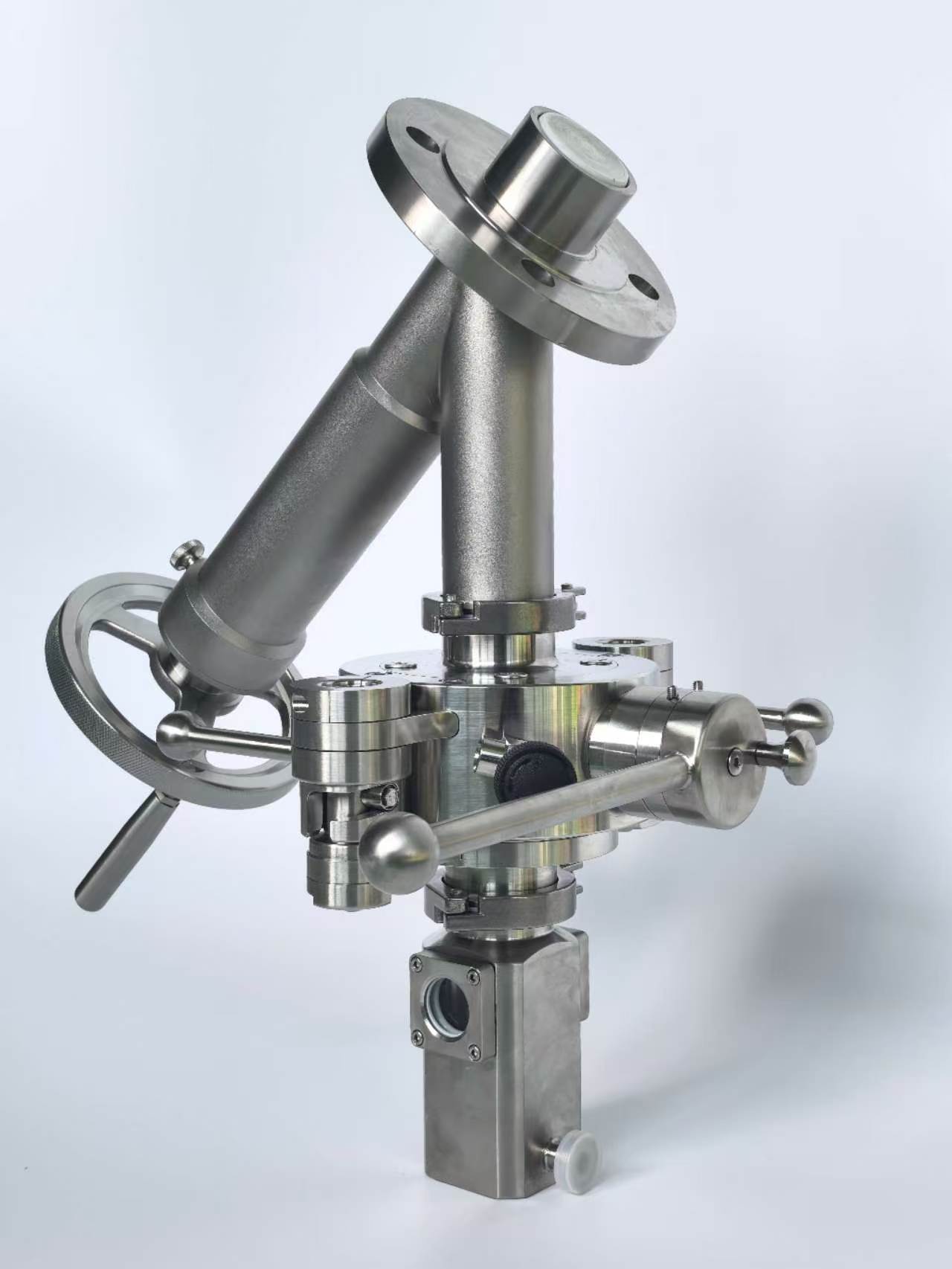
Abrasive and slurry flows punish conventional valve designs, but the ball segment changes the equation. Its contoured V-notch or parabolic port slices through thick, particle-laden media instead of trapping it against the seat. This geometry creates a self-cleaning shear between the ball edge and seat, reducing scoring and localized erosion. It also delivers a tighter shutoff because the segment wipes the seat during rotation, clearing settled solids before they harden or pack.
Beyond mechanical durability, the ball segment gives operators finer control over flow rate. Its shaped opening provides a nearly linear or equal-percentage characteristic across a wide range, which matters when throttling dense slurries. The unobstructed, straight-through passage minimizes turbulence and pressure drop, so the slurry moves with fewer dead zones where particles can accumulate and eventually block flow.
In mining, mineral processing, and wastewater applications, that translates into fewer shutdowns for seat replacement or flushing. Actuation packages can also be sized smaller than for full-bore ball valves because the segment's reduced contact area lowers breakaway torque, even under heavy solids loading. The result is a valve that stays responsive and sealed in conditions that would quickly degrade standard rotary or globe designs.
Inflatable Sealing Mechanics: How Pressure Locks Performance In
An inflatable seal works by turning air pressure into a uniform clamping force against the mating surface. Instead of relying on spring tension or manual compression, the seal expands outward as pressure rises, filling every microscopic gap until the contact interface reaches a state of full conformance. The result is a lock that grows stronger the more internal load tries to escape.
The key lies in contact stress distribution. When the seal is pressurized, its elastomer body deforms just enough to follow surface irregularities, from machining marks to thermal warpage. Unlike a rigid gasket that only touches the high spots, an inflatable profile adjusts its contact patch continuously, maintaining a near-constant pressure gradient across the entire sealing perimeter. This self-leveling behavior reduces local stress peaks that often cause premature wear or leakage.
What truly locks performance in is the pressure retention loop. As the internal fluid pushes against the seal lip, the inflation pressure counters it with a slightly higher normal force, preventing blow-by without crushing the substrate. The seal can cycle through pressure fluctuations and temperature swings while keeping its grip, because the pneumatic load always adapts to the external demand rather than fighting it with a fixed preload.
Material Choices for Chemical, Mining, and Food-Grade Demands
Chemical environments rarely allow a single material to dominate. A pump housing that handles hot hydrochloric acid might need a nickel alloy, while the same plant's solvent lines run just fine in polypropylene. The deciding factors are temperature, concentration, and whether the fluid is oxidizing or reducing. Engineers often look past stainless steel toward Hastelloy, titanium, or PTFE-lined carbon steel once corrosion rates climb. It's not about finding the strongest material—it's about matching the failure mode to the specific chemistry.
Mining wear is a different beast. Slurry pipelines and chutes chew through ordinary steel in months. The common fix includes abrasion-resistant plate, ceramic tiles at impact zones, and rubber liners that flex instead of crack. But moisture and acidity from sulfide ores add a corrosion layer, so a purely hard material may still degrade. The best choices combine hardness with some chemical tolerance, which is why polyurethane and duplex alloys keep showing up in modern operations.
Food-grade demands add hygiene and regulatory pressure. A stainless surface that looks smooth might still trap biofilm in microscopic pits. That's why 316L with a ground or electropolished finish dominates product-contact areas. Plastics and elastomers need FDA or NSF certification, and even then they're limited to specific temperatures and fat contents. Cleanability often overrides cost, because a failed inspection can shut down a line far longer than any material savings would justify.
Field-Proven Uses Across Processing and Bulk Handling
The same conveyor drives that move 8,000 tons of crushed limestone a day in a Midwest quarry also keep a phosphate fertilizer plant running through humidity and dust that would choke lesser equipment. Maintenance logs from those sites show bearing replacements dropping by roughly a third after switching to these units, and the payback period rarely stretches past two seasons.
In processing lines, the real test is often product changeover. A specialty chemical blender in Louisiana runs corn starch, titanium dioxide, and recycled polymer flake through the same rotary valve bodies without cross-contamination or jamming, thanks to the tight clearances and quick-clean rotor design. Operators report being able to purge the line in under 15 minutes between batches, which keeps the downstream packaging crew from idling.
Bulk handlers who move everything from wood pellets to spent grain keep coming back because the wear components are not buried behind six hours of tear-down. A single wrench and a spare set of flights will get a drag conveyor back online during a lunch break, and that kind of field-level simplicity shows up in the quarterly downtime numbers more than any spec sheet ever could.
Extending Service Life with Less Downtime and Fewer Rebuilds
Unplanned downtime rarely announces itself, but it almost always leaves a trail. Operators who treat every rebuild as inevitable end up paying for it twice: once in parts and labor, and again in lost production. The alternative is to watch the equipment closely enough to catch wear while it is still a minor adjustment rather than a full teardown.
That means moving away from fixed rebuild cycles and toward condition-based work. Vibration signatures, oil analysis, and thermal checks can reveal which components are degrading long before they fail. When a bearing starts to chatter or a seal leaks slightly, a small targeted repair keeps the line running instead of shutting it down for a week.
The shift usually pays off within the first year. Fewer emergency rebuilds, shorter planned outages, and parts replaced only when actually needed all add up to longer asset life and a maintenance budget that stops swinging from month to month.
FAQ
The key difference lies in the sealing mechanism. Instead of relying on metal-to-metal contact or a fixed elastomer seat, this valve uses an inflatable seal that can be expanded to create a tight shutoff even around slurries, powders, or irregular solids. The ball segment design allows it to cut through media while the inflatable seal conforms to the ball's surface, minimizing leakage and wear.
They show up a lot in bulk material handling, chemical processing, food and beverage, pharmaceutical, and wastewater treatment. Any process that deals with abrasive solids, sticky pastes, or mixed-phase flows can benefit because the valve can seal around particles without jamming.
Yes, many designs are built for in-line maintenance. The seal is typically accessible through a top or side entry, so you can deflate it, slide out the old seal, and install a new one without disconnecting the valve from piping. That cuts downtime significantly.
A ball segment is essentially a partial sphere with a V-notch or similar cutout. This shape gives better flow control and a shearing action as it rotates, which prevents material from packing or clogging. It also reduces the torque needed to operate the valve, which matters when dealing with thick or fibrous media.
You can usually specify the seal material (EPDM, silicone, Viton, etc.), the ball segment coating or alloy, the actuation method (manual, pneumatic, electric), the port size and flange standard, and the inflation pressure range. Some manufacturers also offer custom V-notch angles for specific flow characteristics.
It depends on the seal material and housing design. Inflatable seals generally have temperature limits from around -40°C to 200°C, and pressure limits typically below 10 bar for the seal itself. For higher ratings, you need to work with the manufacturer to select a reinforced seal and a robust actuator. They are not generally meant for extreme high-pressure gas services.
The biggest advantage is that the seal can be deflated during operation to reduce friction and wear, then inflated only when a tight shutoff is needed. This extends seal life dramatically in abrasive applications. It also provides a bubble-tight seal even when solid particles are trapped between the ball and seat, because the inflated seal compresses around them.
Regular inspection of the seal for cuts or chemical degradation is important. Keep the inflation air or fluid supply clean and dry, and monitor pressure to avoid over-inflation. Lubricate the stem and bearings as recommended, and cycle the valve periodically if it sits in one position for long periods to prevent the seal from taking a set.
Conclusion
Custom inflatable seal ball segment valves solve a persistent problem in tough processing lines: instead of forcing your operation to adapt to an off-the-shelf seal, the seal geometry is built around your exact flow, pressure, and media requirements. That shift matters most with abrasive slurries and dry bulk solids, where a rigid metal-to-metal seal wears quickly and leaks. The ball segment design, with its partial-sphere closure and wide port opening, gives throttling and shutoff that hold up against particle-laden streams. When the valve closes, an inflatable bladder expands against the ball segment, creating a tight barrier that compensates for minor seat wear and surface irregularities. Pressure inside the bladder does the locking—no constant adjustment or heavy spring force needed.
Material selection is equally specific: EPDM or Viton for aggressive chemicals, natural rubber or polyurethane for mining slurries, and FDA-compliant elastomers for food-grade lines. This customization shows up in field-proven applications across mineral processing, cement handling, wastewater, and powder transfer. Because the inflatable seal takes the abrasion instead of a metal seat, operators see fewer rebuilds, less unplanned downtime, and longer intervals between maintenance. The result is a valve that works with the process rather than against it—fitting the media, the pressure cycle, and the plant's real operating rhythm.
Contact Us
Contact Person: Ananda
Email: [email protected]
Tel/WhatsApp: 8619016718200
Website: https://www.wzaomi.com