

CPP Film Masterbatch Supplier Selection Tips for Consistent Film Quality
2026-08-20
Finding the right CPP film masterbatch supplier is rarely straightforward. A batch that runs perfectly on one line can cause defects on another, and inconsistent dispersion or color shift can quietly erode your film quality. That's where a partner like Xinwancai changes the equation—by focusing on the variables most suppliers overlook. But before you commit, here are the selection tips that separate reliable suppliers from the rest.
Why carrier resin selection affects film strength
The choice of carrier resin is often dismissed as a mere processing aid, yet it quietly dictates how well a film holds together under stress. Carrier resins act as the vehicle that disperses pigments, additives, or functional fillers into the base polymer. When that vehicle lacks compatibility with the main matrix, the result is not just poor color uniformity but microscopic phase separation. These weak interfacial boundaries become stress concentrators, so a film tears or punctures far sooner than its bulk polymer would suggest.
Film strength is not only about tensile toughness but also about how evenly force spreads across the web. A carrier resin with a lower melt viscosity than the host polymer can migrate to the surface during extrusion, creating a skin layer with different mechanical properties. This skin may feel smooth but often cracks or whitens under bending, because the carrier-rich zone has little entanglement with the core. Selecting a carrier resin that co-crystallizes or at least co-continuous with the base resin avoids this brittle skin effect and keeps the film’s load-bearing cross-section uniform.
In practice, the carrier resin also influences draw-down and orientation. If the carrier resin stretches at a different rate than the host, microvoids open up around each particle during machine-direction orientation. Those voids then act as crack initiation sites under impact or flex fatigue. By matching the rheology and thermal expansion of the carrier resin to the film’s main polymer, converters gain a film that resists delamination, pinhole formation, and premature tear propagation—strength that comes from a coherent, well-bonded structure rather than from a single high-performance ingredient.
The filter pressure test tells you more than a datasheet
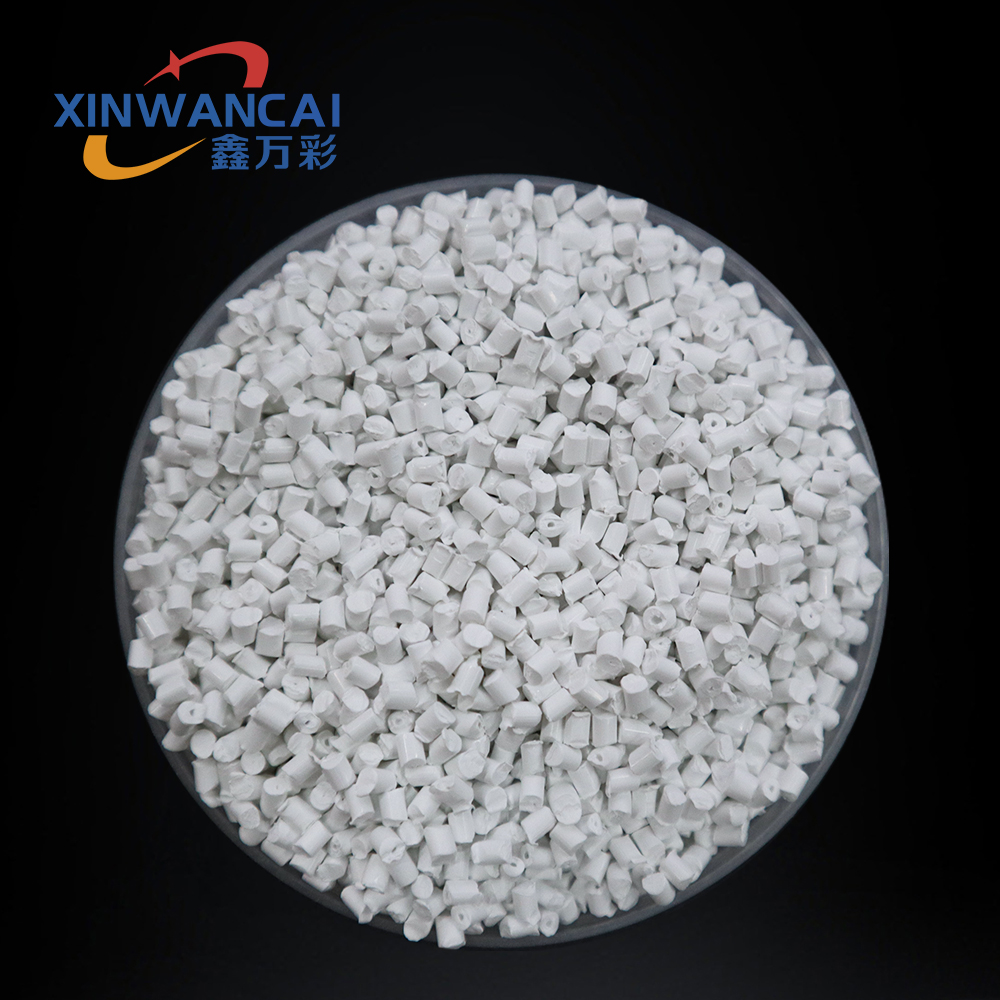
Datasheets give you a snapshot, but the pressure test shows how a filter behaves when it's actually working. A nominal figure on paper rarely matches what happens under real flow, temperature swings, and gradual loading. When you run a pressure test, you see the initial drop, the shape of the curve as it clogs, and the point where resistance climbs sharply. Those moments tell you more about service life and maintenance timing than any published spec ever could.
There's also the matter of consistency. Two filters can share nearly identical datasheet values yet behave differently once installed. One might hold a steady differential for weeks, while another starts to creep after a few days. A pressure test reveals that drift, letting you spot manufacturing variation, bypass issues, or media settling before they turn into downtime. It turns a static rating into a dynamic fingerprint.
Most importantly, the test connects the filter to your system's limits. A datasheet may list a maximum differential pressure, but only a live test shows how close you are to that line during normal operation. You can plan changeouts around observed trends instead of arbitrary hours or estimated dirt-holding capacity. That shift from assumption to measurement is where the real value lies.
Consistent color means controlling every pigment batch
Achieving the exact same shade across production runs doesn't happen by luck. It comes from tracking every pigment lot from the moment raw materials enter the facility. Each batch carries slight variations in particle size, moisture content, and base tone that can shift the final color if left unchecked.
The real work happens in the adjustment phase. Technicians compare each incoming lot against a master standard, then calculate the precise amount of tinting base or carrier needed to bring the batch into tolerance. This isn't a one-time fix—it's a continuous loop of measurement, correction, and re-measurement until the color falls within a tight delta.
What separates a reliable supplier from an inconsistent one is documentation. Every adjustment gets logged, every standard gets revalidated, and every finished batch gets archived for future reference. Without that level of batch-level control, even a small drift in raw pigment can turn a promised color into a visible mismatch on the production line.
Mismatched melt flow can cause web breaks
When two polymer layers with significantly different melt flow rates are coextruded, the lower-viscosity melt tends to channel through the die at a faster rate, creating an uneven thickness profile across the web. This variation often concentrates stress along narrow bands, and under normal tension from the pulling rollers, those thin regions become the initiation points for tears. Operators typically see this as random edge nicks that quickly propagate into full-width breaks, especially at higher line speeds where there is less time for the polymer to level out.
A practical example comes from running a 2.0 melt index LDPE against a 12.0 melt index tie layer. The high-flow tie layer pushes toward the edges of the die, dragging the LDPE with it and leaving weak spots near the center. Once the web passes over a spreader roller, the differential shrinkage from the viscosity mismatch adds transverse stress, and the web snaps at the thin zone before it ever reaches the winder. Operators who try to compensate by increasing tension only make the break happen sooner.
Melt pumps and properly sized die gaps can mitigate the problem, but the real fix is to specify resins with melt flow rates within roughly a 30% window of each other for coextrusion. If a wide gap is unavoidable, a thin intermediate layer with an intermediate viscosity can act as a buffer, reducing the velocity gradient at the interface and preventing the web from tearing at the weak points.
Technical audits reveal the supplier's true capability
Certifications and well-designed capability statements rarely expose the bottlenecks that emerge once production moves past the sample stage. Technical audits cut through that by examining how measurement instruments are calibrated, how nonconforming lots are quarantined, and whether the documented process matches the one operators actually follow on the floor. During one audit, a supplier claimed a ±0.02 mm tolerance on machined housings, but the CMM data for the last three batches showed a drift toward the upper limit that no one had flagged. That gap between declared capability and demonstrated control is exactly what a structured technical audit surfaces.
Beyond checking paperwork, auditors often run unscheduled trials: pulling a random batch from the warehouse, asking for a line changeover, or introducing a minor specification deviation to see how the team responds. These moments reveal whether engineers understand root cause analysis or simply repeat standard answers. A technically strong supplier can walk through the failure history of a component, show corrective actions linked to specific production lots, and explain why a new fixture changed the distribution of dimensions. Suppliers that lack this depth tend to rely on generic quality slogans, and the audit notes that difference immediately.
The resulting audit report becomes more than a pass/fail gate. It provides a practical baseline for negotiating quality agreements, setting incoming inspection levels, and deciding how much engineering support a buyer should expect. When a supplier demonstrates that it can control a process under less-than-ideal conditions, the buyer gains confidence that the relationship will survive volume ramps, material substitutions, and new product introductions without hidden quality costs.
Delivery reliability keeps your CPP line running smoothly
When raw material shipments arrive on schedule, your CPP extrusion line avoids the stop-start rhythm that wears down screws, barrels, and die lips. Steady feed keeps melt pressure and temperature profiles within narrow bands, so gauge variation and optical defects stay low without constant operator correction.
A supplier that hits delivery windows consistently also frees your planning team from juggling buffer stock or expediting freight. That means fewer emergency material switches that force purging, scrap, and re-qualification. The line keeps its planned sequence, and downstream converting steps can rely on film arriving when expected.
Over time, this predictability shows up in lower maintenance hours per ton and more stable output rates. Instead of chasing late shipments, your crew can focus on fine-tuning speed and yield, knowing the next batch of resin or masterbatch will be there before the hopper runs low.
FAQ
Start with their production records and real-world references. Ask for at least three consecutive batches of the same grade and compare melt flow rate, ash content, and carrier resin. If they hesitate to share batch-to-batch data, treat that as a red flag.
Run a small amount on a laboratory cast film extruder and count gel particles or fisheyes per square meter. A steady pressure rise across the screen pack during a fixed throughput also reveals poor dispersion. Clean, low-gel film on the first attempt usually predicts fewer surprises later.
A good trial sample only proves they can make one batch under close attention. Long-term consistency depends on their raw material control, process discipline, and quality system. Request three to five recent production lots with COAs and look at the spread of key values, not just the average.
Pigment dispersion, particle size distribution, and low volatiles are critical. Poorly dispersed pigments create visible specks and reduce gloss, while volatiles can cause die build-up and haze. Ask for filter pressure value and volatile content measured at CPP processing temperatures.
Ask whether they lock the carrier resin grade and pigment lot sources, and how they handle a pigment shortage. Suppliers with single-source dependence or frequent unannounced substitutions cannot guarantee consistent film appearance. A decent supplier will document every incoming lot and trace it to your purchase order.
Request masterbatch formulated with heat-stable, low-volatile additives and ask for a thermal gravimetric analysis profile. The ideal supplier will also share data from extended extrusion trials at your typical barrel temperatures. Frequent die cleaning requirements are a sign the formulation is not robust enough.
Set clear specifications for melt flow rate, pigment loading, dispersion rating, and allowable color deviation between batches. Include a material change notification clause, retained samples from each delivery, and the right to audit their production records. That gives you leverage if quality drifts after the first few shipments.
Conclusion
Choosing a CPP film masterbatch supplier starts with questioning the carrier resin, not just the pigment loading. A carrier that does not match your base polypropylene's crystallinity will create stress points during stretching, leading to weak seals or uneven gauge. Look beyond the datasheet and ask for filter pressure data from actual production runs; a steadily rising pressure curve often reveals agglomerates or contamination that a one-time lab sample misses. Color consistency does not come from a single approved swatch—it comes from a supplier who spectrophotometrically checks every pigment batch and adjusts the masterbatch formulation to compensate for raw material drift. Ignoring melt flow rate differences is another common failure: if the masterbatch's MFI is far from your CPP resin's, you will see web breaks or die lines during extrusion.
Technical audits separate suppliers who can troubleshoot from those who just blend. Spend a day on their floor: check how they handle regrind, whether they have dedicated CPP lines, and how they document process deviations. A supplier that welcomes this kind of scrutiny usually has nothing to hide. Delivery reliability is equally critical because a single late batch can idle your cast line and disrupt downstream converting. Require a documented safety stock agreement and ask about their contingency plans for raw material shortages. The best suppliers treat your CPP film quality as a shared target, not a one-time sale.
Contact Us
Contact Person: JACK
Email: [email protected]
Tel/WhatsApp: 86 18650130917
Website: https://www.xinwancai.com/