
Chinese Thermal Inkjet Printers: Revolutionizing Industrial Coding and Marking
2026-06-04
Industrial coding and marking are entering a new era, driven by the speed and precision of Chinese thermal inkjet technology. At the forefront of this revolution is Danmajet, redefining what's possible on production lines worldwide. Discover how these compact yet powerful printers are solving real-world challenges—from high-resolution date codes to seamless integration—making downtime and smudged prints a thing of the past.
Thermal Inkjet Tech Finally Gets Its Industrial Upgrade
For years, thermal inkjet was the darling of desktop printers but struggled to move beyond the office. The technology’s precision was undeniable, yet industrial environments demanded reliability under stress that those tiny heated nozzles just couldn’t deliver. That’s finally changing—not through a single breakthrough, but a quiet reengineering of the entire printhead ecosystem.
The real shift happened when manufacturers stopped treating durability and speed as afterthoughts. New nozzle architectures now handle thicker, faster-curing fluids without clogging, while smarter firing algorithms adjust on the fly to prevent overheating during marathon print runs. It’s a classic story of industrial adaptation: take something clever from the consumer world, strip it down, and rebuild it for the factory floor.
Say Goodbye to Downtime: How These Printers Keep Lines Moving
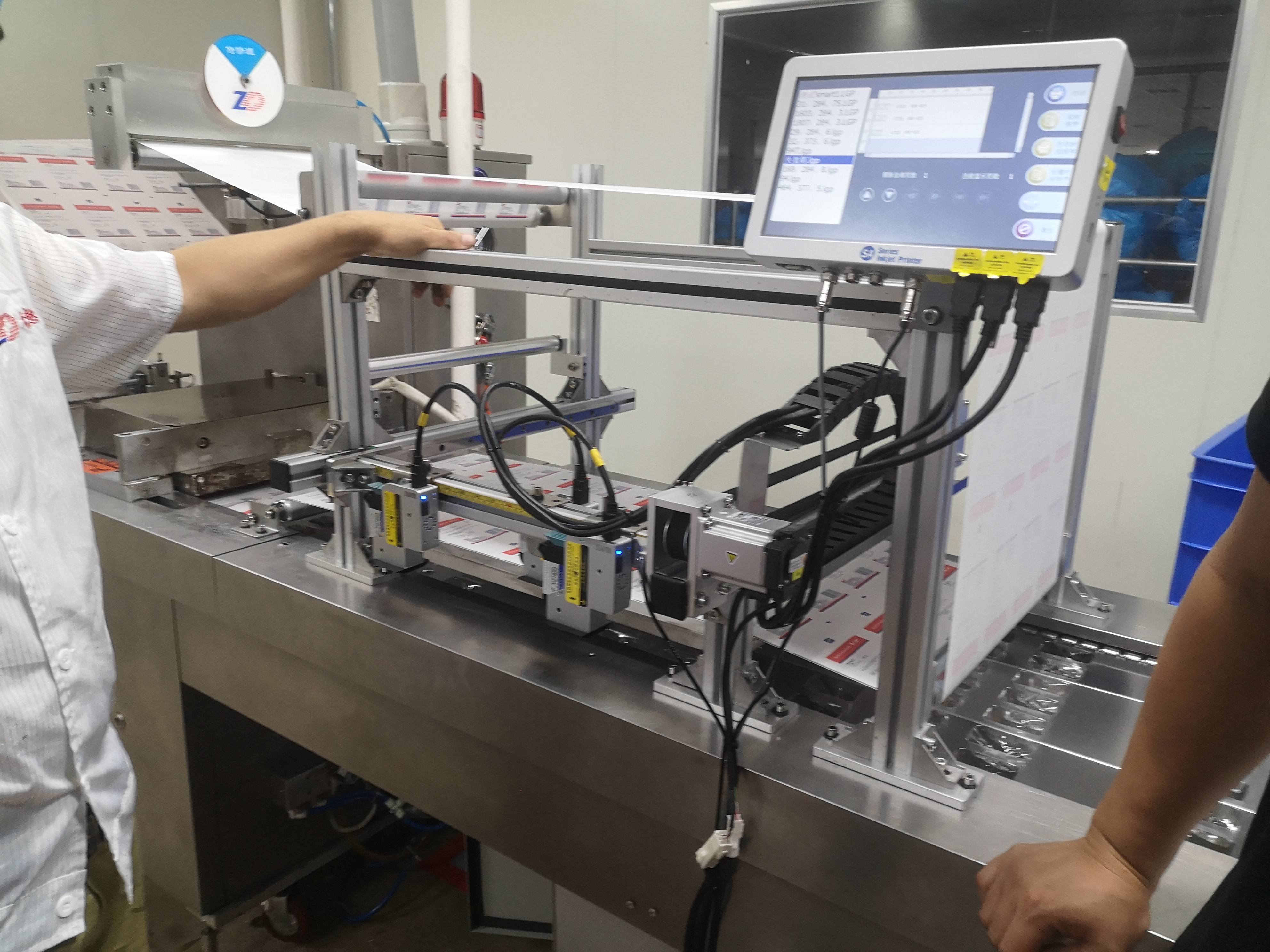
When the pace of production is relentless, every second counts. You’ve probably felt that sinking feeling when a printer jams or runs out of ink at the worst possible moment, bringing entire workflows to a halt. But imagine machines designed to anticipate these hiccups before they happen. With advanced sensors that monitor ink levels in real time and self-diagnosing systems that flag potential issues early, these printers practically manage themselves. They’re built to handle high-volume environments without breaking a sweat, ensuring that your line keeps humming along no matter how tight the deadline.
What sets them apart isn’t just reliability—it’s adaptability. Traditional printers often struggle with inconsistent media types or sudden shifts in demand, leading to frustrating stoppages. These models, however, adjust on the fly. Whether you’re switching from labels to cardstock or scaling up output for a seasonal rush, the hardware recalibrates automatically. The result? You get crisp, consistent prints without ever pausing to tweak settings. It’s the kind of seamless integration that makes your team forget the printer is even there—until they realize the line hasn’t stopped once all shift.
Not Just for Paper: Unexpected Surfaces Now Print-Ready
Printing has broken free from the confines of flat sheets, embracing everything from textured wood to sleek metal. Modern ink and toner technologies now cling to surfaces once deemed impossible, opening doors for creatives and businesses alike. A rough piece of reclaimed timber can hold lines with startling clarity, while anodized aluminum becomes a canvas for photography that won’t fade under the sun. This shift isn’t just about novelty—it’s redefining what a “substrate” can be, pushing design into furniture, decor, and even architectural elements without compromise.
Glass and ceramics have joined the line-up, reflecting images with a depth paper could never achieve. Think shower doors embellished with custom mandalas, or backsplash tiles telling a story through high-resolution prints. Specialized primers and UV-curable inks lock pigments onto slick, non-porous bodies, resisting scratches and moisture. The tactile surprise of running a finger over a printed stone coaster or a fabric lampshade that holds a city skyline—these sensations are changing how we interact with everyday objects. No longer bound by traditional media, personalization finds its way onto tabletops, windows, and even leather-bound notebooks with a simple, direct process.
What’s driving this expansion is a mix of accessible hardware and smarter chemistry. Small-format flatbed printers, once industrial behemoths, are now compact enough for a studio corner. Meanwhile, inks formulated for flexibility can stretch with fabric or harden to endure outdoor exposure. The outcome is a new wave of micro-entrepreneurs transforming ordinary items into custom merchandise—phone cases printed on demand, wood signs with intricate gradients, or metal panels that double as wall art. For anyone who thought printing stopped at the paper tray, it’s time to look around. The surfaces that surround us, from cabinet doors to laptop lids, are waiting to be made print-ready.
Ink Smarts: Formulas That Stick to Any Surface, Dry Instantly
Ever tried marking a glossy plastic container only to watch the ink smear right off? Standard inks fail on slick, oily, or textured surfaces because they can't bite into the substrate. Our reformulated smart inks change that—they create a micro-bond with just about anything you throw at them, from glass and metal to rubber and unprimed wood. It's not magic; it's meticulous molecular engineering that ensures every drop anchors itself instantly, no primers or surface prep needed.
The real game-changer is the drying speed. Traditional permanent markers demand patience, but these formulas flash off in under a second on porous stock and within three seconds on non-porous materials. That means no more smudged barcodes, no waiting between passes on a busy production line, and clean, crisp legends even on fast-moving packaging. The low-odor, xylene-free chemistry also makes them safer for indoor use without ventilation hassles.
We didn't stop at adhesion and speed. The ink stays legible under extreme conditions—think deep freeze storage, steam sterilization, or outdoor sun exposure—without fading or flaking. Whether you're labeling cryovials in a lab, waterproofing field tags, or coding automotive parts that face oil and heat, these inks keep their word. It's the kind of quiet reliability that turns a simple mark into a lasting record.
Maintenance? These Cartridges Swapped Out in Seconds
Picture this: you're mid-print, the job is flowing perfectly, and then the dreaded low-ink warning flashes. With most printers, that means pausing everything, wrestling with tiny, messy cartridges, and hoping you don't get ink all over your hands. But here, the whole ordeal takes literally seconds. The cartridge slides out with a gentle click—no tools, no fuss. You pop in a fresh one and the printer's back in action before you can even remember where you put the paper towels.
The design behind this quick-swap mechanism is almost laughably simple, yet it transforms how you think about printer upkeep. You don't have to be tech-savvy or patient. It's just a matter of opening a compartment, pulling out the old unit, and sliding the new one into place. There's something deeply satisfying about how seamless it is—like the machine was built for real people, not just engineers.
Because the swap is so effortless, you might actually find yourself doing it more often than you expect. No more putting off that fading yellow cartridge because you don't want to deal with the mess. It's the kind of small quality-of-life upgrade that makes you wonder why every manufacturer doesn't do it this way. Maintenance stops being a chore and becomes a two-second pit stop.
From Niche to Necessity: Why Smaller Manufacturers Are Adopting at Speed
It wasn’t long ago that advanced manufacturing tech felt like a playground reserved for deep-pocketed giants. Smaller shops looked on from the sidelines, waiting for costs to drop or for the hype to settle. But that’s changed—bluntly and quickly. Today, the same compact manufacturers who once hesitated are embedding automation, real-time data, and connected systems into daily operations, not because it’s trendy, but because their survival now depends on it. Labor gaps, spikier demand, and customers who expect Amazon-level transparency have turned digital capabilities from “nice-to-have” into operational oxygen.
What’s striking is the speed of this shift. Smaller manufacturers are often the most agile adopters precisely because they carry less organizational baggage. They don’t spend quarters securing budget or untangling legacy IT knots. A shop floor supervisor with a hunch can trial a sensor-based monitoring system over a weekend, see results by Tuesday, and scale what works. That’s a competitive edge big plants can’t easily replicate. As a result, these nimble players are leapfrogging from paper checklists to predictive analytics in months, not years, tearing down the old myth that innovation starts in corporate labs and trickles down.
Underneath this urgency is a quieter truth: small doesn’t mean simple anymore. The same manufacturer running a thirty-person operation might be coordinating orders across three time zones, customizing batches of five, and wrestling with supply chains that shift overnight. What used to separate large from small was scale; now it’s the ability to react without hesitation. Technology that was once niche—collaborative robots, AI-driven scheduling, visibility into the shop floor in real time—has become the only way to keep promises. And once you’ve tasted that control, going back to gut-feel guesswork feels like a gamble no one can afford.
FAQ
They combine high-resolution printing with compact design, low maintenance demands, and surprisingly affordable pricing, allowing even small factories to upgrade their coding capabilities without major infrastructure changes.
Thermal inkjet models use less solvent and require fewer consumables, which cuts ongoing expenses. They also minimize mess and downtime, making them a cleaner and more efficient alternative for many applications.
Food and beverage, pharmaceutical, and cosmetics sectors see the biggest gains because of clear, durable codes on packaging. Electronics and automotive parts industries also appreciate their precision on small components.
Yes, many models now integrate seamlessly with fast-paced conveyors and deliver consistent print quality at speeds over 200 meters per minute, with minimal nozzle clogging thanks to advanced ink circulation systems.
They support water-based, solvent-based, and UV-curable inks, catering to surfaces from porous cardboard to glossy plastics and metal. Quick-drying options are especially popular for avoiding smudges on slick materials.
Companies often see a 30–50% reduction in total cost of ownership compared to traditional methods, driven by lower initial investment, fewer replacement parts, and reduced energy and solvent usage.
Absolutely. With flexible print head mounting and software that compensates for surface variations, they produce clear codes on bottles, cables, and textured packaging without sacrificing legibility.
Look for smarter IoT-enabled devices with remote monitoring, predictive maintenance alerts, and expanded ink compatibility for challenging substrates like recycled materials, all while keeping prices competitive.
Conclusion
The industrial coding sector is witnessing a quiet transformation as thermal inkjet technology matures far beyond its office origins. Chinese manufacturers have re-engineered these systems for the punishing demands of production floors, delivering printers that combine high-resolution output with the ruggedness needed for round-the-clock operation. What’s truly changing the game is their versatility: a single unit can now mark on everything from glossy plastic films to textured metals and curved glass, thanks to clever printhead designs and quick-drying ink chemistries that grip instantly without smudging. These aren’t the fragile desktop machines of the past—they’re built to thrive in dusty, high-vibration environments where consistency is non-negotiable.
What makes them indispensable, especially for smaller manufacturers, is the dramatic reduction in operational headaches. Cartridge swaps take seconds, not minutes, and the sealed systems eliminate messy refills and clogged nozzles. Inks are formulated to adhere to challenging substrates while drying on contact, so lines never pause for curing. The result is minimal downtime and a lower total cost of ownership that has turned a once-niche solution into a must-have. From food packaging to electronics, businesses are adopting at speed, realizing that these compact, smartly engineered printers deliver the reliability and print quality that used to demand far bulkier equipment.
Contact Us
Contact Person: Jacky
Email: [email protected]
Tel/WhatsApp: 086 15000607053
Website: https://www.danmajet.com