

Chinese Rotary Valve: How It Works and Key Benefits Explained
2026-09-18
Rotary valves are at the heart of countless industrial processes, yet the engineering behind Chinese rotary valves often gets overlooked. At AVM, we’ve seen firsthand how these precision components keep powders, pellets, and granules flowing smoothly—but understanding exactly how they work and why they matter isn’t always straightforward. Whether you’re troubleshooting a material handling line or simply curious about what sets a well-built rotary valve apart, this guide breaks down the core operating principles and the key benefits you can expect. Let’s dive into the mechanics that make Chinese rotary valves a smart choice for modern production.
How a Rotary Valve Moves Bulk Solids Without Breaking Flow
Rotary valves handle dry powders and granules by isolating pressure zones while the pockets in the rotor keep filling and discharging. As the vanes sweep past the inlet, material drops into each cavity, then rides around the housing until it reaches the outlet. Because the rotor clearance is tight and the speed is matched to the product’s angle of repose, there’s no surge or stall. The material never stops moving as a column, so downstream equipment sees a steady draw instead of a gulping batch.
Maintaining that continuous feed depends on the valve body geometry and the rotor’s venting. Without a vent port, fine particles can carry compressed air back into the incoming stream and momentarily block flow. A well-placed vent lets that air escape before the pocket re-enters the inlet, which keeps the drop-out uniform. Operators who monitor blade-tip wear and adjust rotor speed to the bulk density of the material will avoid bridging and keep the line running without interruption.
The Sealing Strategy That Keeps Pressure Where It Belongs
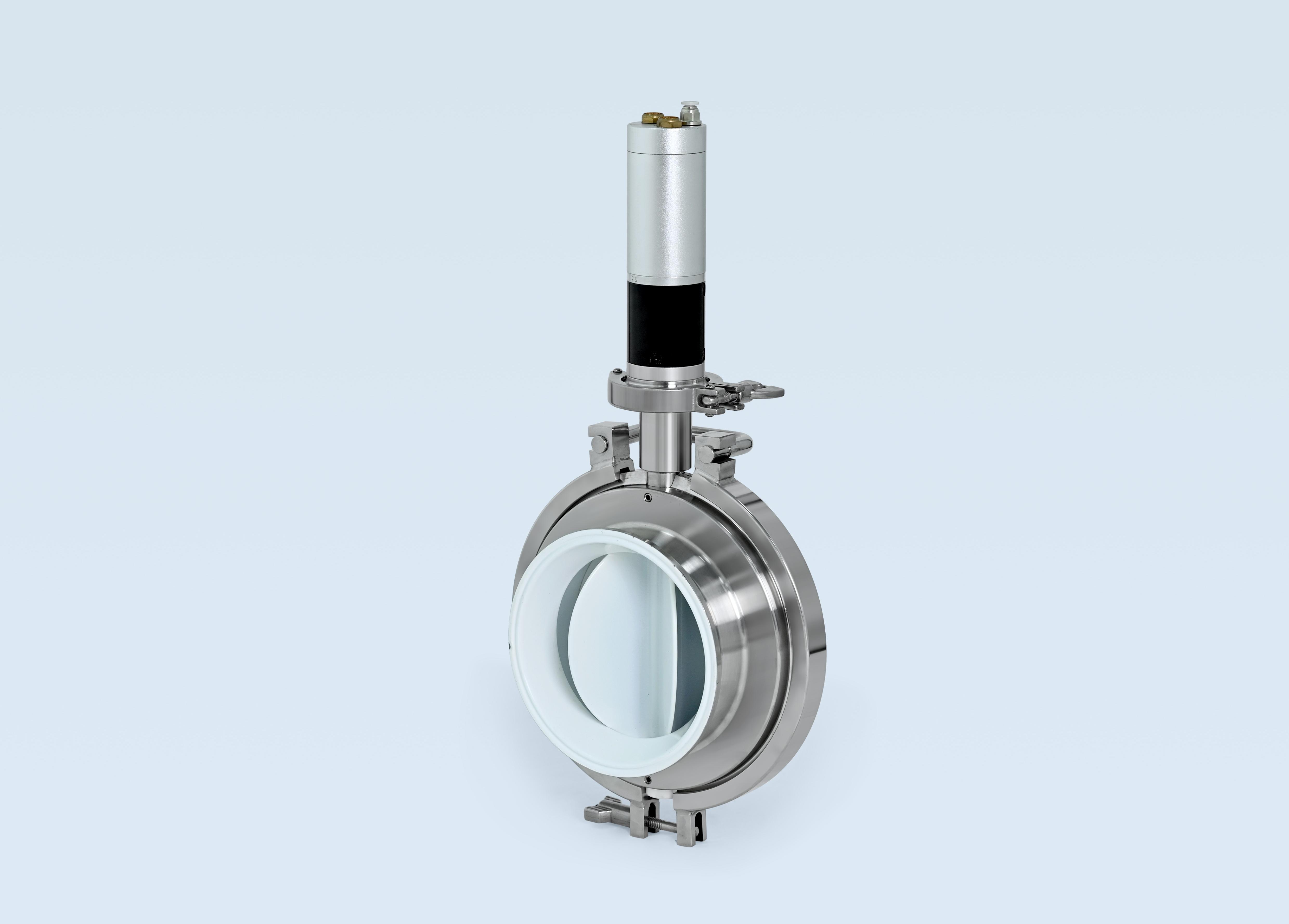
Most leaks don't start as sudden failures. They begin when a gasket loses just enough compressive load to let fluid slip across the flange face. The trick is to treat the seal as a spring system rather than a static barrier. By matching bolt preload to the gasket's relaxation curve and compensating for thermal swings, you keep the residual stress above the minimum seating stress even after the joint settles.
Surface finish matters more than hardness here. A finish that's too smooth gives the gasket nothing to bite into, while a coarse finish can shear soft materials during tightening. The workable range sits between 125 and 250 microinches for most non-metallic gaskets, but that window shifts once you introduce spiral-wound or kammprofile types. The real control point is measuring actual compression, not just torque, because thread friction can eat 40 percent of your applied load before it reaches the seal.
Once the joint is live, pressure cycling becomes the silent test. Each cycle flexes the bolts a few microns, and if the gasket can't rebound, the seal opens up. That's why controlled stiffness in the flange and proper bolt spacing prevent the scalloped gaps that let pressure escape sideways. In practice, this means fewer, larger bolts often beat more small ones—they store more elastic energy and give the joint room to breathe without losing its grip.
Why Chinese Foundries Lead in Wear-Resistant Rotor Castings
Walk through any modern aggregate plant or cement mill, and the rotors spinning inside the crushers often trace their origins back to a handful of specialist foundries in Hebei or Zhejiang. The reason isn't just cheap labor—it's a deep, almost stubborn mastery of high-chrome white iron and martensitic steels, alloys that punish the careless with cracks and porosity. Chinese foundries have spent two decades refining gating systems and shakeout cycles specifically for thick-section rotor bodies, where internal soundness means the difference between a part that lasts two years and one that fails in six months.
Beyond metallurgy, the supply chain advantage is hard to overstate. Local access to ferrochrome, molybdenum, and recycled wear plate lets these foundries pour prototype rotors in weeks rather than months, while in-house heat treatment shops fine-tune hardness profiles to match specific rock abrasiveness. This vertical integration, paired with pattern shops that have accumulated thousands of rotor designs, allows customers to request tweaks—a thicker impeller shoe here, a revised balancing boss there—without triggering the tooling costs that would make Western foundries hesitate.
Field performance eventually became the clincher. Chinese rotor castings moved from being low-cost alternatives to benchmark references, with operators reporting equal or better wear life under identical feed conditions. The foundries that survived the brutal domestic competition are the ones that treated every returned cracked rotor as a failure analysis lesson, not a warranty write-off. That iterative loop, running at a scale no other country matches, is why a growing share of the world's hardest-working rotors now carry a Chinese heat number.
Common Pitfalls When Matching Valve Size to Your Conveying Line
A lot of systems run into trouble because the valve is chosen to match the nominal pipe size without checking the actual velocity or pressure drop across the valve. An undersized valve might seem like a minor bottleneck, but it adds sharp resistance that forces the blower or compressor to work harder, and in dense phase conveying it can quickly lead to plugging. On the flip side, going too large because “bigger is safer” just wastes money and makes flow control sloppy, especially when you need precise batch dosing.
Another common slip is forgetting that material characteristics change what “size” really means. A valve bore that works fine for free-flowing pellets may choke on abrasive powder or sticky granules, because the internal contours, seat design, and even the end connections affect how material passes through. If you only compare flange-to-flange dimensions or thread sizes on paper, you’ll miss the transition pieces, wear liners, or reduced port areas that actually determine performance in the field.
Energy Savings That Come From Tighter Clearances
Tighter clearances in rotating equipment directly cut energy waste by reducing internal leakage. When gaps between impellers, lobes, or screws and their housings shrink, less compressed gas or liquid slips back to the suction side. That slip is pure lost work — it raises the machine's power draw without adding useful output. In screw compressors, for example, bringing radial clearance down by just a few thousandths of an inch can lower specific power by 2 to 4 percent, which shows up on the utility bill month after month.
The savings also come from less churning and friction. A tighter fit means the moving parts shear through a thinner fluid film or trap less dead volume between surfaces, so the drive motor doesn't have to fight as much parasitic drag. This is especially noticeable in positive displacement blowers and gear pumps, where excess clearance lets fluid recirculate inside the casing, heating it up and requiring extra cooling fan energy on top of the wasted shaft power.
Over a full operating year, those small efficiency gains stack up. A process that runs continuously will often see enough reduction in kilowatt-hours to offset the cost of higher-precision machining or tighter assembly tolerances within the first 12 to 18 months. And because the equipment runs slightly cooler with less internal recirculation, seals and bearings tend to last longer, which avoids the energy penalty of frequent starts, stops, and rebuilds.
What to Inspect Before Blaming the Valve for a Leak
Leaks are often blamed on the valve body simply because that is where the moisture or hiss becomes visible, but the real culprit is usually a nearby connection. Before you remove or condemn the valve, dry the entire area with a clean rag and inspect the threaded joints, compression fittings, and union nuts on both sides. A slow weep at the packing nut can travel along the pipe and drip from the lowest point of the valve, making it look like a body crack. Tighten the packing nut only a quarter turn at a time while the system is under normal pressure, and watch for any change in the leak rate.
Next, check the bonnet gasket and flange bolts for uneven loading. Thermal expansion and vibration can loosen bolts over time, allowing a path for fluid to escape without any visible damage to the valve itself. Look carefully at the casting with a bright light and a small mirror, but do not stop there. Condensation from a cold line can pool and drip exactly like a leak, and a drip from an overhead joint can land directly on the valve. Place a strip of clean paper or cardboard beneath the suspected area and observe which side gets wet first. Only after ruling out these external sources should you consider replacing the valve.
FAQ
A rotary valve is a compact mechanical device used to feed or discharge bulk materials from a hopper, silo, or pneumatic conveying line. It typically consists of a housing with an inlet and outlet, and a rotating rotor with vanes that creates moving pockets to transfer material at a controlled rate while maintaining an airlock.
The rotor turns inside a machined housing. Material enters from the top, fills the pockets between the vanes, and as the rotor rotates, those pockets carry the material to the outlet at the bottom. The close clearance between the rotor and housing forms a seal, which prevents air from escaping or entering the system when pressure differences exist.
Most manufacturers offer cast iron, carbon steel, stainless steel, and sometimes aluminum. For abrasive or corrosive materials, hard coatings like tungsten carbide or ceramic liners are often applied to the rotor tips and housing bore to extend service life.
You often get a strong balance of cost and quality. Chinese manufacturers have improved their machining capabilities significantly, and many now offer customizable designs, quick lead times, and a wide range of sizes. The lower labor costs also make replacement parts more affordable without sacrificing basic reliability.
Sizing depends on the bulk density of your material, the required feed rate, and the pressure differential across the valve. You need to calculate the volumetric capacity per revolution and then match it to your motor speed. It is best to share your material properties and flow requirements with the supplier so they can recommend a rotor diameter and pocket depth that avoid bridging or excessive wear.
Reputable Chinese manufacturers follow international standards like ISO and often export to demanding markets. Reliability comes down to the specific factory and materials used, not just the country of origin. Checking references, requesting material certificates, and asking about quality control procedures will help you find a unit that performs as well as Western counterparts at a lower price.
Routine maintenance includes checking rotor clearance, inspecting seals and bearings, and clearing any material buildup on the vanes or housing. Lubricating the drive chain or gearbox and monitoring for unusual noise or vibration are also important. Replacing worn rotor tips before they get too thin prevents air leakage and keeps the valve efficient.
Yes, many Chinese suppliers offer heavy-duty models with replaceable wear-resistant tips, hardened rotors, and high-temperature packing or cooling channels. For extreme conditions, you can order a valve with ceramic-lined housing and rotor, or specify materials like 304 or 316 stainless steel with high-temp grease and seals rated for continuous use.
Conclusion
A rotary valve works as a metering airlock, letting powders, granules, and pellets pass from a hopper into a pneumatic line without disrupting the conveying air. The rotor pockets fill under gravity, rotate through a sealed housing, and discharge on the opposite side. Chinese manufacturers have refined this basic design with precision-machined bodies and rotor tips that maintain a controlled gap. That gap is critical: too wide and high-pressure air leaks backward, wasting energy and reducing feed accuracy; too tight and the rotor binds or wears quickly. By holding clearances closer than many older castings allowed, modern Chinese rotary valves keep pressure differentials stable while using less compressed air. This translates into lower operating costs on dense-phase and vacuum systems, especially in cement, flour, and plastic compounding plants.
The real advantage from Chinese foundries comes from wear-resistant rotor castings. Using alloyed irons or hardened steel, they produce rotors and endplates that survive abrasive materials like silica sand, fly ash, or alumina. That does not mean every valve fits every line, though. A common mistake is specifying a valve by flange size alone instead of swept volume, rotor speed, and inlet shear angle. If the pockets cannot fill completely at high rotor speeds, the conveying line starves; if the valve is oversized, material floods the pipe and plugs it. Before assuming a leak is the valve's fault, check the vent port, rotor tip clearance, shaft seals, and housing alignment. Often a pressure imbalance or worn flexible connection is the real source. Properly matched and maintained, a Chinese rotary valve offers reliable feeding, tighter sealing, and measurable energy savings without constant rebuilds.
Contact Us
Contact Person: Ananda
Email: [email protected]
Tel/WhatsApp: 8619016718200
Website: https://www.wzaomi.com