

China Food Grade Anti-caking Silica: Unlocking Purity and Performance in Food Processing
2026-05-16
In the intricate world of food processing, purity and consistency aren't just goals—they're mandates. Yet, everyday ingredients like powdered spices, instant soups, and grated cheeses face a silent adversary: caking. That's where China's food-grade anti-caking silica steps in, quietly transforming product flow and shelf life. And at the forefront of this innovation stands Zhonglian, a name synonymous with uncompromising quality. Join us as we delve into how this microscopic marvel upholds performance while meeting the strictest purity demands, one powder at a time.
What Sets Food-Grade Silica Apart from Industrial Variants
Food-grade silica is manufactured under stringent purity standards that go far beyond what's required for industrial use. Industrial variants may contain trace heavy metals or reactive compounds that are acceptable in manufacturing but have no place in consumables. The refining process for food-grade material strips away these unwanted extras, ensuring a product that's chemically inert and safe even in long-term, intimate contact with food products.
Another key differentiator lies in the physical structure of the silica. Industrial grades can have irregular particle shapes and a wide spectrum of sizes, which are fine for abrasive blasting or filler but could compromise texture or safety in edibles. Food-grade silica, by contrast, has tightly controlled particle dimensions and a uniform, porous architecture. This consistency keeps powders free-flowing, prevents clumping in spices and supplements, and does so without altering taste, color, or nutritional value.
How Anti-caking Agents Preserve Powdered Food Integrity
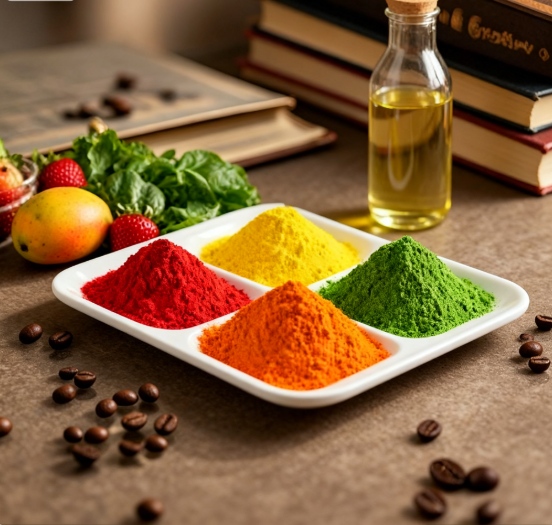
Powdered foods—think spices, instant coffee, or powdered sugar—have a natural tendency to clump together when exposed to moisture. Even slight humidity can turn a free-flowing powder into a stubborn, lumpy mass. This is where anti-caking agents step in, working silently to maintain that loose, sprinkle-able texture we expect. They don't alter flavor or nutritional value; instead, they tackle the physical forces that cause particles to stick together, ensuring every spoonful remains as consistent as the day it was packaged.
At a microscopic level, these additives function through a few clever mechanisms. Some, like calcium silicate or silicon dioxide, absorb excess moisture before it bridges the gaps between particles, effectively denying water the chance to form liquid bonds. Others create a fine, powdery barrier that coats each grain, reducing friction and preventing interlocking. A few even work by physically spacing particles apart, acting like tiny ball bearings. This multi-pronged approach keeps the bulk powder stable, whether it's been sitting in a pantry for weeks or traveling through humid supply chains.
Without anti-caking agents, many dry goods would lose their usability and appeal. Imagine trying to pour clumpy flour or shake a solid block of grated cheese. Beyond convenience, preserving powder integrity also ensures accurate measuring and even mixing in recipes. The next time your powdered ingredients flow smoothly from the container, remember it's not by chance—it's precise chemistry keeping everything in its right place.
Inside the Manufacturing Precision Behind China’s Leading Silica
Every grain of silica tells a story of exacting standards. From raw quartz to ultra-pure powder, the transformation hinges on tightly controlled environments where micron-level tolerances aren’t just goals—they’re non-negotiable. Advanced milling technologies and real-time particle analysis ensure consistency batch after batch, while proprietary classification systems remove even the slightest deviations. It’s this relentless pursuit of uniformity that sets the foundation for everything from semiconductor polishing to high-grade coatings.
Precision extends far beyond the production line. Behind the scenes, innovation labs push boundaries with custom surface treatments and functionalization techniques, tailoring silica’s behavior for specific industrial demands. Whether it’s improving flowability in adhesives or enhancing optical clarity in specialty glass, each refinement is the result of thousands of data points and iterative testing. Here, precision isn’t a buzzword—it’s a measurable parameter verified by laser diffraction, electron microscopy, and contamination-free packaging protocols.
What truly separates leading suppliers is the marriage of automation with human expertise. Smart factories monitor variables that escape the naked eye, but experienced engineers still make micro-adjustments based on tactile feedback and decades of know-how. This blend of old-school vigilance and Industry 4.0 intelligence creates silica that performs predictably in high-stakes applications, from pharmaceutical excipients to battery separator films. The result? A material so consistently pure that manufacturers around the globe build their reputations on it.
Navigating Purity Standards and Certifications for Modern Food Safety
Navigating the landscape of purity standards in food production can feel like learning a new language. From organic to non-GMO, each label carries its own set of requirements and audits. For manufacturers, aligning with the right certifications isn't just about market access—it's a commitment to consistent quality and consumer trust. Yet, the sheer number of options often leads to confusion rather than clarity.
Understanding the nuances behind these certifications is where real value lies. Programs like the Global Food Safety Initiative (GFSI) benchmarks provide a framework, but regional and product-specific standards often add another layer. Scenario-based training and regular internal audits help teams not just check boxes but internalize safety protocols. This shift from passive compliance to proactive culture reduces risks long before a third-party inspection.
In practice, staying current means more than reviewing updated guidelines. It involves fostering partnerships with certifiers who offer guidance beyond the audit cycle. Transparency across the supply chain—from sourcing to packaging—becomes a differentiator. Consumers are increasingly savvy, seeking brands that openly share their testing data and certification journey, making purity a lived story rather than a mere marketing claim.
From Seasonings to Supplements: Versatile Applications You Might Overlook
When most people think of spices and herbs, they picture a dash of turmeric in curry or a sprinkle of cinnamon on oatmeal. Yet these pantry staples hold hidden talents that extend far beyond the kitchen. For centuries, traditional medicine systems have harnessed their concentrated extracts, but modern lifestyles are only beginning to rediscover how a simple oregano leaf or ginger root can double as a daily wellness booster. The line between seasoning your food and supplementing your health has never been blurrier, and that’s a good thing.
Take black pepper, for instance. It’s not just there to make you sneeze—its active compound piperine can dramatically increase the absorption of other nutrients like curcumin from turmeric. Without that pinch of pepper, you might be flushing a good portion of your golden latte’s benefits down the drain. Similarly, humble rosemary does more than perfume roasted potatoes; its carnosic acid has been studied for cognitive support, hinting at why ancient scholars wore garlands of the herb. These aren’t fringe theories but everyday hacks that transform seasoning into a strategic act of self-care.
What’s often overlooked is how seamlessly these ingredients can slide into a capsule, tincture, or even a sports drink. Cardamom, long used to freshen breath after a meal, now appears in digestive enzyme formulas. Tart, bright sumac—prized in Middle Eastern cooking—offers antioxidant properties that rival goji berries. By reframing your spice rack as a supplement shelf, you unlock a world of subtle, sustained benefits without the clinical feel of a pill organizer. It’s a quiet shift toward functional flavoring that invites you to taste your way to better health, one meal at a time.
Balancing Performance and Clean Label Demands in Processed Foods
Striking the right balance between product performance and clean label expectations has become a central challenge for food manufacturers. Consumers increasingly demand recognizable, minimally processed ingredients, yet they still expect the same taste, texture, and shelf life they’ve grown accustomed to. Achieving this requires rethinking traditional formulations—swapping out synthetic preservatives for natural alternatives like rosemary extract or cultured dextrose, and using fruit or vegetable powders for vibrant colors without artificial dyes. The trick lies in ensuring these swaps don’t compromise the product’s stability or sensory appeal, which often means extensive testing and a deeper understanding of ingredient interactions.
One of the trickiest areas is maintaining texture and mouthfeel when removing modified starches or hydrocolloids that consumers view as overly processed. Ingredients like citrus fiber, oat bran, or chia seeds can step in as natural thickeners and stabilizers, but they can introduce off-notes or grittiness if not carefully handled. Manufacturers are turning to innovative processing methods such as high-pressure processing (HPP) and precision fermentation to preserve functionality while keeping labels short and understandable. These techniques help extend shelf life and improve safety without resorting to chemical-sounding preservatives, though they often require significant capital investment and process redesign.
Transparency has become just as important as the ingredients themselves. Brands that openly communicate why certain additives are necessary—like using ascorbic acid as a dough conditioner or vinegar as a natural preservative—can build trust even when a product isn’t perfectly “free-from” everything. The key is avoiding oversimplification and instead educating consumers about the purpose behind each ingredient. Successful products in this space often pair a concise ingredient list with clear, honest messaging that acknowledges the complexity of making safe, enjoyable food at scale, all while quietly pushing the boundaries of food science.
FAQ
It prevents clumping by absorbing excess moisture, ensuring free flow and consistent texture in products like spices, coffee creamers, and protein powders.
Chinese manufacturers use advanced precipitation methods and strict purification processes to meet international food safety standards, resulting in silica with minimal impurities.
No, it is inert, tasteless, and transparent when dispersed, so it won't alter flavor, color, or clarity in the final product.
It complies with GB 25576-2020, aligning with global norms like JECFA and FCC, ensuring it's safe for consumption.
By maintaining powder fluidity, it reduces downtime caused by blockages in machinery and ensures accurate dosing during high-speed packaging.
Yes, high-performance variants offer larger pore volume and tailored particle sizes for challenging applications like hygroscopic powders or oil-based seasonings.
Many producers focus on energy-efficient manufacturing, water recycling, and eco-friendly packaging to reduce environmental impact.
Store in cool, dry conditions away from strong odors to prevent premature moisture uptake and preserve the silica's effectiveness.
Conclusion
Food-grade silica has carved out an essential role in modern food processing, yet its specialized nature often goes unnoticed. Unlike industrial silica, which is geared toward applications like construction or electronics, the food-grade variant undergoes rigorous refinement to eliminate contaminants such as heavy metals and crystalline forms that pose health risks. This level of scrutiny ensures that the silica used in powdered foods, from spices to protein shakes, remains inert and safe for consumption. China’s leading manufacturers have honed precision production methods, tightly controlling particle size and porosity to achieve the delicate balance needed for effective anti-caking. These processes allow the silica to coat individual particles, absorbing moisture microscopically without altering taste, odor, or color. The result is a free-flowing powder that retains its texture and extends shelf life, even in humid environments.
Beyond the technical finesse, food-grade silica aligns with evolving market demands for cleaner labels. It is a synthetic yet naturally derived material that satisfies both performance requirements and consumer expectations for recognizable ingredients. Its versatility spans far beyond the obvious: it prevents clumping in seasonings, maintains flow in powdered supplements, and even stabilizes powdered fats and flavorings. Stringent certifications like FCC and EU compliance validate its purity, giving food manufacturers confidence in safety and consistency. As the industry pushes toward minimally processed offerings, silica provides a subtle but powerful tool—keeping products fresh and appealing without the need for more complex or less accepted additives. In this way, China’s high-purity silica helps unlock new possibilities in food formulation while quietly upholding the integrity we expect in everyday products.
Contact Us
Contact Person: Levin Wang
Email: [email protected]
Tel/WhatsApp: 8618668999988
Website: https://www.silicaplant.com/