

China Conveyor Pulley Supplier Selection Guide for Reliable Industrial Operations
2026-10-27
Every maintenance manager knows the sinking feeling of a failed pulley bringing a whole line to a halt. Sourcing reliable conveyor pulleys from China should not feel like a gamble, yet too many buyers still rely on glossy catalogs and vague promises. The real differentiators are hidden in engineering details, material traceability, and how a supplier responds when something goes wrong. That is where XAN stands apart — not by claiming perfection, but by building components that hold up under real industrial stress. This guide breaks down the selection criteria that matter most, so you can make a confident choice without the usual trial and error.
Reading the Weld Map: How to Spot a Pulley Shell That Will Hold Under Load
Start by tracing the weld map with your finger, not just your eyes. A shell that will hold under load tends to have continuous, evenly spaced weld beads where the cap meets the sidewall. Look for a slight crown—roughly 1–2 millimeters above the base metal—and a smooth transition at the toes. If the bead looks flat, ropey, or has abrupt edges, that's usually a sign of uneven heat input or a rushed pass.
Pay close attention to the heat-affected zone along the edges of the weld. On a properly welded pulley shell, this narrow band should be uniform in color, with no sharp blue or straw-colored streaks that indicate local overheating. Run a gloved fingertip over the toes; you shouldn't feel any undercut—a groove that eats into the parent metal. Undercut, even if it looks minor, creates a stress riser that can open up under cyclic loading.
Finally, check the stops and starts. Many failures begin where the welder struck an arc or broke one. A clean shell will have these points ground back and blended so they don't stand proud. If you see craters, pinholes, or overlapping ripples at the ends of a pass, walk away—those are exactly where a crack will start when the pulley sees its first real shock load.
Material Mill Certificates Are Only Half the Story: What Else to Demand
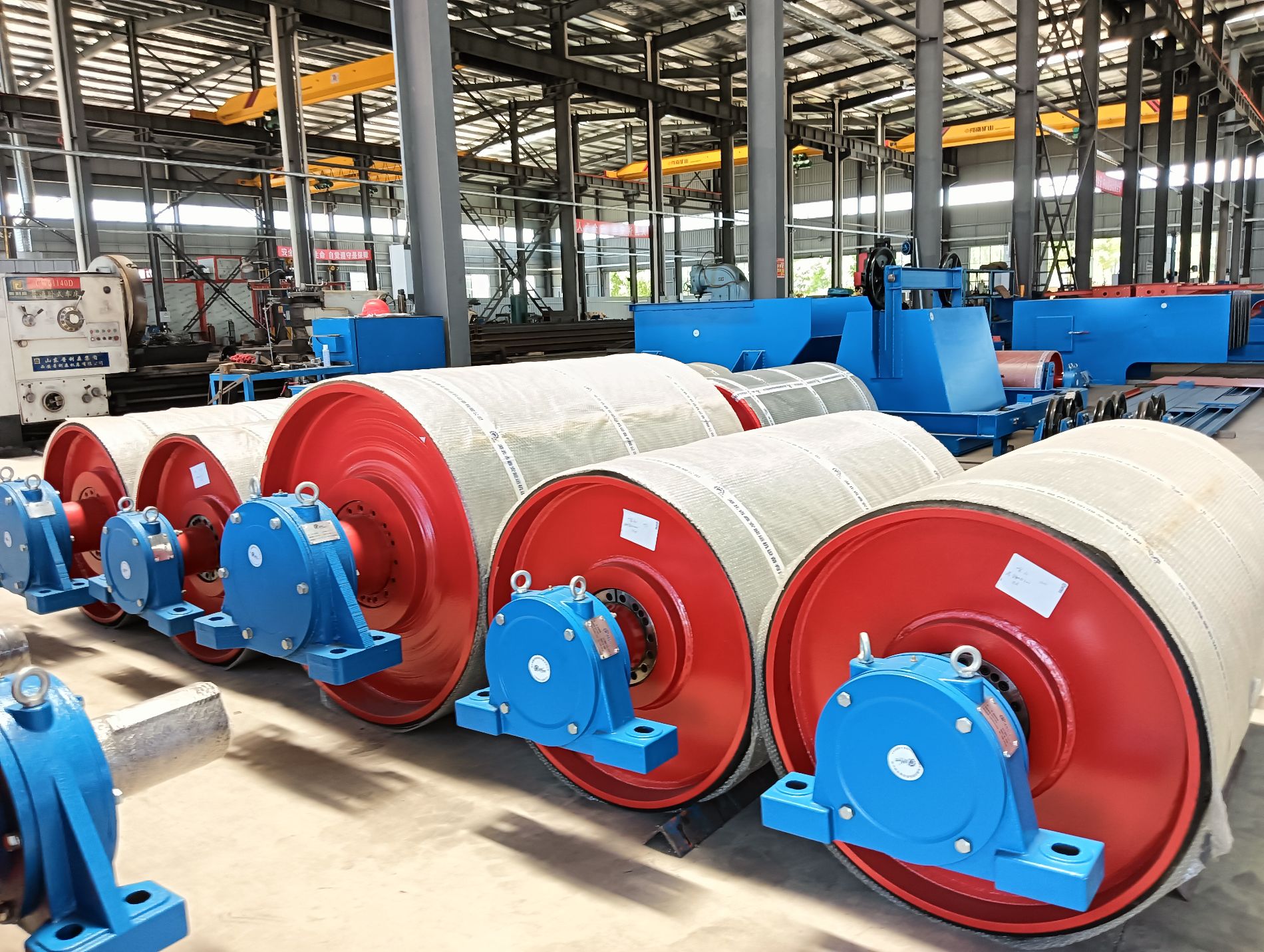
A mill certificate is a starting point, not a guarantee. It tells you what the mill intended to produce, but it doesn't confirm what actually landed on your dock. Insist on matching the heat numbers stamped on the physical material with the cert, and ask for the original ladle analysis rather than a re-typed summary. Small discrepancies in traceability often signal bigger problems downstream.
Handling and storage after the material leaves the mill can undo everything the certificate promises. Ask for evidence of proper storage, protection from contamination, and documented transfer of custody. If the material sat outdoors for weeks or was re-cut by a third party without re-certification, the original test values may no longer apply. Demand updated documentation for any processing that alters dimensions or surface condition.
For critical applications, require independent verification. Request third-party test reports for properties like impact toughness, hardness, or corrosion resistance that are not always covered by a standard mill cert. A supplier who is reluctant to share raw data or allow an audit is often hiding something. The full picture comes from combining the certificate with your own incoming inspection, not from trusting a single sheet of paper.
Custom Hub Design: When Standard Bores Become Your Biggest Downtime Risk
Standard bores look efficient on paper, but real operating conditions stack up tolerances in ways that nominal dimensions never capture. Minor shaft runout, thermal growth, and uneven load distribution create localized fretting and micro-movement at the bore interface. That movement eventually wears the seating surface, loosens the fit, and transfers destructive loads straight into the bearings and seals—components never designed to absorb that punishment.
Custom hub design starts with the actual measured shaft profile, not a catalog spec. By factoring in the application's torque peaks, vibration spectrum, and temperature swings, the bore geometry and interference fit get recalculated for a controlled contact stress pattern. In high-vibration drives, a standard keyway often becomes a crack initiation site, whereas a tapered clamping element or custom spline profile spreads the load across the full circumference and eliminates the point loading that triggers early failure.
The true cost comparison isn't the machining invoice; it's the hours of unplanned downtime when a standard hub backs off or seizes. Repeated bearing replacements, seal leaks, and shaft scoring add up faster than most maintenance budgets admit. A hub machined to match the shaft and duty cycle removes that failure mode at the root, often paying for itself the first time it survives a season that would have destroyed an off-the-shelf fit.
The Ningbo Advantage: Turning Port Proximity into Delivery Certainty
Ningbo doesn't just sit next to one of the world's busiest ports—it lives inside its rhythm. A factory here isn't six hours from the berth; it's often forty minutes, sometimes less. That closeness changes what "on time" means. When a container is booked, it doesn't wait for a cross-country truck or a clogged highway. It moves from dock to warehouse in a single morning, which means a promise made on Monday can survive even a Wednesday storm.
The real advantage shows up when schedules break. Ports everywhere face weather delays, equipment shortages, and customs backlogs. In Ningbo, those delays land on a supply chain that can absorb them. A shipment that misses a cutoff can often be rebooked the same afternoon. A last-minute order can still catch a vessel because the distance between production and loading is measured in minutes, not days. That's not just convenience—it's insurance against the kind of uncertainty that kills delivery dates.
Buyers don't pay for proximity in abstract terms. They pay for fewer handoffs, fewer chances for a carton to sit in a yard, and fewer nights wondering where a batch actually is. Ningbo's port has spent years building feeder networks and rail links that extend its reach inland, so the certainty doesn't stop at the dock. It travels backward into the province and forward onto the water. For anyone tired of tracking a shipment that keeps slipping, that's the difference between hoping for delivery and planning on it.
Paint Is Not Protection: Asking the Right Questions About Coatings and Corrosion
Most people assume a fresh coat of paint means the steel underneath is safe. It looks fine, feels smooth, and everyone walks away happy. But corrosion doesn't care about appearances. A coating is just a thin barrier, and once moisture, oxygen, or chlorides find a way through—whether at a pinhole, a scratch, or an edge—the real damage starts beneath the surface, often hidden for years.
So the first question isn't 'What colour do you want?' It's 'What exactly are we protecting against?' Is the environment coastal with salt spray? Is the structure buried, submerged, or exposed to chemical splash? What's the failure mode—uniform rust, pitting, crevice corrosion, or galvanic attack between dissimilar metals? If you don't know the answers, you're not specifying a protective system; you're just picking a paint.
The right questions keep going. What surface preparation standard was actually achieved, not just what the spec says? Is the primer compatible with the topcoat, or will solvents lift it? What dry film thickness is realistic on edges and welds, not flat test panels? And when the coating does fail—because all coatings eventually fail—what's the inspection and maintenance plan to catch it before the metal loses too much section? Paint alone was never protection. It's one layer in a system that only works if you ask the hard questions first.
The Real Warranty Test: Will Your Supplier Answer the Phone in Year Three?
Most warranty documents read like they were written by the same legal team, promising coverage for parts, labor, and sometimes even shipping. But the real test never shows up on page four of the contract. It happens in year three, when a critical component fails and you dial the supplier's support line. If the phone rings into a void, or you get bounced through three departments before landing on a voicemail that never calls back, that warranty isn't worth the paper it's printed on. A supplier who answers quickly in year three is one who actually built a service infrastructure, not just a sales pitch.
The pattern is painfully common: during the sales cycle, your calls are returned within minutes. Eighteen months later, the same number takes days to respond. By year three, the extension you memorized no longer exists. This happens because many suppliers treat warranties as a cost center to be minimized, not a relationship to maintain. They might have moved support overseas, cut their field technician team, or pivoted to new product lines that make your equipment a low priority. The suppliers who pass the three-year test are the ones who retained their original engineers, kept spare parts in stock, and still know your company by name when you call.
So before you sign anything, ask the uncomfortable question: "Can you give me the phone number of a customer who's had this equipment for three years and actually needed service?" Then call that reference and ask how long it took to get a human on the line. Also demand a written service-level agreement with specific response times for years two, three, and beyond—not just the first twelve months. If a supplier hesitates or gives you a generic answer, that hesitation is your answer. The warranty test isn't about what they promise when everything is new; it's about whether they'll still pick up the phone after the honeymoon ends.
FAQ
Look beyond the glossy catalog. Request detailed cross-section drawings for your exact belt width and tension. Ask about their calculation method for shaft deflection and rim thickness under load. A supplier that can walk through those numbers and adjust for your duty cycle is usually more reliable than one quoting only standard sizes.
Focus on the welding procedure and post-weld stress relief. Heavy-duty pulleys should have full-penetration welds on end discs and hubs, with vibration stress relief or annealing to prevent cracking. Ask for weld maps and procedure qualification records, not just material certificates.
Request photos or live video of the pulley after each stage: shell rolling, welding, machining, and balancing. The key is dimensional inspection reports showing runout under 0.5 mm and balance grade to ISO 21940 G6.3 or tighter. If they hesitate to share in-process data, that is a warning sign.
Lowest bid often hides shortcuts like thinner shells, undersized bearings, or no dynamic balancing. Paying slightly more for a supplier that does finite element analysis on high-tension pulleys and load tests prototypes usually avoids costly failures and unplanned downtime.
Ask them to show previous orders with ceramic tile lagging, spiral wing pulleys, or tapered bore hubs. Have them explain how they bond rubber to the shell and cure it. A supplier who asks about your belt speed, material abrasiveness, and wet conditions before recommending lagging is more credible.
Location near a major port like Shanghai, Ningbo, or Qingdao can reduce inland freight delays. But more critical is export packaging know-how: rust preventive coating, sealed bearings, and reinforced crates that survive ocean transit. A supplier with a track record to your region and references from similar industries is worth more than a slightly cheaper inland factory.
Be wary of vague material descriptions like 'high-quality steel' without a grade such as Q345B or 45# steel. Also watch for unusually short lead times that suggest off-the-shelf components mismatched to your specifications. Missing bearing brand or using no-name bearings without traceability is another common cost-cutting trick.
Yes, but define expectations upfront. Ask about spare shaft assemblies, bearing housing interchangeability, and response time for technical queries. A supplier willing to provide installation torque values, alignment tolerances, and a dedicated technical contact in English is more likely to keep your operation running reliably.
Conclusion
Selecting a conveyor pulley supplier in China demands more than a quick price check. Start by reading the weld map—ask to see how the shell seams are positioned and whether full penetration welds are specified, because a pulley that looks smooth on the outside may hide stress risers that fail under cyclic loading. Material mill certificates are a baseline, but demand traceability from heat number to finished shell, including impact test results at your operating temperature. Custom hub design is often overlooked; standard bores may not match your shaft tolerances, leading to fretting or keyway failure after months of vibration. A supplier willing to machine hubs to your exact interference fit—not just a catalog bore—saves you from unplanned downtime.
Proximity matters more than many buyers realize. A supplier near Ningbo port can turn a last-minute design change into a shipment that still leaves on schedule, because the container yard is minutes away, not days. Don't be fooled by a thick coat of paint; ask for a written coating specification—surface prep standard, dry film thickness, and salt spray hours—and verify it with a pull-off test on a sample panel. Finally, the real warranty test happens in year three, when a weld cracks or a lagging delaminates. Will your supplier answer the phone, send a replacement hub, or blame your maintenance crew? Demand a warranty that includes labor and freight, not just parts, and call their existing customers to see how they handle claims.
Contact Us
Contact Person: Anna Lu
Email: [email protected]
Tel/WhatsApp: 8618561668850
Website: https://www.x-conveyor.com