

China CNC Machining Service Solutions for Reliable Precision Manufacturing
2026-11-02
Precision isn't a buzzword when your prototype's tolerances decide the next funding round. That's why engineers hunting for China CNC machining services keep circling back to ProtoMat—a partner that turns 'reliable' from a spec-sheet claim into a repeatable outcome. In this guide, we unpack how smart sourcing, tight process control, and on-the-ground expertise close the gap between CAD intent and production reality.
How China CNC Shops Keep Tight Tolerances From Drifting
Most drift in tight-tolerance machining doesn't come from the cutting itself—it creeps in through uncontrolled shop conditions. Chinese CNC shops that consistently hold ±0.005 mm often run climate-controlled bays where ambient temperature stays within a couple of degrees. Machine tools warm up before production, and critical dimensions are measured only after thermal equilibrium. Without this, a 10°C swing can shift a 100 mm steel part by several microns.
Tool wear is another quiet enemy. Rather than waiting for a tool to break or produce visible finish problems, shops track wear through probing cycles and statistical process control. Cutting parameters are adjusted proactively, and sister tooling is staged so that a changeover doesn't interrupt a long run. This keeps a process centered instead of letting it drift toward the control limits.
In-process feedback closes the loop. On-machine probing and automated offset updates allow a machine to correct for gradual changes without stopping production. Some shops also use laser tool setters and post-process inspection data to fine-tune offsets. The goal isn't to inspect quality in at the end—it's to keep the process stable enough that drift never gets a chance to accumulate.
Material Choices That Put the Part Before the Data Sheet
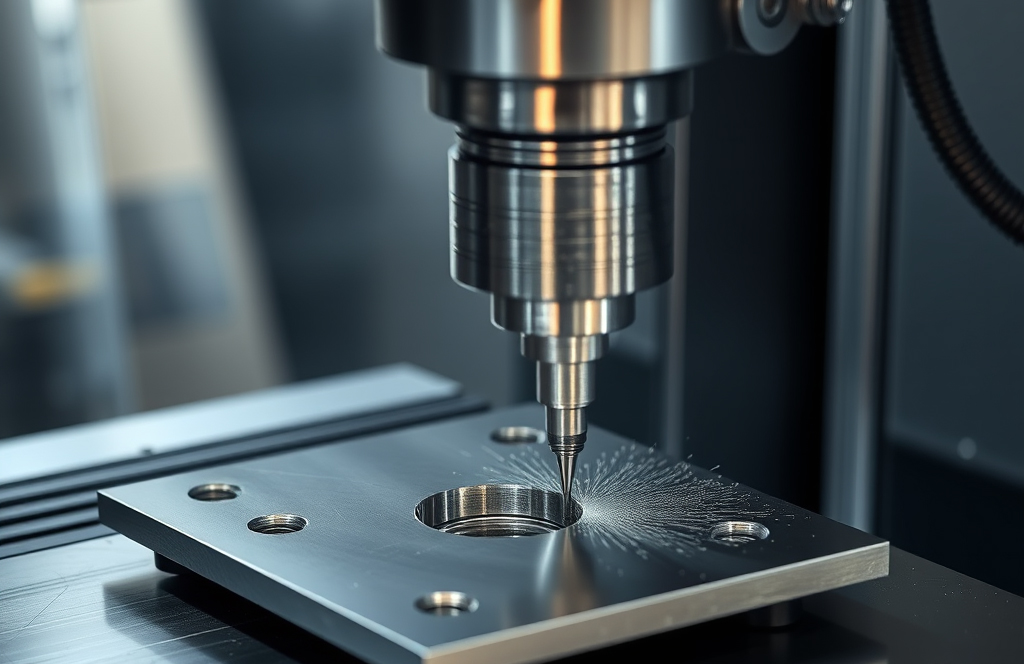
Too many engineers start with a datasheet and then try to force the part to fit. Instead, flip that order: define the load, temperature range, chemical exposure, and expected lifetime of the part first. Then look for materials that meet those conditions without over-engineering. A part that spends its life indoors under light stress doesn't need the same alloy as one sitting on an ocean rig.
Suppliers love to highlight ultimate tensile strength or thermal conductivity, but those numbers are often measured under idealized lab conditions. Ask how the material behaves after welding, after UV exposure, or after a few thousand thermal cycles. Look at real failure modes from similar parts in the field. That's where the real selection happens—not on page one of a brochure.
Sometimes the smartest choice is a lower-spec material with a better processing window or more consistent supply. If a fancy polymer saves 3% weight but doubles your rejection rate in molding, it's not a win. Match the material to the actual manufacturing process and the person who has to run it every day. That's what putting the part before the datasheet really means.
Where First Article Inspection Saves the Entire Batch
First article inspection catches problems before they multiply into a full production run. A wrong tool offset, a dull insert, or a fixture shifted by a few thousandths can turn the next 500 parts into scrap. Checking that first piece against the drawing—not just visually, but with real measurements—gives you a chance to fix the setup while the damage is limited to one part.
This is where the entire batch gets saved in ways that aren't always obvious. A new material lot might machine slightly differently, or a program tweak from the night shift might have introduced an offset error. Without a first article check, those small deviations ride along until final inspection, when all the parts are already done. At that point you're not saving the batch; you're writing it off.
The savings go beyond scrap and rework. A rejected batch can idle a downstream assembly line, miss a customer's dock date, and force an expensive sort of the whole inventory. Spending fifteen minutes verifying the first article is cheap insurance against a day of chaos. That's why shops that take it seriously rarely discover a bad batch at the end.
Managing Design Changes Without Disrupting CNC Production
Design revisions are inevitable in CNC machining, but they don't have to halt production. The key is to treat change requests as part of the workflow rather than exceptions. When a customer adjusts a hole diameter or tweaks a fillet radius mid-run, the first step is to map exactly which toolpaths and setups are affected. Often only a single operation needs re-posting, not the entire program. By isolating the delta—comparing the revised CAD model against the previously approved version—you can pinpoint the affected tool numbers, feeds, and fixture clearances. This granular view lets the machine keep cutting unaffected features while the programming team prepares the updated segment.
Another practical approach is to batch minor design tweaks instead of applying each one as it arrives. A small change to a pocket depth may not justify stopping a spindle, but if you know a chamfer angle is also under review, it pays to wait until both are approved and then swap in a single revised program. During that waiting window, operators can run other workpieces or finish secondary operations like deburring and inspection. This strategy works best when you maintain a clear revision log tied to each part number, so the shop floor always knows which model version is currently in the machine.
Finally, keep a library of proven setup sheets and cutting parameters that remain valid across minor design changes. If a part grows by a millimeter in overall length, the same workholding and tool lengths often still apply. By reusing validated offsets and only re-verifying the changed features, you avoid the downtime of a full re-setup. Communicate the change to the operator with a simple markup—highlight the altered dimension on the drawing and note which line of G-code was re-posted. That focused handoff keeps production moving and prevents the all-too-common stop-and-reinterpret delays that come from vague revision requests.
Lead Time Realities When Custom Machined Parts Can't Wait
When a production line is down or a prototype deadline looms, lead time stops being a number on a quote and becomes the only thing that matters. Custom machined parts carry inherent uncertainty: tooling changes, material availability, and queue position at the shop all conspire against a rushed schedule. Even the most responsive machine shops can't conjure hours out of thin air—they can re-prioritize, run lights-out, or pull from pre-stocked bar stock, but complex geometries still demand careful setups and inspection. The reality is that urgent requests test not just capacity but the shop's willingness to absorb disruption for your job.
The difference between a quote that says 'two weeks' and a part that actually arrives in three days often comes down to how you communicate. Clear, complete drawings and honest conversations about what tolerances truly matter let machinists skip redundant checks. Sharing your end-use context—whether it's a field repair or a trade show demo—helps them decide where to cut corners safely. Meanwhile, expect to pay a premium for after-hours shifts or dedicated attention; that's the trade-off for jumping the queue. And be ready to accept small compromises, like a slightly rougher finish on non-critical surfaces if it means the part ships tonight.
Sometimes the hardest reality is that custom machining simply can't match off-the-shelf speed, and no amount of pleading changes physics or machine availability. In those moments, smart teams already have a fallback: a local shop with open capacity, a simplified design that avoids multi-axis setups, or an interim solution like 3D printing a functional prototype while the machined version is in progress. Lead time pressure exposes weak planning, but it also reveals which suppliers will treat your emergency as their own. The ones that will stay on the phone at 6 p.m., suggest a cheaper rush path, or tell you honestly when they can't hit the date are the ones worth keeping for the next crisis.
What Reliable Precision Manufacturing Looks Like on the Shop Floor
On a truly reliable precision manufacturing floor, the first thing you notice is the absence of chaos. Machines are spaced thoughtfully, tools are shadow-boarded and accounted for, and the air has a steady hum rather than a frantic clatter. Operators move with purpose—checking gauges, logging measurements, and performing quick tool offsets without breaking rhythm. It’s not about spotless perfection for show; it’s about making every motion count.
The equipment itself tells a story of consistency. CNC lathes and mills run programs that have been proven out, with chip conveyors clearing waste quickly and coolant maintained at the right concentration. In-process inspection isn’t an afterthought—bench micrometers, CMMs, and optical comparators sit within arm’s reach of the work cell. Calibration stickers are current, and any deviation from a control chart triggers an immediate conversation, not a shrug.
Perhaps the clearest sign is how problems are handled. When a dimension drifts or a surface finish degrades, you see small cross-functional huddles at the machine, not blame-shifting. People pull up SPC data, check tool wear, and adjust parameters on the spot. That collaborative troubleshooting, combined with routine maintenance that’s never skipped, is what separates genuine precision manufacturing from shops that just claim tight tolerances.
FAQ
It often comes down to the mix of cost and capability. Chinese shops have invested heavily in multi-axis machines and skilled operators, so you get complex parts without the price tag you'd see elsewhere. Shipping and communication have also improved to the point where working across time zones is rarely a headache.
We rely on a combination of stable fixturing, temperature-controlled inspection, and in-process probing. Operators check critical dimensions at set intervals rather than waiting until the end, and we adjust tool offsets before any drift becomes a problem. Final inspection uses calibrated CMMs to confirm everything matches the drawing.
Aluminum, stainless steel, brass, and engineering plastics are the daily workhorses. For less common materials like titanium, Inconel, or PEEK, we keep a network of vetted suppliers and can usually have stock within a week. Just send the spec, and we'll confirm availability before quoting.
Simple parts can ship in as little as five to seven working days. Complex geometries or parts needing multiple setups or special finishing may take two to three weeks. We'd rather give you an honest date upfront than promise an aggressive one and miss it.
Yes, and the process doesn't change much. For prototypes, we focus on quick turnarounds and design feedback. For production, we lock in the process, create dedicated fixtures, and run first-article inspections before the full batch. This keeps quality consistent whether you need five pieces or five thousand.
Mostly through efficient setups and reducing waste. We nest parts where possible, reuse proven programs, and machine lights-out for simple jobs. Buying raw material in bulk for common grades also helps. The savings come from process control, not from skipping inspections or using worn-out tools.
We handle bead blasting, anodizing, passivation, powder coating, and laser engraving in-house or through long-term partners. If you need a specific surface finish or a particular color match, we can produce samples for approval before treating the entire order.
Each part is cleaned, dried, and wrapped in anti-rust material before going into custom foam or partitioned boxes. We also take photos of the packaging and include a dimensional report with every shipment. If something arrives damaged, we ask for pictures and work with the courier to resolve it quickly.
Conclusion
Reliable precision work in Chinese CNC shops rarely comes from a single machine or a clever quote. It starts on the floor, where temperature swings, tool wear, and clamping pressure can quietly push a ±0.005 mm bore out of spec before lunch. Shops that hold those numbers tend to measure more than they cut—probing critical features after roughing, letting parts normalize, and adjusting offsets before the finish pass. They also treat material selection as a conversation, not a checkbox. A 7075 aluminum housing might save weight, but a 6061 variant often machines flatter with less internal stress, and good shops will tell you that before you order a hundred pieces.
First article inspection is where many batches either get saved or scrapped. Instead of waiting until the last part comes off, a thorough FAI catches a misread datum or a dull end mill while the correction costs minutes, not days. Design changes get handled the same way: version-controlled setups, toolpath revisions quarantined until proven, and clear feedback loops with the customer so a tweak to a pocket depth doesn't ripple into a missed delivery. When lead times compress, the factories that deliver don't simply promise faster spindles. They run proven workholding families, keep common bar stock and cutters on the shelf, and schedule capacity around known bottlenecks. That kind of floor-level discipline—visible in clean chip management, labeled fixtures, and repeatable setup sheets—is what turns 'reliable precision manufacturing' from a marketing phrase into a repeatable result.
Contact Us
Contact Person: Joe
Email: [email protected]
Tel/WhatsApp: +8613799507208
Website: https://www.3dprotomat.com/