

Carbon-Neutral Wastewater Treatment System for Concrete Batching Plants: Ready for Global Export
2026-07-24
Every cubic meter of concrete mixed leaves behind more than just structures—it generates a hidden stream of wastewater that most plants struggle to manage sustainably. As environmental regulations tighten worldwide, the concrete industry faces a pressing dilemma: how to handle high-pH, sediment-laden slurry without sacrificing profitability or operational efficiency. Enter a game-changing solution that doesn’t just treat wastewater—it turns the treatment process itself carbon-neutral. Developed by Sinou, this innovative system is rewriting the rules for batching plants, offering a compact, automated package primed for global export. In this article, we’ll explore how it works, why it outperforms conventional methods, and what makes it the smart choice for producers aiming to lead in the green transition.
Turning Concrete Slurry into Clean Water
Concrete slurry, the messy byproduct of cutting, grinding, or drilling concrete, is often seen as just another waste headache. But what if it wasn't waste at all? The process of turning this murky, alkaline mix back into clean water isn't some far-off dream—it's a practical reality that's already reshaping how we think about construction site runoff. By separating the solid particles from the liquid, we end up with water clear enough to be reused on site, cutting down both freshwater consumption and disposal costs.
The magic lies in a surprisingly simple sequence: settling, filtering, and sometimes a bit of chemistry. Heavy particles sink naturally over time, but to speed things up, many setups use a system of weirs or inclined plates that coax the solids to drop out faster. The remaining water still carries fine suspended grit, so it's pushed through filtration media—often layers of sand, cloth, or even specialized cartridges—until it runs crystal clear. In some cases, a careful pH adjustment brings the water back to neutral, ensuring it won't harm surrounding ecosystems if released, or corrode equipment if recycled.
What's striking is how this shift transforms a liability into a resource. Rather than hauling thousands of gallons off-site or dealing with the risks of illegal dumping, contractors can loop water back into the job—for dust suppression, tool cooling, or even new concrete mixes. It's a quiet revolution that's not just about compliance, but about seeing the value in what we used to pour down the drain. And when you see the gunk settle out and the clean water rise, it's hard not to wonder why we ever did it any other way.
Zero Carbon, Zero Wastewater
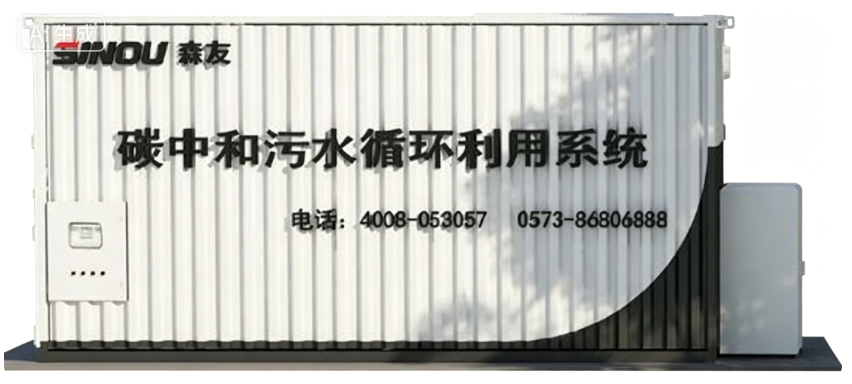
Achieving zero carbon and zero wastewater isn’t just a distant ideal — it’s a practical commitment woven into every operational layer. We’ve redesigned production cycles to eliminate emissions at the source, capturing and reusing energy that would otherwise escape. By integrating closed-loop water systems, every drop is continuously purified and recirculated, slashing freshwater demand to virtually nothing. This dual focus has transformed our facilities into self-sustaining hubs where waste becomes a resource rather than a burden.
The heart of this approach lies in treating carbon and wastewater as interconnected challenges. Advanced membrane bioreactors paired with on-site renewable energy mean we no longer see effluent as a disposal problem but as a stream rich with reclaimable heat and nutrients. Captured biogas from organic residues powers our pretreatment stages, while the remaining solids are converted into agricultural-grade fertilizers. It’s a quiet, efficient loop that shrinks our environmental footprint while boosting long-term resilience against regulatory shifts and resource scarcity.
What sets this model apart is its inherent flexibility — it adapts to diverse climates and scales without relying on offset schemes or off-site processing. From arid regions where water is precious to dense urban centers with strict discharge limits, the combination of low-energy distillation and solar thermal arrays delivers consistent results. Workers on the ground don’t just follow protocols; they actively refine them, noticing subtle inefficiencies that engineers might miss. This marriage of high-tech and human insight ensures that zero carbon, zero wastewater isn’t a static certification but a living practice that grows smarter over time.
Inside the Filtration Process
At the heart of every filter lies a carefully engineered barrier that catches particles while letting fluid flow. This barrier might be a tangled web of fibers, a porous ceramic disc, or a tightly wound coil of synthetic thread. The real magic happens at the microscopic level, where physical and chemical forces collaborate to trap contaminants. Larger particles get stuck simply because they can't squeeze through the gaps, but smaller particles rely on more subtle interactions—like electrical attraction or adsorption onto the material itself.
As fluid enters the filter housing, the flow often follows a labyrinthine path designed to maximize contact with the filter media. In many systems, the dirty liquid is directed across the surface in a cross‑flow pattern, which helps sweep away accumulated debris and prevents clogging. This constant scouring action keeps the pores open longer, allowing sustained purification without rapid pressure buildup. Meanwhile, the filter’s depth provides a gradient of pore sizes—larger openings on the outside gradually narrowing toward the core—so particles lodge themselves at different depths based on their size, reducing the chance of a single layer blinding over.
Behind the scenes, the dynamics of adsorption and diffusion come into play for the finest threats. Activated carbon, for instance, uses its massive internal surface area to chemically bond with organic molecules and chlorine, pulling them out of the stream like a magnet. Ion exchange resins swap harmless ions for heavy metals, while special membranes achieve separation down to the ionic level. Throughout the process, monitoring pressure drops and flow rates gives real‑time clues about the filter’s condition; a sudden spike often signals that the media has reached its holding capacity. Understanding these inner workings reveals why proper pre‑treatment, material selection, and maintenance schedules are not just routine steps but the very key to filtration success.
Why Concrete Plants Are Switching
For decades, concrete production followed a well-worn path: heat limestone to staggering temperatures, mix with aggregates, and churn out a product that built the modern world. That path, however, now leads toward environmental and regulatory dead ends. Carbon taxes, tighter emission caps, and plain old public pressure have nudged plant owners to rethink their entire operation. When a single tonne of cement releases nearly a tonne of CO₂, the math stops adding up—both for the planet and for the balance sheet.
The shift isn't just about dodging penalties. New binder technologies, recycled aggregates, and even carbon-cured mixes are turning what used to be liability into opportunity. Some plants are tapping into industrial byproducts like fly ash or slag, cutting clinker content without sacrificing strength. Others are experimenting with electrified kilns powered by renewables, slashing fuel costs while attracting eco-conscious clients. The quiet truth is that many of these changes have trimmed operating expenses enough to make the upfront investment sting less.
Markets have twisted the knife further. Developers increasingly demand Environmental Product Declarations, and projects with green certifications skip over suppliers who can't show measurable improvements. It's no longer a niche request; mainstream contractors now treat low-carbon concrete as part of their own brand promise. Plants that hesitated at first are finding that staying put means losing bids they once took for granted.
Built for International Standards
Every product we design starts with a deep dive into the regulatory landscape of its target markets. From IEC safety protocols in Europe to ANSI performance benchmarks in North America, our engineering teams embed compliance requirements directly into the initial design phase—not as an afterthought. This upfront integration means your solution arrives ready to deploy, without costly redesigns or delays at the border.
Beyond checking boxes, we operate our own accredited testing facilities to push components beyond baseline criteria. Whether it’s subjecting enclosures to extreme IP69K washdowns or validating electromagnetic compatibility in worst-case scenarios, this layered validation ensures that international certification isn’t just a stamp on paper—it’s a guarantee of real-world resilience. The result is equipment that maintains peak performance whether it’s installed in a humid Asian metropolis or a Scandinavian winter.
Success Stories from Early Adopters
The journey to innovation often begins with a leap of faith, and our early adopters are the ones who took that leap with us. Their stories are not just testimonials; they are testaments to what happens when vision meets execution. One adopter, a small logistics firm, managed to cut delivery times by 40% within the first quarter of implementation. They didn't just adopt a tool—they reshaped their entire operational workflow, and the results spoke volumes.
Another story comes from a retail chain that was on the brink of closing due to inefficient inventory management. After integrating our solution, they not only recovered but expanded to three new locations in under a year. The store manager noted, "It felt like switching from a foggy windshield to a clear, wide-open road." That kind of transformation is exactly what we aimed to enable.
Perhaps the most unexpected success came from a non-profit education platform. They used our system to personalize learning paths for underprivileged students, leading to a measurable increase in course completion rates. These early adopters didn't wait for a perfect roadmap—they co-created the future with us, and their wins are a preview of what's possible when you move early and adapt fast.
FAQ
This system is an innovative solution designed specifically for concrete batching plants to treat wastewater without generating carbon emissions. It uses advanced processes to recycle water and recover materials, enabling plants to operate more sustainably.
It achieves carbon neutrality by integrating energy-efficient technologies and renewable energy sources, such as solar power, to run the treatment process. The closed-loop design minimizes waste and emissions, offsetting any residual carbon through verified carbon credits or on-site sequestration.
Its modular design, lightweight components, and compliance with international standards make shipping and installation straightforward across different countries. The system is pre-assembled and tested, requiring minimal on-site setup.
Benefits include reduced water consumption, lower operational costs, compliance with strict environmental regulations, and a smaller carbon footprint. It also recovers aggregates and cement slurry, turning waste into reusable materials.
Traditional methods often rely on chemical treatments and energy-intensive processes, leading to high emissions. This system uses physical and biological processes with low energy demand, resulting in zero net carbon output.
Yes, the system is modular and scalable. Small plants can start with a basic unit, while larger operations can combine multiple modules to handle higher volumes, making it adaptable to any scale.
Maintenance is straightforward, involving regular inspections, filter replacements, and occasional sensor calibration. The system is designed with self-cleaning features and easy-access components to minimize downtime.
Absolutely. We offer tailored configurations to meet local discharge limits and water reuse standards. The system can be adjusted for varying pH, solids content, and flow rates, ensuring compliance wherever it's deployed.
Conclusion
The concrete batching industry has long struggled with the environmental burden of slurry waste, but a new treatment system now turns this byproduct into clean, reusable water—without contributing carbon emissions. It achieves true zero-waste status by filtering and recycling every drop of process water, eliminating the need for discharge or off-site disposal. At the heart of the operation lies a multi-stage filtration sequence that separates cement particles, aggregates, and fine suspended solids, all while running on energy-efficient equipment that keeps the carbon footprint at net zero. The reclaimed water meets clarity standards high enough for reuse in batching or other on-site applications, closing the loop entirely.
Operators are making the switch not only for lower water bills and reduced regulatory exposure, but because the system aligns with tightening international environmental mandates. Each unit is pre-configured to comply with CE, ISO, and other major standards, simplifying integration into existing plant infrastructure whether in Europe, Southeast Asia, or the Americas. Pilot installations in Germany, Australia, and Thailand have already reported consistent savings, minimal maintenance, and the ability to handle peak production loads. With no compromises on performance or compliance, this carbon-neutral solution is now positioned for wider distribution, meeting the growing demand for sustainable industrial practices in concrete manufacturing worldwide.
Contact Us
Contact Person: HaiYan
Email: [email protected]
Tel/WhatsApp: +86 18957325588
Website: https://www.senyoubeton.com/