

Best Diesel Generator Sets: Expert Recommendations for Dependable Backup Power
2026-05-25
When the grid goes down, a reliable backup is non-negotiable—but not all diesel generator sets are built equal. Delving into expert-backed insights, this guide cuts through the noise to highlight truly dependable power solutions. Among those worth noting, Hichai Power stands out for its engineering precision and consistent performance under pressure. Whether you're securing a hospital, data center, or remote site, choosing wisely means digging into what separates best-in-class units from the rest. Let’s explore the key recommendations that keep your operations running, no matter what.
Why Diesel Generators Outperform the Rest
It’s no secret that diesel generators have long been the backbone of power reliability across the globe. Their robust engineering allows them to handle heavy loads and run continuously for extended periods without missing a beat. Unlike other power sources that falter under strain, diesel units thrive in demanding environments—whether it’s a remote construction site, a critical hospital backup, or a data center that can’t afford a flicker of downtime. This inherent durability means fewer interruptions and a steady supply of energy when it matters most.
One often overlooked advantage is the sheer efficiency of diesel combustion. Diesel engines extract more usable energy from every drop of fuel compared to their gas or propane counterparts, translating into lower consumption and reduced operational costs over the long haul. They’re also notoriously simple in design, which means there’s less to go wrong. With no spark plugs or carburetors to fiddle with, maintenance becomes a straightforward, predictable routine rather than a constant headache. It’s this practical, no-nonsense approach that keeps them running in the toughest spots.
Beyond mechanics, diesel fuel itself brings a logistical win. It’s far less flammable than gasoline and has a longer shelf life, making storage safer and more manageable—especially in off-grid or emergency scenarios. When hurricanes knock out power or a grid failure strikes, a diesel generator isn’t just a backup; it’s a dependable workhorse that springs to life without hesitation. While newer technologies grab headlines, diesel’s blend of proven power, fuel economy, and sheer reliability continues to set the bar that others struggle to reach.
Matching Generator Capacity to Your Critical Loads
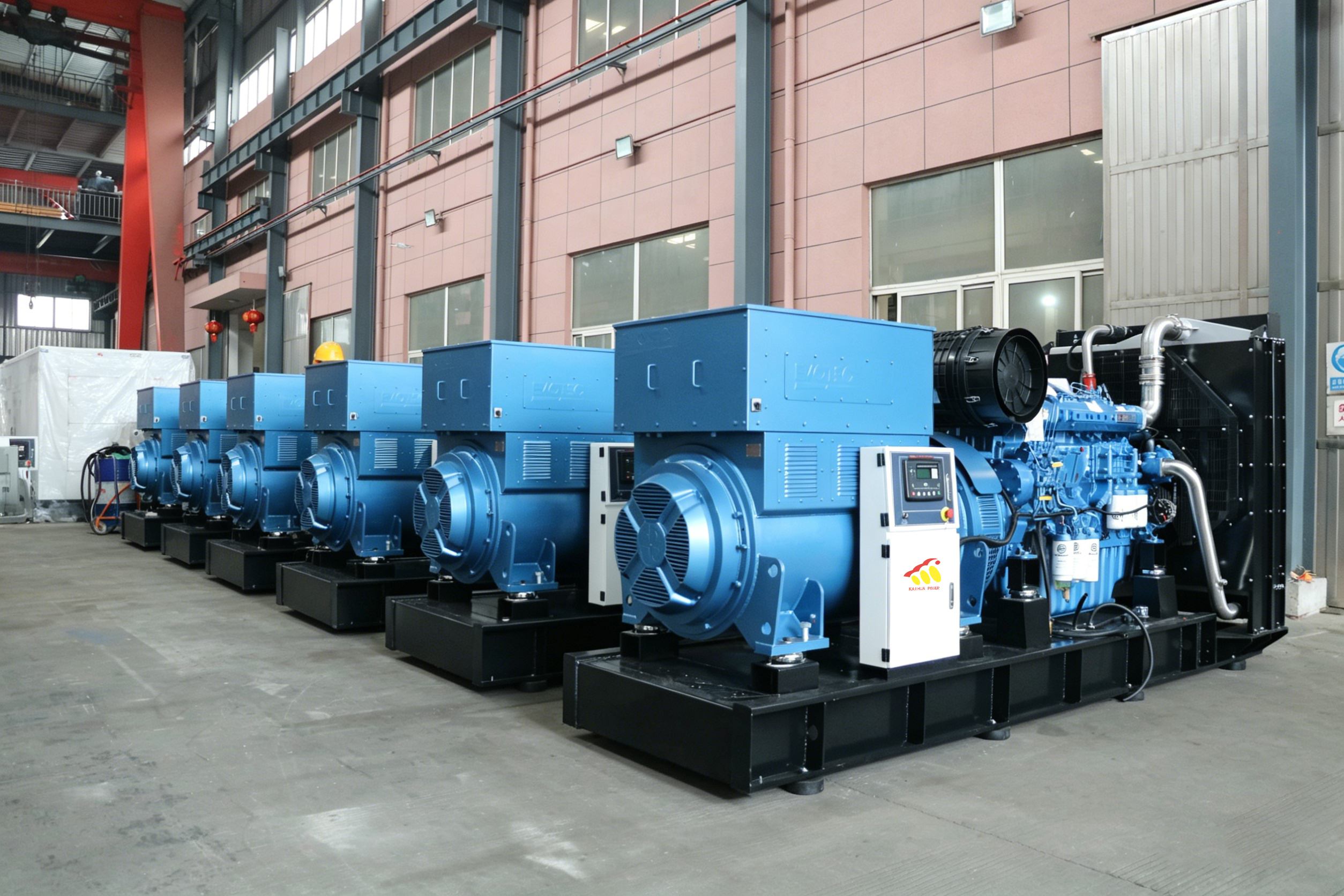
Sizing a generator isn't just about picking a number off a spec sheet—it's about understanding exactly how your critical loads behave. Every facility has a unique fingerprint of equipment that must stay online during an outage, from sensitive medical devices to heavy-starting motors. Overlooking the starting current requirements of these loads can leave you with a generator that stalls exactly when you need it most. The goal is to map out the sequence and magnitude of power demands so that the generator handles them gracefully, without unnecessary strain or voltage dips.
One common mistake is to simply add up the nameplate ratings of all essential equipment. That approach ignores the real-world dynamics: some loads cycle on and off, others have high inrush currents at startup, and still others may never run at full load simultaneously. A careful load analysis accounts for diversity factors and starting methods, like soft starters or variable frequency drives, which can dramatically reduce peak demand. By right-sizing the generator to your actual load profile, you avoid both the pitfalls of undersizing—where the generator trips or overheats—and oversizing, which leads to wet stacking, carbon buildup, and wasted fuel.
Ultimately, matching generator capacity to your critical loads is a balance between technical precision and operational practicality. It’s not just about surviving the first few seconds of an outage, but sustaining reliable power for hours or days. Consider future expansion, but don’t let hypothetical loads today force you into an oversized solution that operates inefficiently. A well-matched system delivers clean, stable power, reduces maintenance headaches, and gives you confidence that your critical operations won’t miss a beat—regardless of what the grid does.
Quiet Power: Noise Reduction Without Sacrificing Output
Imagine a workspace where the hum of machinery fades into a whisper, yet productivity climbs higher than ever. Achieving this balance isn’t about silencers that choke performance—it’s about rethinking the very materials and shapes that guide sound. Strategically engineered baffles and absorption layers can redirect or dissipate noise without obstructing airflow or adding backpressure. The result is a system that breathes freely and runs cool, while the decibel level drops to a subtle background presence.
Beyond hardware, intelligent control plays a quiet role. Flow-optimized chambers and adaptive damping technologies respond to real-time demands, tightening acoustics during low-load moments and opening up when full output is needed. This dynamic approach avoids the wasteful extremes of permanent mufflers that cut power or fully open channels that broadcast noise. It’s a responsive design—almost like the device knows when to speak softly and when to go all-out.
The payoff goes beyond technical specs. Users notice the absence of fatigue that comes from hours of low-frequency drone, while neighbors and coworkers appreciate the lack of disturbance. In the end, the quietest systems often feel the most powerful, because they deliver full capability without the aggressive soundtrack. It’s a refined strength that doesn’t need to shout.
Fuel Efficiency Hacks That Extend Runtime
Most people overlook the small maintenance tasks that quietly drain fuel reserves. Swapping out a clogged air filter, for example, can instantly improve combustion and keep your engine from working harder than necessary. Likewise, checking tire pressure might seem trivial, but underinflated tires create rolling resistance that steadily eats into your runtime. A quick glance at the owner’s manual and a monthly walk-around can uncover leaks, dirt buildup, or worn-out components that silently compromise efficiency.
How you operate the machine matters just as much as how you maintain it. Sudden throttle bursts and harsh braking force the system to burn far more fuel than smooth, steady inputs do. If you’re standing by with the engine idling for more than a minute, it’s often smarter to shut it down altogether—restarting typically uses less fuel than prolonged idling. And when you plan your route or task sequence to minimize unnecessary travel and avoid stop-and-go patterns, the savings compound over time without you even noticing.
Weight and configuration play a quiet but powerful role. Carrying around extra gear that isn’t essential for the job simply wastes energy, so stripping down to what you actually need can add precious minutes or even hours to your active window. Many modern setups also feature eco or economy modes that adjust power output and RPM limits to favor endurance over peak performance; switching to those when the task permits can make a noticeable dent in consumption. Finally, using a quality fuel stabilizer or treatment occasionally keeps the combustion process cleaner and more predictable, especially if the fuel sits for long periods.
Weatherproofing Your Setup for Year-Round Reliability
Keeping your gear safe from the elements isn’t just about dodging rain—it’s about withstanding everything from scorching heat to freezing sleet without a hiccup. Too many setups fail because they treat weatherproofing as an afterthought, slapping on a generic cover and calling it a day. Real reliability means thinking through how moisture, dust, UV rays, and temperature swings will interact with every cable, connection, and component, then building defenses that evolve with the seasons.
Start by sealing every potential entry point with silicone gaskets or self-fusing tape, paying extra attention to joints and ports where water likes to sneak in. For cables, ditch the basic zip ties and opt for UV-resistant conduit paired with drip loops—simple bends that force rain to slide off instead of creeping into sensitive electronics. In blazing sun, reflective shrouds or ventilated enclosures prevent heat buildup that can cook circuits, while in subzero conditions, low-temperature-rated lubricants and heated wraps keep moving parts from seizing up. Don’t overlook the ground itself: a gravel bed or raised platform can stop mud from swallowing your setup after a storm.
Even the best shield degrades over time, so make monthly checkups a ritual. Look for brittle seals, cracked housing, or condensation inside viewports—small giveaways that moisture is winning. Swap out dessicant packs before they saturate, and test backup power systems after wild weather, since a solar panel caked in ice or a wind-blown branch can quietly cripple your reliability. Treat these inspections less like a chore and more like tuning a fine instrument; a little proactive tweaking now keeps you from a frantic scramble when the next squall hits.
Real-World Installations That Defied Blackouts
The Tesla solar and Powerwall installation at the Ta'u Island in American Samoa stands as a remarkable example. Before the switch, the island relied entirely on diesel generators, suffering frequent blackouts and fuel shortages. The microgrid, comprising 5,328 solar panels and 60 Powerwall batteries, now provides nearly 100% of the island's electricity needs. Even during extended cloudy periods, the system stores enough energy to keep the community running for three full days without sunlight, effectively eliminating the blackout nightmares that once plagued daily life.
In Puerto Rico, after Hurricane Maria devastated the grid, a hospital in the town of Caguas turned to a combination of solar panels and battery storage to ensure uninterrupted power. The system was designed to power critical care areas, refrigerate medicines, and maintain essential services during frequent grid failures. Unlike traditional generators, this setup operates silently and without fuel dependency, proving its worth time and again when the main grid goes down. It has become a blueprint for resilience in regions battered by extreme weather.
A different approach was taken in the Netherlands, where a data center in Amsterdam integrated flywheel energy storage alongside batteries. During voltage dips and short interruptions, the flywheels kick in within milliseconds, bridging the gap until backup generators start. This hybrid system has prevented countless server shutdowns and data losses that would otherwise occur from even brief blackouts. The installation quietly demonstrates how combining old-school kinetic storage with modern electronics can create a fortress against grid instability.
FAQ
Diesel generators are built tough and handle heavy loads without breaking a sweat. They fire up quickly when the grid goes down and sip fuel efficiently during long outages. Plus, diesel fuel stores safely for years, so you’re always ready.
Start by listing everything you need to keep running—fridge, lights, medical gear, maybe an AC unit. Add up the starting and running watts, then pick a generator with at least 20% more capacity. An electrician can do a load calculation to be precise, but this ballpark method works for most.
Names like Cummins, Generac, and Kohler come up a lot because they’ve been in the game forever and their engines just last. For smaller setups, brands like Pulsar and DuroMax offer solid value without the premium price tag. It really depends on your power needs and budget.
At least twice a year—before storm season and after heavy use. Oil and filter changes are non-negotiable; check coolant, belts, and hoses too. Run it under load for 30 minutes every month to keep everything lubed and spot issues early. Neglect is the quickest way to kill reliability.
Yes, but you need a model with clean power output, like an inverter generator or one with an automatic voltage regulator. Dirty power can fry circuit boards, so look for units with less than 5% total harmonic distortion. If in doubt, run electronics through a quality surge protector.
Air-cooled models are simpler and cheaper, great for occasional home backup. Liquid-cooled ones handle constant heavy loads and hot environments better, so they’re the go-to for commercial sites and whole-house standby. Maintenance is a bit more involved with liquid cooling, but the durability is worth it.
If you face frequent outages or rely on medical equipment, definitely. Permanent setups automatically kick in and can run for days with a large fuel tank. They add home value too. It’s an upfront investment, but the peace of mind pays for itself the next time a storm hits.
Conclusion
For those seeking true energy independence, diesel generator sets remain unmatched in their ability to deliver steadfast backup power when it matters most. Unlike alternative options that falter under sustained loads, modern diesel units excel at shouldering critical circuits with remarkable fuel efficiency and rugged longevity. The key lies in intelligent sizing—avoid the common trap of overspending on excessive capacity by meticulously auditing your must-keep loads, from medical equipment to sump pumps, and then applying a realistic surge factor. This precision prevents both wasteful fuel burn and the risk of underpowered blackout failures, ensuring you pay for performance that actually counts.
Real-world resilience goes beyond raw wattage, though. Today’s top-tier diesel generators incorporate multi-layer noise dampening technology that quiets operation to a neighbor-friendly hum without throttling output, a critical advantage during extended outages. Smart fuel management techniques, such as load banking and treating stored diesel with biocides, can stretch runtime dramatically when resupply is uncertain. Meanwhile, weatherproof enclosures engineered for salt spray, heavy snow, or blistering heat keep your unit ready to roar to life in any season. The proof is in installations from coastal hurricane zones to remote mountain clinics, where well-planned diesel systems have maintained power for days on end while grid-tied alternatives failed. This blend of thoughtful engineering and proven field performance is what transforms a generator from a backup plan into a true pillar of reliability.
Contact Us
Contact Person: Ms. Lu
Email: [email protected]
Tel/WhatsApp: 8618917899306
Website: https://www.hichaipower.com