

Best Activated Carbon for Pure Water and Fresh Air
2026-08-21
Clean water and crisp air shouldn't be a luxury. Yet everyday pollutants, odors, and invisible particles often slip past standard filters. That's where advanced activated carbon steps in — and one name keeps surfacing among homeowners and specialists alike: Tundrr. If you've ever wondered why some carbon filters outperform others or how to pick the right one for your space, you're in the right place. Let's cut through the clutter and see what actually works.
What Makes Activated Carbon the Go-To for Clean Water and Air?
Activated carbon works because it is mostly empty space, but at a scale you can’t see. A single gram can have a surface area larger than a tennis court, thanks to millions of tiny pores and cracks. These pores act like traps for dissolved chemicals, gases, and even some metals. When water or air passes through, molecules that cause bad tastes, odors, or health risks get stuck inside the porous network instead of continuing on to your tap or lungs.
Different source materials change how the carbon behaves. Coconut shell carbon tends to have smaller pores ideal for drinking water filters, while coal-based or wood-based carbon handles broader industrial pollutants. The activation process—usually steam or chemical treatment—also matters more than most people realize. Overdo it and the carbon becomes brittle; underdo it and you lose capacity. That balance is why not all carbon filters perform the same, even if they look identical on the shelf.
Practical use also involves a trade-off between contact time and flow rate. A water pitcher filter works slowly because the water needs time to reach deep into the pores. Air purifiers face the same limit: faster fans move more air but give each molecule less chance to be captured. So the “go-to” status of activated carbon isn’t magic. It comes from a simple physical advantage—an enormous, tailored surface area—paired with realistic expectations about how fluid actually moves through it.
Coconut Shell vs. Coal: Which Carbon Actually Performs Better?
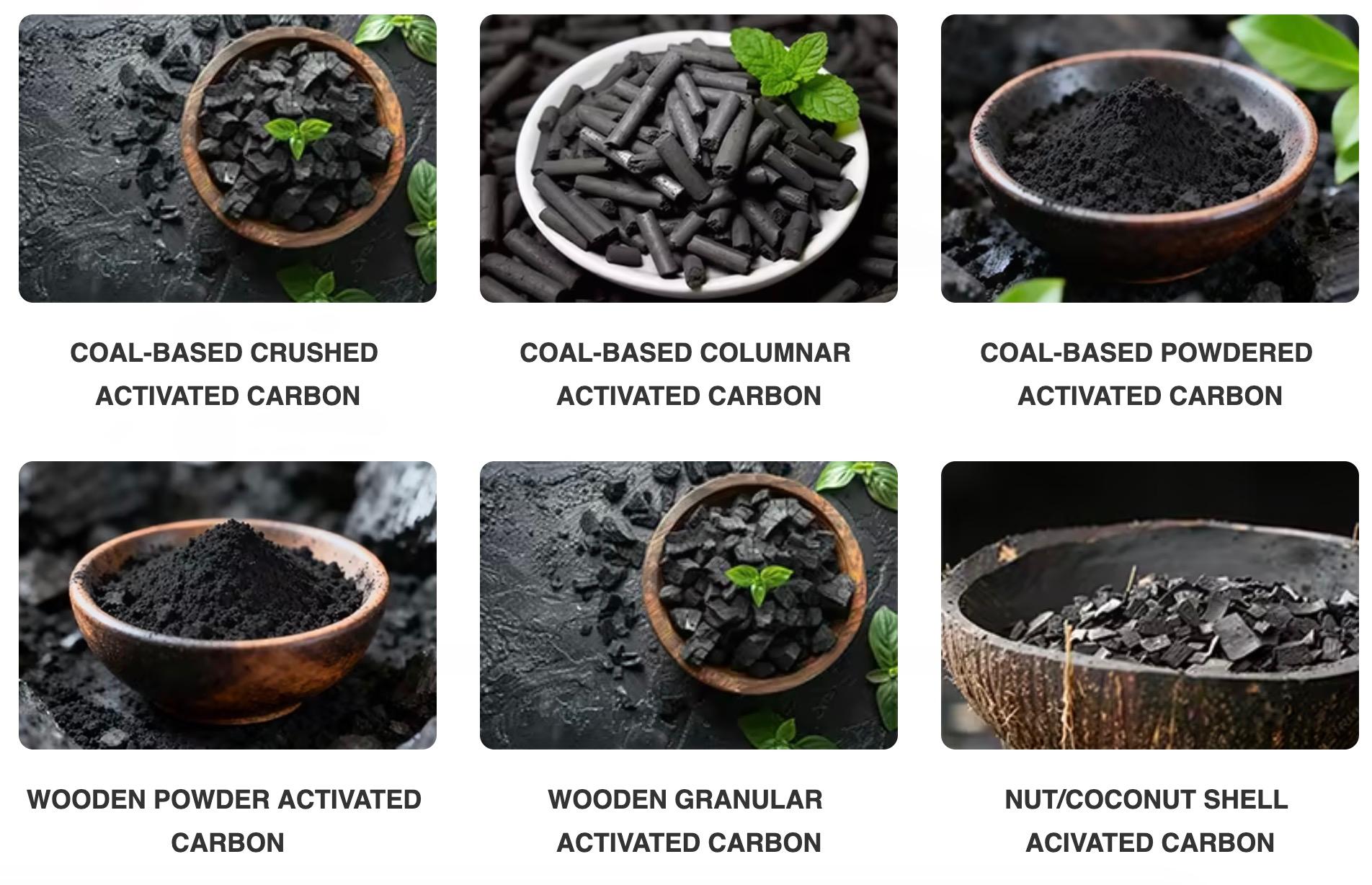
Put the two side by side in a water filter and the difference shows up quickly. Coconut shell carbon builds a tighter network of micropores, which gives it an edge at trapping small organics, chlorine byproducts, and compounds that cause off-tastes. Coal-based carbon runs wider on pore distribution, so it grabs larger molecules more easily but can leave the smaller ones slipping through unless the activation is tuned carefully.
Hardness changes how long the bed lasts. Coconut shell holds its shape under backwashing and generates far less dust, which matters in point-of-use filters and beverage treatment. Coal carbon is softer, breaks down faster, and tends to produce fines that clog downstream equipment. That said, coal-based grades often carry higher total surface area at a lower price, so they still dominate large-scale wastewater and decolorization jobs where replacement cost outweighs precision.
Real performance comes down to the match, not the raw material. For drinking water, aquarium systems, and gold recovery circuits, coconut shell usually wins because it resists attrition and delivers consistent low-level contaminant removal. For industrial streams loaded with color bodies, proteins, or high molecular weight pollutants, coal carbon’s mesopore volume gives it a practical advantage. Neither is universally better; the one that performs is the one whose pore geometry fits the target molecule.
The Hidden Factor That Determines How Long Your Filter Lasts
Most people assume filter life is tied to how dirty the water looks. But visible murk is a poor predictor. The hidden factor that truly shortens service intervals is the mix of particle sizes in the fluid. Countless microscopic fines can slip past larger debris and pack themselves into the smallest pores, gradually raising resistance even when the water appears clean.
This invisible loading shifts the pressure drop curve long before flow falls off. A filter in a visually clear system can clog faster than one handling turbid water, simply because the fine fraction forms a dense internal layer. Watching differential pressure, rather than judging by eye, gives a much earlier signal that the media is nearing exhaustion.
To get more life out of a filter, align the media structure with the actual particle profile of your process fluid. A quick particle size check can show whether you are dealing with silt, colloids, or biological matter. Adjusting prefiltration or flow rate to handle the dominant fine fraction often extends the time between replacements far more than switching to a nominally better cartridge.
Why Your Water Tastes Odd Even After Filtering (And How to Fix It)
A lot of people assume any off-putting taste means the filter isn’t working, but it’s often the opposite—your filter is pulling out chlorine or sediment while leaving behind minerals like calcium, magnesium, or even trace metals that have their own sharp or earthy notes. If the water source carries high TDS, carbon filters alone won’t touch that, and the taste can seem more pronounced once the chlorine mask is gone.
Another overlooked issue is the filter housing itself. Warm, damp, dark spots are perfect for bacteria or mold to grow on the cartridge or inside the canister, especially if the filter sits unused for a while. That stale, musty, or slightly sour taste usually points to buildup on the media rather than anything coming from your tap.
To fix it, start by checking the filter’s age and replacement schedule—many people forget they’re overdue. Flush a new filter thoroughly before use, clean the housing with mild soap and water, and let the system dry out if it won’t be used for a few days. If the taste persists, test your water for minerals, chloramine, or bacteria so you can pick a filter type that actually matches what’s in your supply.
Activated Carbon Myths You Can Safely Ignore
Plenty of folks assume activated carbon acts like a sponge for everything in your gut, including the good stuff. That's only half true. It does grab a wide range of organic compounds, but it leaves most minerals—like calcium, magnesium, and potassium—largely alone. The real issue isn't nutrient theft; it's timing. Take it too close to meals or supplements, and you'll blunt their effect. Space it out by a couple of hours, and that fear mostly evaporates.
Another stubborn belief is that if a little carbon helps, a lot will work even better. In practice, dumping extra scoops into your water or smoothie won't supercharge detoxification. It mostly increases your odds of constipation or makes your medication useless for a while. Stick to the suggested amount on the label, and don't treat it like a daily multivitamin. It's meant for occasional use, not a permanent fixture in your routine.
Then there's the worry that used carbon will suddenly release everything it captured back into your body. That's not how adsorption works under normal conditions. Once those molecules bind to the surface, they stay put unless you expose the carbon to extreme heat or chemical treatments you'd never find in a kitchen. Replace it according to the product's guidance, and you won't experience some dramatic toxin dump.
A Simple Maintenance Routine That Keeps Filters Working Like New
Most people only think about their filters when performance drops noticeably, but by then the damage is already done. A simple habit can prevent this: spend one minute after each use checking the intake and outlet. No tools needed—just look for visible debris on the screen and feel whether the airflow or water pressure is weaker than usual.
If the flow seems sluggish, do a quick rinse. For washable cartridges, run low-pressure water from the clean side toward the dirty side. For disposable ones, tap off the surface dust to buy extra days. Make this check as automatic as patting your pockets before leaving the house.
Stick with this routine and your filter will stay close to new condition for months or even years. You save more than the cost of replacements—you avoid the hidden wear on equipment and the drop in air or water quality. The steady confidence of full output every time you turn it on beats any deep clean you only do once a season.
FAQ
Its enormous surface area and tiny pores trap a wide range of impurities. Whether dissolved in water or floating in air, contaminants stick to the carbon through adsorption, which is why the same material works in both situations.
Look for carbon made from coconut shells or high-quality bituminous coal, ideally with a low ash content and a high iodine number. Granular or block forms tend to work better than powders for household filtration because they allow water to flow through while capturing more particles.
Yes. It grabs volatile organic compounds, smoke, cooking smells, and many chemical fumes. For a room, you usually want a carbon filter with a decent bed depth and enough airflow, not just a thin pre-filter sheet.
Coconut shell carbon often has more micropores, which makes it excellent for trapping small molecules and improving taste and odor. Coal-based carbon can handle a broader range of molecule sizes and is sometimes more cost-effective for heavy-duty gas removal.
It depends on how much contaminant load the filter faces. A water filter in normal household use might last three to six months, while an air filter working in a smoky or chemically active space could need replacing every few weeks. Once the carbon smells or the water taste returns, it has likely reached its capacity.
Granular carbon has irregular shapes and is often used in water filter cartridges because it packs well and allows good flow. Pelletized carbon is compressed into uniform cylinders, which reduces dust and provides more consistent airflow, making it popular in air purification systems.
While the core material is similar, aquarium carbon is usually acid-washed and phosphate-free to avoid harming fish, and it is sized for water flow. Air purifier carbon may be impregnated with chemicals for specific gases. Swapping them is not recommended unless the product explicitly says it is safe for both uses.
Yes. It does not reliably remove dissolved minerals like calcium or magnesium, nitrates, fluoride, or most heavy metals unless it has been specially treated. It also cannot filter out microbial pathogens such as bacteria and viruses on its own.
Conclusion
Activated carbon's reputation rests on its massive internal surface area, where millions of micropores trap chlorine, volatile organics, and odors that conventional filters miss. When comparing coconut shell and coal-based carbon, the difference isn't just raw material—it's pore architecture. Coconut shell tends to produce tighter, more uniform micropores, giving it an edge for adsorbing smaller, taste-tainting molecules in drinking water. Coal-derived carbon, often less dense and more variable, can still work well for broader contaminant loads but usually needs a thicker bed to match that polishing effect. The real hidden variable in any filter's lifespan is contact time: water or air passing too quickly never gets fully scrubbed, so a slower flow rate through a well-packed carbon block often outperforms a larger, looser bed. If your filtered water still tastes odd, the culprit is usually channeling or exhausted carbon that's re-releasing trapped compounds, not the filter type itself.
Many myths persist—for example, that all carbon filters remove lead or fluoride, or that boiling spent carbon revives it. Neither is true; carbon targets organic chemicals and chlorine byproducts, while heavy metals require separate media. A simple maintenance routine keeps performance high: replace cartridges before they saturate, avoid letting them dry out completely after use, and periodically flush new carbon with a few liters of water to wash away loose fines. For air filters, vacuum the outer pre-filter monthly and keep the carbon bed away from humidity, since moisture competes for adsorption sites and shortens service life. In practice, the best activated carbon isn't a single product but a matched choice—coconut shell for drinking water taste and odor, a well-sized coal or blended carbon for whole-house or air purification—paired with realistic replacement intervals and proper flow control.
Contact Us
Contact Person: Ellen Zhang
Email: [email protected]
Tel/WhatsApp: +86(21) 2287 6756
Website: https://www.tundrr.com/en/