

4G/5G Radio Manufacturer Innovations Powering the Future of Connectivity
2026-10-08
The gap between a good 4G/5G radio and a great one is measured in milliwatts and millimeters. As operators chase coverage that actually pays for itself, radio manufacturers are rethinking everything from gallium nitride amplifiers to AI-driven beamforming. lisheng sits in the middle of that shift, building radios that prioritize thermal headroom and modularity when the spec sheet no longer tells the whole story. Here's what that means for the networks you'll rely on tomorrow.
Inside the Radio Units Powering Dense City 5G Rollouts
Walk through any dense urban corridor and the data demands are relentless—streaming, navigation, sensor backhaul, and thousands of simultaneous connections all fighting for spectrum. The radio units tucked into street furniture and rooftop enclosures handle this by packing more active components into a smaller footprint than their suburban counterparts. Inside, a typical unit starts with a multi-band power amplifier chain, often using Doherty or envelope-tracking architectures to squeeze efficiency out of every watt. Rather than one bulky heatsink, these units rely on die-cast aluminum chassis with intricate internal fins, sometimes paired with vapor chambers or micro heat pipes, pulling heat away from gallium nitride transistors that can run hot even at moderate output.
The digital front end is where the real differentiation happens. Field-programmable gate arrays and application-specific chips run crest factor reduction and digital pre-distortion algorithms in real time, linearizing the signal before it ever reaches the antenna. This matters because dense city deployments use higher-order modulation like 256-QAM, and any distortion collapses the usable data rate. Filtering is equally critical: cavity filters still dominate for out-of-band rejection, but ceramic waveguide filters are gaining ground due to their smaller size and lower insertion loss. Many new units also integrate the antenna directly, doing away with the traditional coaxial jumper and its associated losses, which is why you now see slim, panel-like radios bolted directly to light poles or hidden behind fiberglass shrouds on bus shelters.
Power and connectivity round out the internal layout. Unlike macro sites with dedicated rectifiers, dense city radios often accept Power over Ethernet or a local 48-volt DC feed, with onboard DC-DC converters feeding each stage separately to prevent noise coupling. Fiber or high-speed copper carries Common Public Radio Interface or enhanced CPRI traffic, but a growing number of designs embed the baseband processing right next to the radio, collapsing what used to be a separate rack unit into a single weatherproof housing. That integration reduces latency and lets operators daisy-chain multiple units from one fiber drop, which is essential when every block needs several small cells and there is no room for a cabinet on the sidewalk.
Balancing Spectrum Hunger with Smarter Antenna Architectures
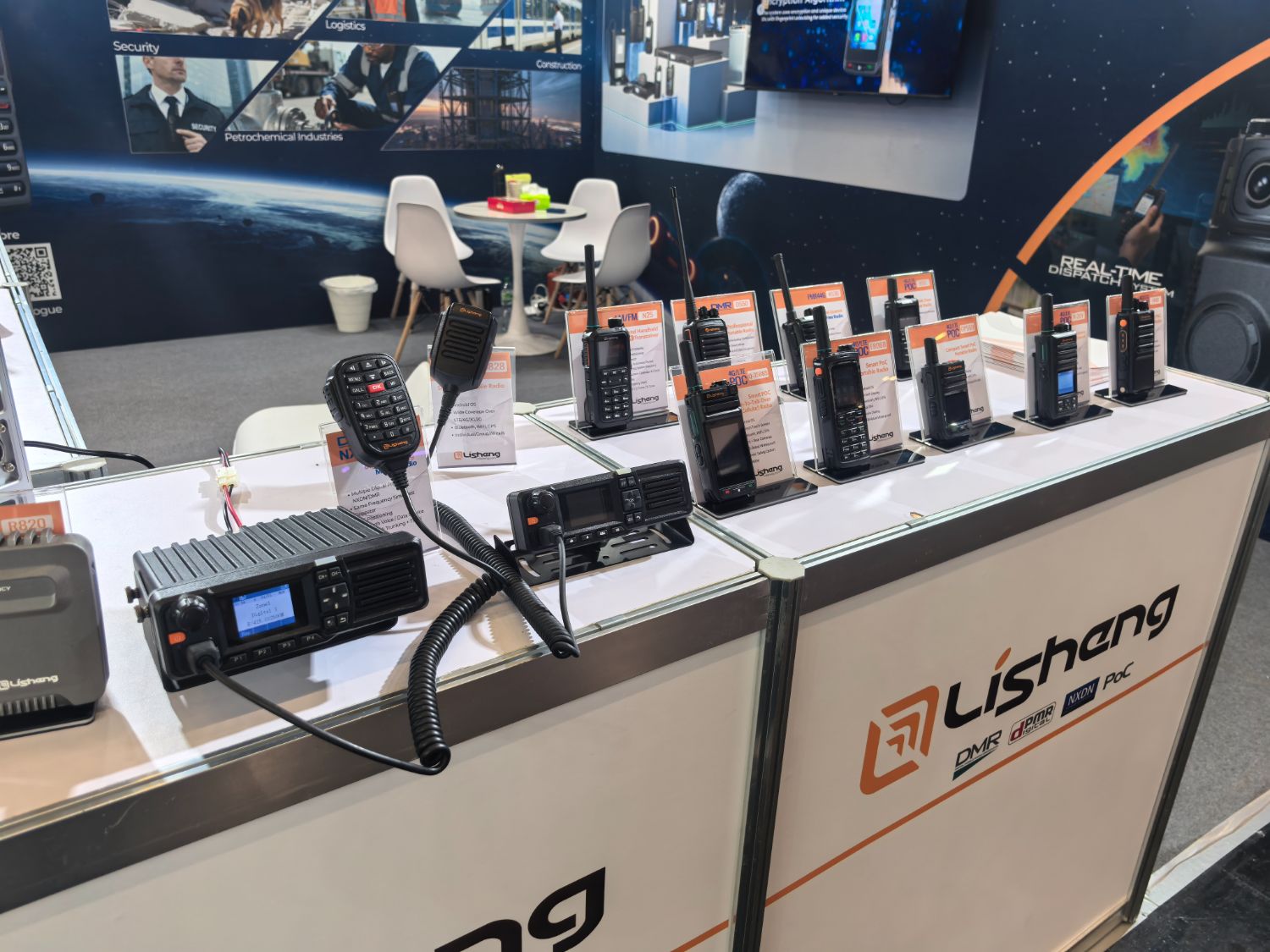
The insatiable demand for wireless data keeps colliding with a hard physical limit: usable spectrum is finite, and carving out new bands is slow, expensive, and often politically fraught. Smarter antenna architectures are stepping in not by magically creating more spectrum, but by making the same sliver of airwaves work far harder. Instead of blanketing a sector with energy, modern arrays shape and steer signals with surgical precision, letting multiple users share a frequency without drowning each other out. The shift is subtle but profound—capacity no longer depends on owning more bandwidth, but on how intelligently you can reuse what already exists.
This approach shows up in a few concrete forms. Massive MIMO panels pack dozens or even hundreds of elements into a base station, using phase differences to build narrow beams that track individual devices in real time. Distributed antenna systems pull the radio closer to the user, shrinking cell sizes and cutting interference at the edges. Reconfigurable intelligent surfaces go a step further, bending reflections off walls and windows to turn dead zones into usable paths. Each of these techniques treats the physical environment as a resource to be tuned, not a fixed obstacle, which fundamentally changes how network planners think about coverage.
What makes these architectures truly compelling is their ability to adapt on the fly. A static antenna pattern might serve peak hour downtown traffic but waste energy at 3 a.m. in a suburban neighborhood. Smarter systems read the room—user density, mobility, interference levels—and reshape their radiation pattern every few milliseconds. That agility means a single deployment can gracefully handle a stadium full of streaming fans one moment and a sparse industrial corridor the next, squeezing more value out of every hertz without waiting for regulators to auction off another slice of spectrum.
Why Power Efficiency Is Becoming the Defining Radio Metric
Radio designers used to chase raw throughput and range above all else, but those days are fading fast. The devices that win in the field now are the ones that sip battery rather than gulp it. Every milliwatt saved translates directly into longer runtime for sensors, wearables, and remote infrastructure where swapping a battery is impractical or impossible. This shift isn't just about convenience—it's about viability. A radio that drains its power source in days, no matter how fast it transmits, is simply not an option for the growing mesh of always-on endpoints.
The pressure comes from multiple directions at once. Regulatory bodies are tightening energy budgets for unlicensed spectrum, while end users demand devices that last years on a coin cell. At the silicon level, leakage currents and active-mode inefficiencies that were once tolerated now define a product's competitiveness. Engineers are finding that optimizing power efficiency often forces smarter protocol design, better sleep-state management, and more selective RF front-end tuning—choices that ripple through the entire stack. A radio that wakes, sends, and returns to deep sleep in microseconds can outperform a nominally faster radio that idles hot.
Perhaps the clearest signal is how quickly efficiency has moved from a secondary spec to the primary filter in component selection. Datasheets once led with data rate and sensitivity; now the first page highlights microamp-hours per bit. This reframing means radio architects can no longer treat power as an afterthought. It shapes antenna choices, modulation schemes, and even error-correction overhead. The result is a new breed of wireless systems where every layer is judged by the same hard question: does this choice let the device live longer in the real world? For a growing number of applications, that answer matters more than any headline number on a spec sheet.
Open Interfaces and the End of Single-Vendor Lock-In
Vendor lock-in rarely announces itself. It creeps in through convenience: a proprietary API here, a closed data format there, until the cost of leaving feels greater than the cost of staying. Open interfaces change that arithmetic. By defining clear, neutral contracts between components, they let teams swap one implementation for another without rewriting the surrounding system. The lock’s power was never the quality of the tool; it was the friction of the exit.
When interfaces are open, procurement shifts from a marriage to a marketplace. You can run a different database, a different identity provider, or a different storage backend and expect them to talk to the rest of your stack. That expectation is the real prize. It forces vendors to compete on performance, support, and price, not on the sheer difficulty of disentangling yourself from their ecosystem.
This does not mean every integration becomes painless overnight. Open interfaces still need governance, versioning, and testing. But the absence of a single choke point means no vendor can hold your roadmap hostage. The end of single-vendor lock-in is less about any particular standard and more about restoring a basic condition: your systems should be yours to change.
Edge Processing Meets Radio Silicon: A New Division of Labor
For years, the radio front-end and the application processor lived in separate worlds, each with its own clock, memory map, and power budget. That boundary is now blurring. As endpoint devices take on heavier inference and signal-processing tasks, a growing share of the compute load is moving closer to the antenna—not by bolting a CPU onto the radio, but by redistributing functions across the silicon that already exists there.
This shift creates a different kind of partitioning. Rather than treating the radio as a dumb pipe that merely moves samples, the modem’s dedicated hardware handles feature extraction, filtering, and even parts of the model execution that were previously considered application-layer work. The benefit is less data movement and lower latency, but it also demands a cleaner contract between the radio’s real-time domain and the edge processor’s more flexible scheduling. Teams that get this split right can cut power significantly without adding another general-purpose core.
From Fixed Hardware to Software-Defined Radio Networks
For decades, radio networks were built around fixed-function hardware: mixers, filters, modulators, and demodulators hardwired for a specific waveform or standard. Every upgrade meant swapping physical boards or deploying entirely new infrastructure, leaving operators locked into costly and inflexible lifecycles. As spectrum demands grew and new protocols emerged, this rigid approach became a bottleneck for both military and commercial deployments.
The shift toward software-defined radio flips that model on its head. Instead of dedicating silicon to a single task, a general-purpose RF front end digitizes signals early, handing them to processors that can be reprogrammed on the fly. Waveforms become code, not circuitry. A single device can hop between LTE, Wi-Fi, or a custom tactical link simply by loading new software, and updates arrive over the network rather than through a truck roll.
This transition does more than cut hardware costs; it changes how networks adapt. Spectrum sensing, dynamic frequency selection, and cognitive routing become practical when every node can alter its behavior in milliseconds. The result is a radio infrastructure that behaves less like a collection of fixed appliances and more like a fluid, programmable fabric capable of evolving alongside the standards it carries.
FAQ
In dense urban zones, the shift to massive MIMO antenna arrays and dynamic beamforming has been the real game changer. Instead of broadcasting energy everywhere, radios now steer focused signals toward active devices, which lifts throughput and cuts interference. A few vendors also bake digital predistortion into the RF front end, letting power amplifiers run closer to their limits without distorting high-order QAM.
Most manufacturers build dual-mode or multi-band radios that handle both, because operators rarely replace an entire site at once. A single unit might support LTE carrier aggregation while simultaneously running a 5G NR carrier over the same antenna. Shared hardware also means software upgrades can unlock new features without climbing the tower again.
Open RAN is forcing the industry to break away from proprietary interfaces. Radio units now need to work with baseband software from different vendors, so manufacturers are investing in standardized fronthaul and flexible silicon. That opens the door for smaller players to offer specialized radios, while established vendors have to compete on power efficiency and size rather than lock-in.
Power use is a major cost, so new designs lean on gallium nitride amplifiers, sleep modes that shut down parts of the radio when traffic is low, and liquid cooling in high-power units. Some vendors claim 30 to 40 percent energy savings compared with previous generations by combining these techniques with smarter scheduling.
Small cells fill coverage holes and add capacity where macro sites can't go. Manufacturers are making them easier to deploy with integrated backhaul, compact antennas, and support for unlicensed spectrum. In stadiums, campuses, and dense retail areas, they shoulder much of the data load so the macro layer doesn't collapse.
Yes, the economics have changed. High-power remote radio heads and extended-range software features let a single site cover more ground. Some vendors also build radios that operate in low-band spectrum, which travels farther and penetrates buildings better, while automated alignment tools shorten installation time in remote areas.
Expect more software-defined radios that can reconfigure frequencies and standards on the fly, deeper integration of AI for real-time interference management, and wider use of millimeter wave with better thermal designs. There is also a push toward integrated sensing and communication, where the same radio hardware supports both data links and radar-like awareness.
Conclusion
Radio manufacturers are rethinking the entire signal chain as dense city deployments push hardware to its physical limits. Inside these new units, massive MIMO arrays and beamforming engines squeeze capacity from crowded spectrum, while smarter antenna architectures—folding in filters, duplexers, and even power amplifiers into tighter footprints—reduce tower clutter without sacrificing gain. Yet the loudest conversations now center on power efficiency: with electricity costs and thermal budgets climbing, every watt saved at the radio translates directly into lower opex and longer component life. Vendors are chasing nonlinear efficiency gains through envelope tracking, gallium nitride front-ends, and dynamic voltage scaling, moving well beyond simple "sleep mode" tricks.
At the same time, open interfaces like O-RAN are dismantling single-vendor lock-in, letting operators mix baseband units from one supplier with radios from another—and forcing innovation to happen at the module level rather than inside proprietary black boxes. Edge processing is now bleeding into radio silicon itself, with lightweight inference tasks (interference classification, user clustering) running directly on the radio's compute fabric, offloading the central baseband. Finally, software-defined radio networks turn yesterday's fixed hardware into programmable assets: a firmware update can repurpose a 4G radio for 5G NR, shift carrier bandwidth, or enable new band combinations without a truck roll. That flexibility, paired with efficiency and open architectures, is what will actually power the next wave of connectivity.
Contact Us
Contact Person: andrea
Email: [email protected]
Tel/WhatsApp: (+86)13960400802
Website: https://www.lishengradio.com/